Institut für Pharmakologie und Klinische Pharmazie, Goethe-Universität Frankfurt am Main, 60438 Frankfurt am Main, Hessen, Germany.
Pharmakologie, Toxikologie und Klinische Pharmazie, Institut für Pharmazie, Universität Tübingen, 72076 Tübingen, Baden-Württemberg, Germany.
Int J Mol Sci. 2021 Jan 2;22(1):405. doi: 10.3390/ijms22010405.
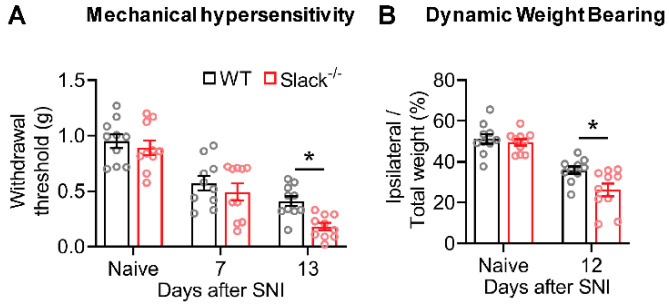
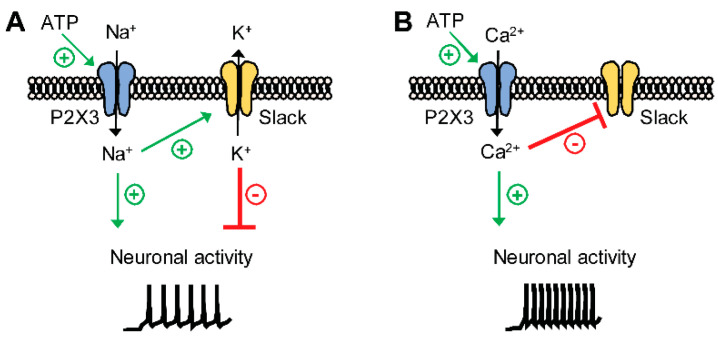
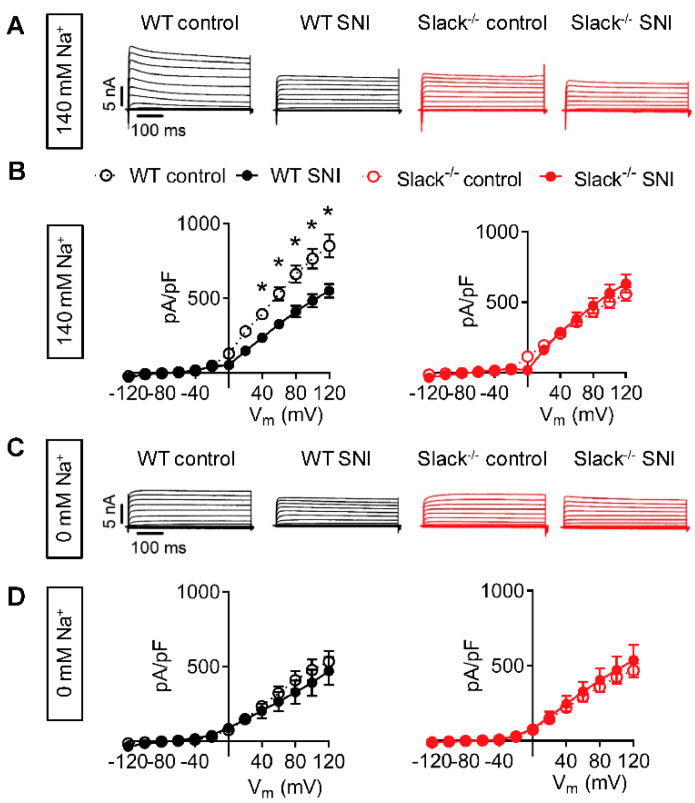
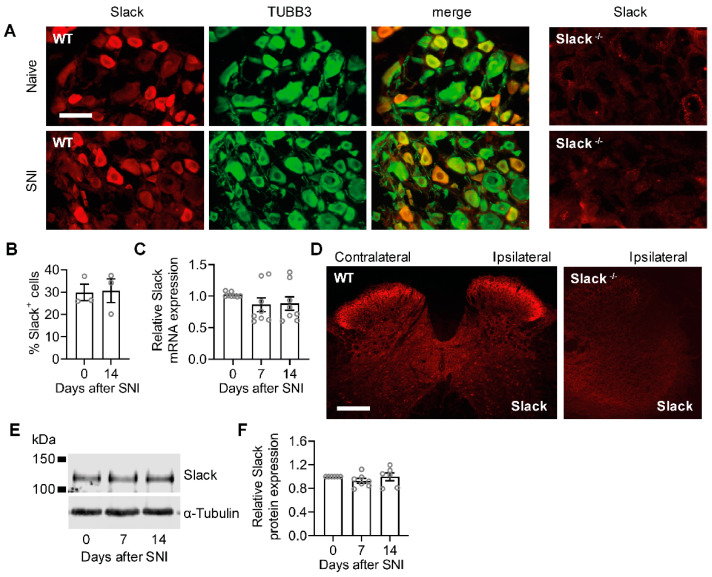
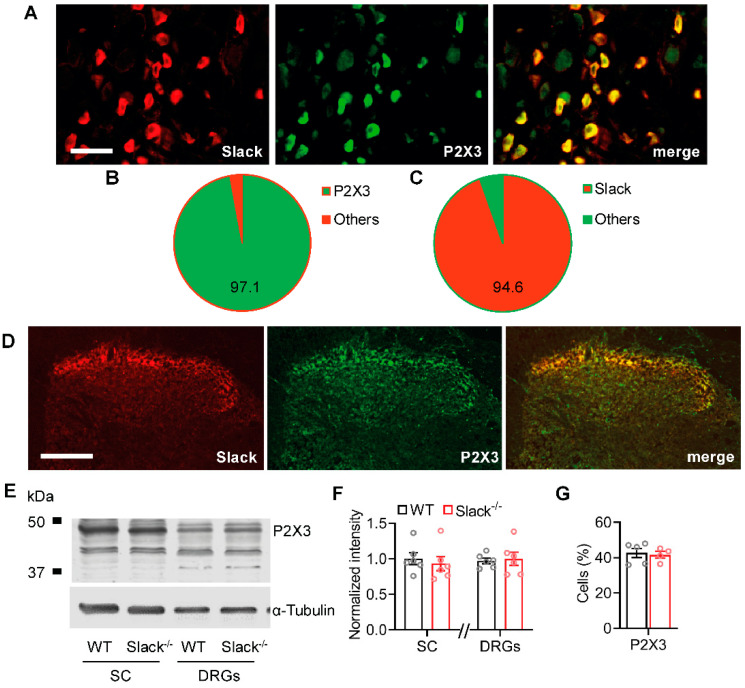
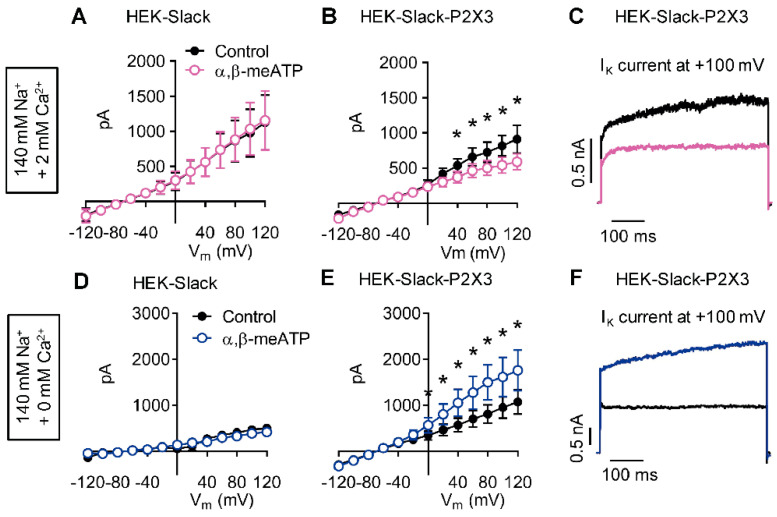
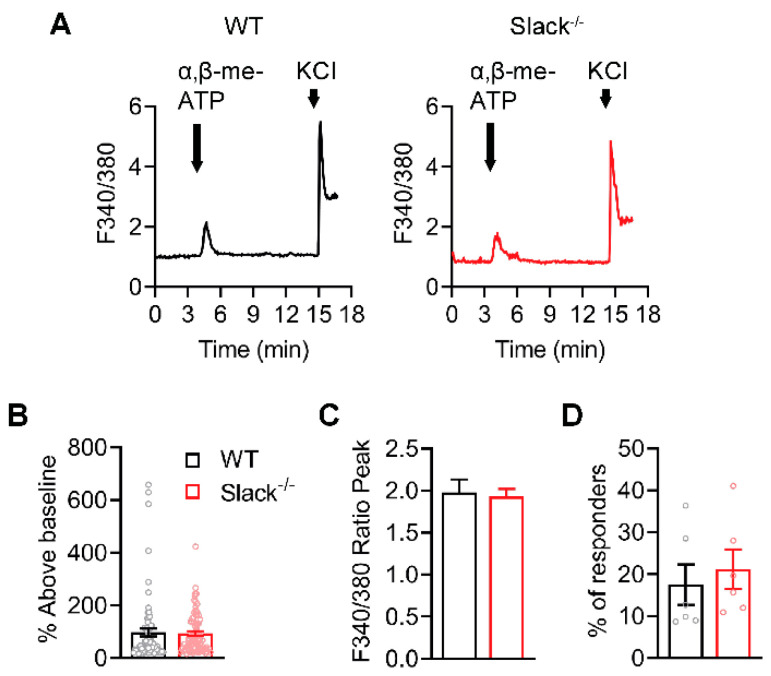
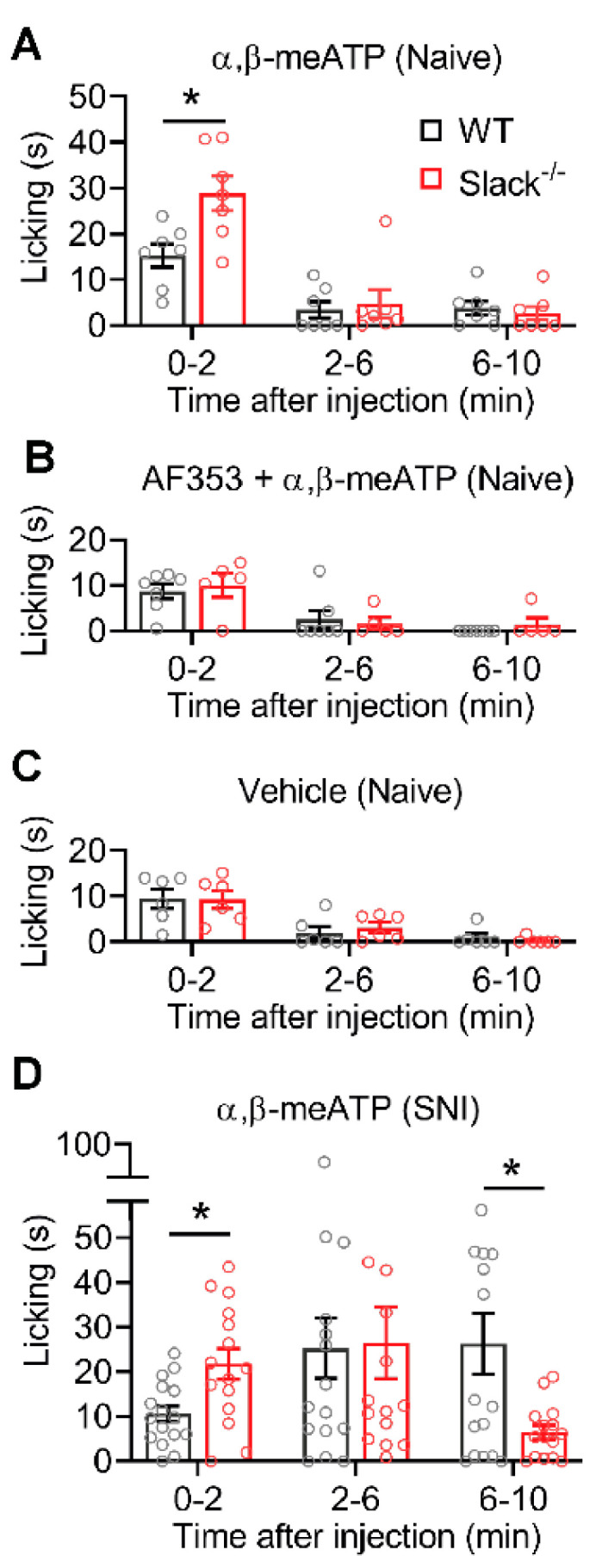
The sodium-activated potassium channel Slack (K1.1, Slo2.2, or Kcnt1) is highly expressed in populations of sensory neurons, where it mediates the sodium-activated potassium current (I) and modulates neuronal activity. Previous studies suggest that Slack is involved in the processing of neuropathic pain. However, mechanisms underlying the regulation of Slack activity in this context are poorly understood. Using whole-cell patch-clamp recordings we found that Slack-mediated I in sensory neurons of mice is reduced after peripheral nerve injury, thereby contributing to neuropathic pain hypersensitivity. Interestingly, Slack is closely associated with ATP-sensitive P2X3 receptors in a population of sensory neurons. In vitro experiments revealed that Slack-mediated I may be bidirectionally modulated in response to P2X3 activation. Moreover, mice lacking Slack show altered nocifensive responses to P2X3 stimulation. Our study identifies P2X3/Slack signaling as a mechanism contributing to hypersensitivity after peripheral nerve injury and proposes a potential novel strategy for treatment of neuropathic pain.
钠激活钾通道 Slack(K1.1、Slo2.2 或 Kcnt1)在感觉神经元群体中高度表达,在其中介导钠激活钾电流(I)并调节神经元活性。先前的研究表明 Slack 参与了神经性疼痛的处理。然而,这种情况下 Slack 活性调节的机制尚不清楚。使用全细胞膜片钳记录,我们发现外周神经损伤后,小鼠感觉神经元中的 Slack 介导的 I 减少,从而导致神经性疼痛过敏。有趣的是,在感觉神经元的一个群体中,Slack 与 ATP 敏感的 P2X3 受体密切相关。体外实验表明,Slack 介导的 I 可能会对 P2X3 激活产生双向调节。此外,缺乏 Slack 的小鼠对 P2X3 刺激的伤害性反应发生改变。我们的研究确定了 P2X3/Slack 信号作为外周神经损伤后敏感性增加的一种机制,并提出了一种治疗神经性疼痛的潜在新策略。