Wei Qing, Liao Jing, Jiang Min, Liu Jing, Liang Xiuan, Nong Guangmin
Department of Pediatrics, The First Affiliated Hospital of Guangxi Medical University, Nanning, 530021, Guangxi, China.
Allergy Asthma Clin Immunol. 2021 Jan 6;17(1):4. doi: 10.1186/s13223-020-00504-3.
The pathogenetic mechanisms of neutrophilic asthma are not well understood now. Whether T helper (Th)17-mediated immunity contributes to the pathogenesis of neutrophilic asthma in human is still under investigation. The aim of this study was to explore the relationship between Th17-mediated immunity and airway inflammation in childhood neutrophilic asthma.
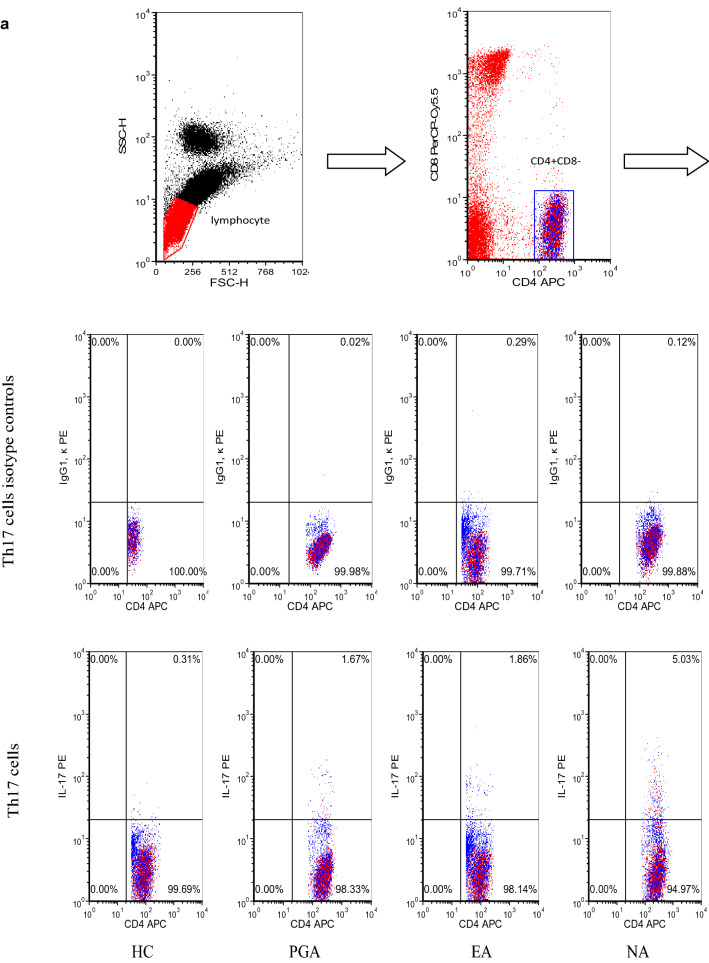
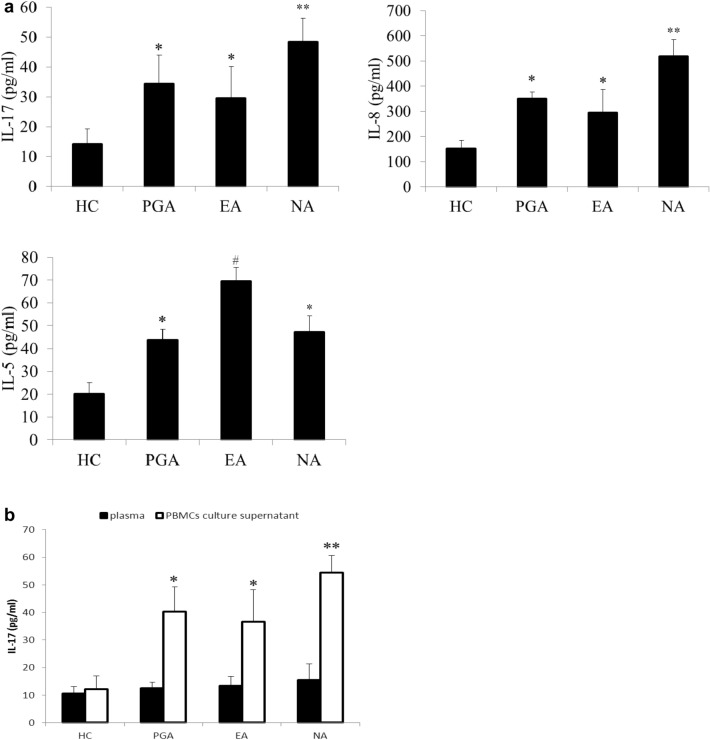
Twenty-eight children with exacerbated asthma and without using any glucocorticoids were divided into three groups: eosinophilic asthma (EA, n = 12) group, neutrophilic asthma (NA, n = 10) group and paucigranulocytic asthma (PGA, n = 6) group according to the induced sputum cytology. Ten healthy children were recruited as healthy control (HC, n = 10) group. Peripheral Th17 and Th2 cells, and the expression of Ki-67 in peripheral Th17 cells were detected by flow cytometry. The mRNA expression of retinoic acid-related orphan receptor γt (RORγt) in peripheral blood mononuclear cells (PBMCs) was detected by qRT-PCR. The concentrations of IL-17, IL-8 and IL-5 in sputum, as well as IL-17 in plasma and culture supernatant of activated PBMCs were measured by ELISA.
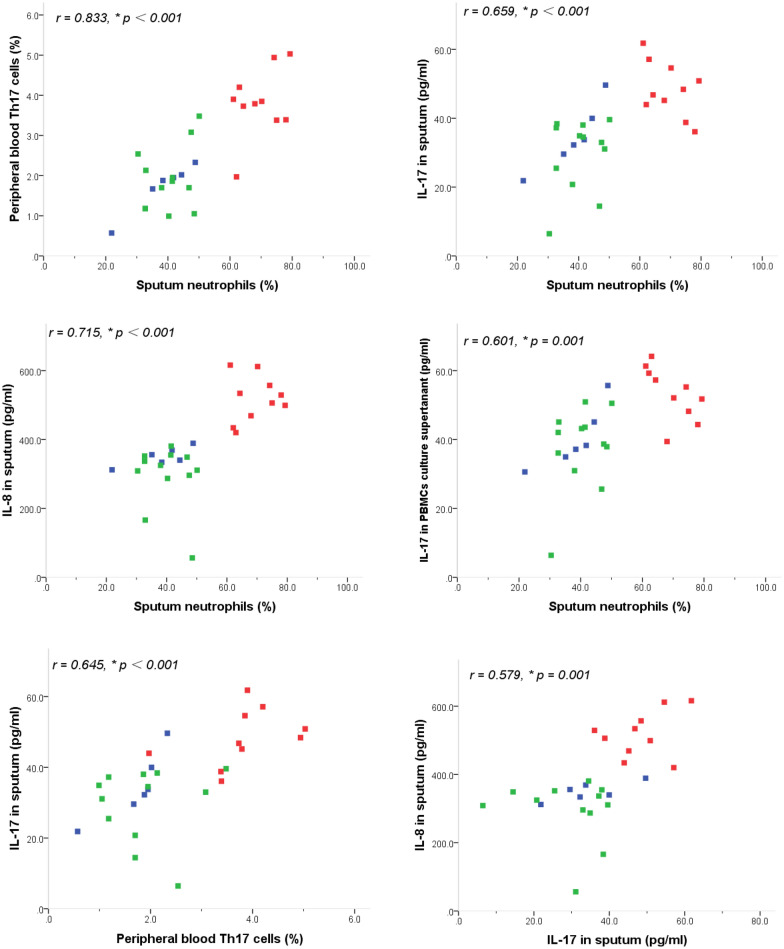
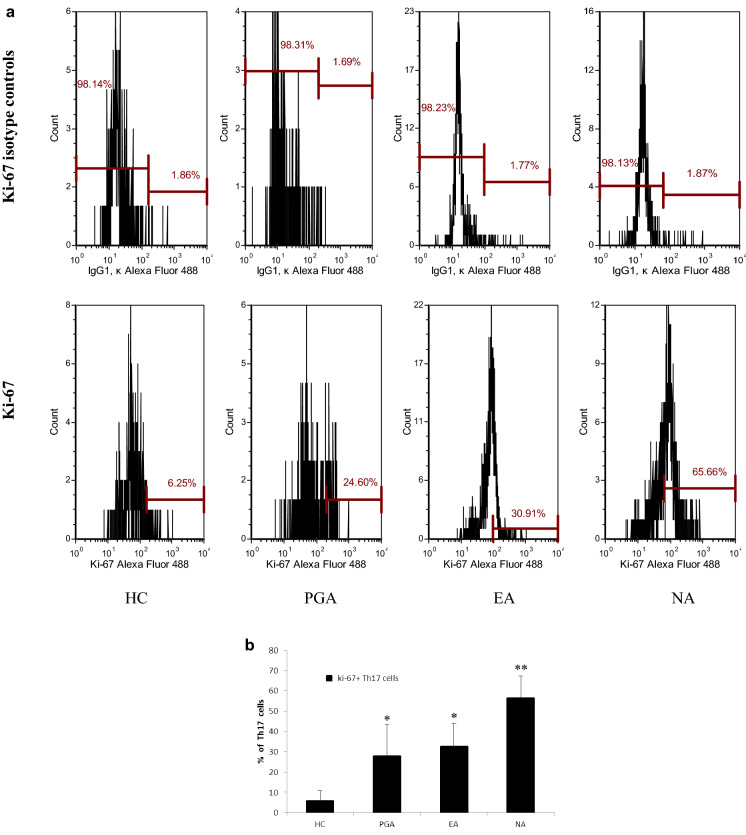
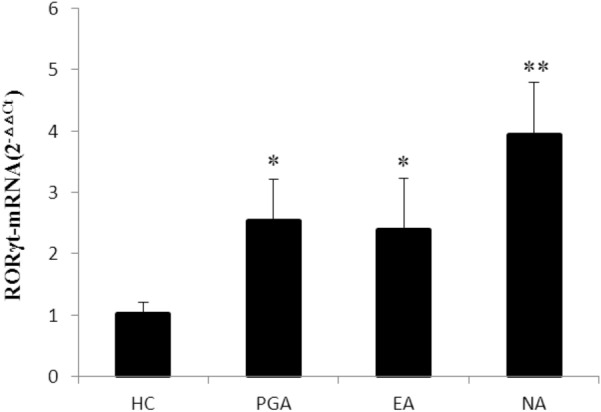
The percentage of Th17 cells in peripheral Th cells, and the concentrations of IL-17, IL-8 in sputum, as well as IL-17 in culture supernatant of activated PBMCs were all increased in NA group, and positively correlated with neutrophil level in sputum and with each other. Also, the mRNA expression of RORγt in PBMCs and Ki-67 positivity in peripheral Th17 cells were both increased in NA group. The percentage of Th2 cells in peripheral Th cells, and the concentration of IL-5 in sputum were both increased in EA group, and positively correlated with eosinophil level in sputum and with each other.
Both Th17- and Th2-mediated immunity are involved in the pathogenesis of childhood asthma. There is predominance of Th17-mediated immunity and Th17 cells proliferation in childhood neutrophilic asthma.
嗜中性粒细胞性哮喘的发病机制目前尚未完全明确。辅助性T(Th)17介导的免疫是否参与人类嗜中性粒细胞性哮喘的发病仍在研究中。本研究旨在探讨Th17介导的免疫与儿童嗜中性粒细胞性哮喘气道炎症之间的关系。
将28例哮喘急性加重且未使用任何糖皮质激素的儿童,根据诱导痰细胞学检查分为三组:嗜酸性粒细胞性哮喘(EA,n = 12)组、嗜中性粒细胞性哮喘(NA,n = 10)组和少粒细胞性哮喘(PGA,n = 6)组。招募10名健康儿童作为健康对照(HC,n = 10)组。采用流式细胞术检测外周血Th17和Th2细胞,以及外周血Th17细胞中Ki-67的表达。采用qRT-PCR检测外周血单个核细胞(PBMC)中维甲酸相关孤儿受体γt(RORγt)的mRNA表达。采用ELISA法检测痰液中IL-17、IL-8和IL-5的浓度,以及活化PBMC血浆和培养上清液中IL-17的浓度。
NA组外周血Th细胞中Th17细胞百分比、痰液中IL-17、IL-8浓度以及活化PBMC培养上清液中IL-17浓度均升高,且与痰液中嗜中性粒细胞水平呈正相关,且彼此之间也呈正相关。此外,NA组PBMC中RORγt的mRNA表达和外周血Th17细胞中Ki-67阳性率均升高。EA组外周血Th细胞中Th2细胞百分比和痰液中IL-5浓度均升高,且与痰液中嗜酸性粒细胞水平呈正相关,且彼此之间也呈正相关。
Th17和Th2介导的免疫均参与儿童哮喘的发病机制。在儿童嗜中性粒细胞性哮喘中,Th17介导的免疫占优势且Th17细胞增殖。