Department of Pain Pharmacology, Maj Institute of Pharmacology, Polish Academy of Sciences, Krakow, Poland.
Front Immunol. 2020 Dec 21;11:615327. doi: 10.3389/fimmu.2020.615327. eCollection 2020.
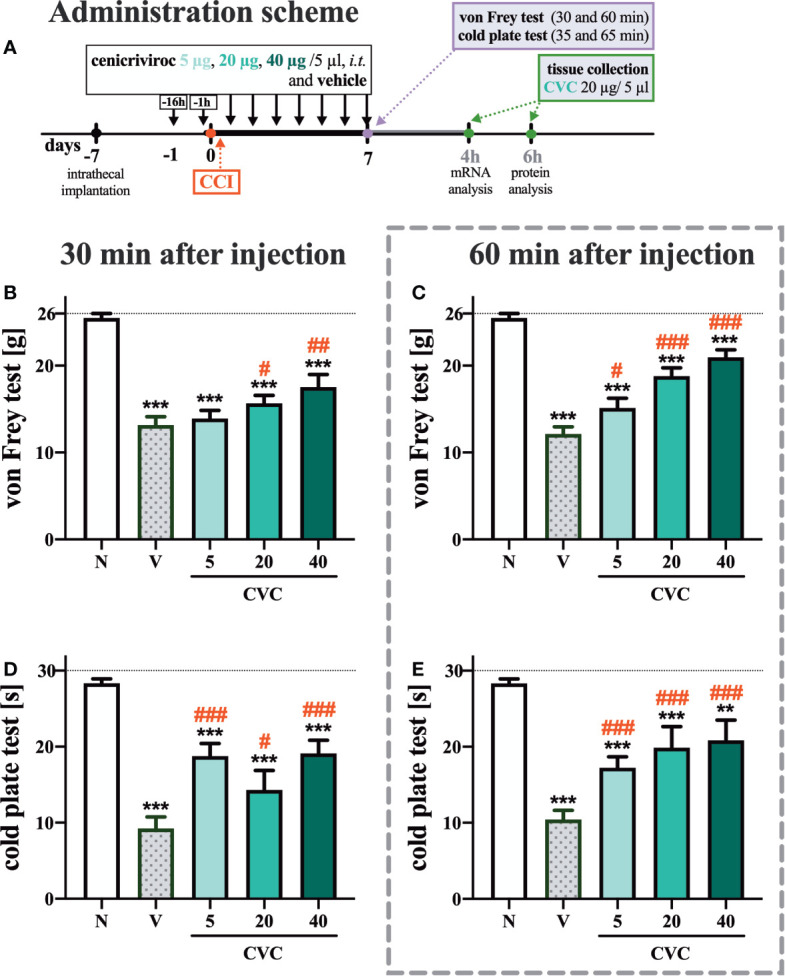
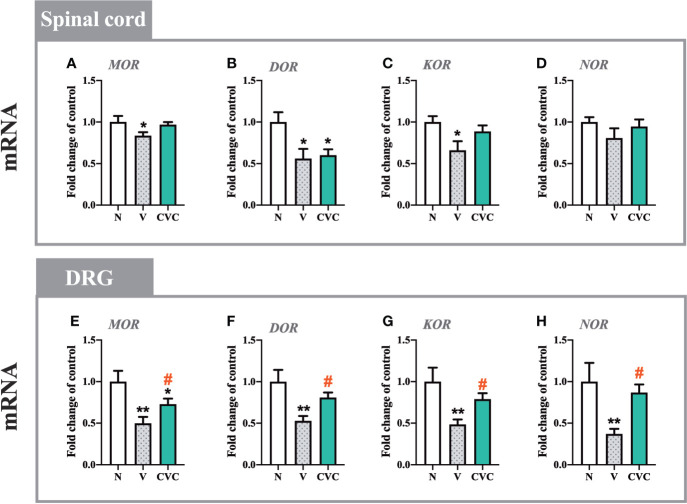
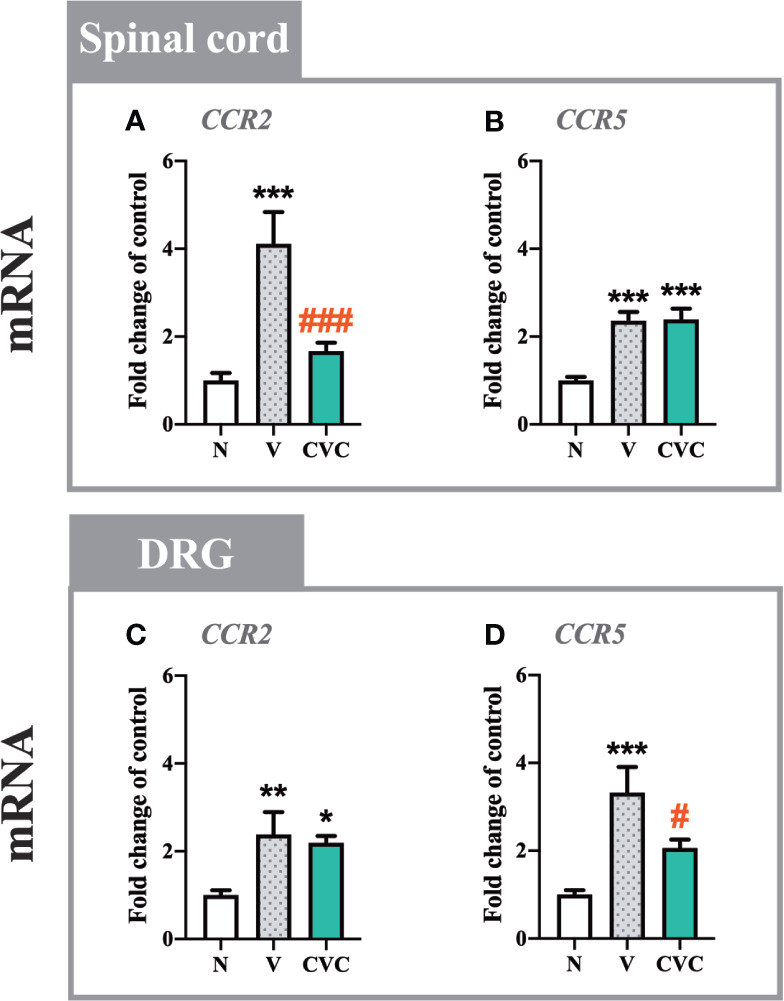
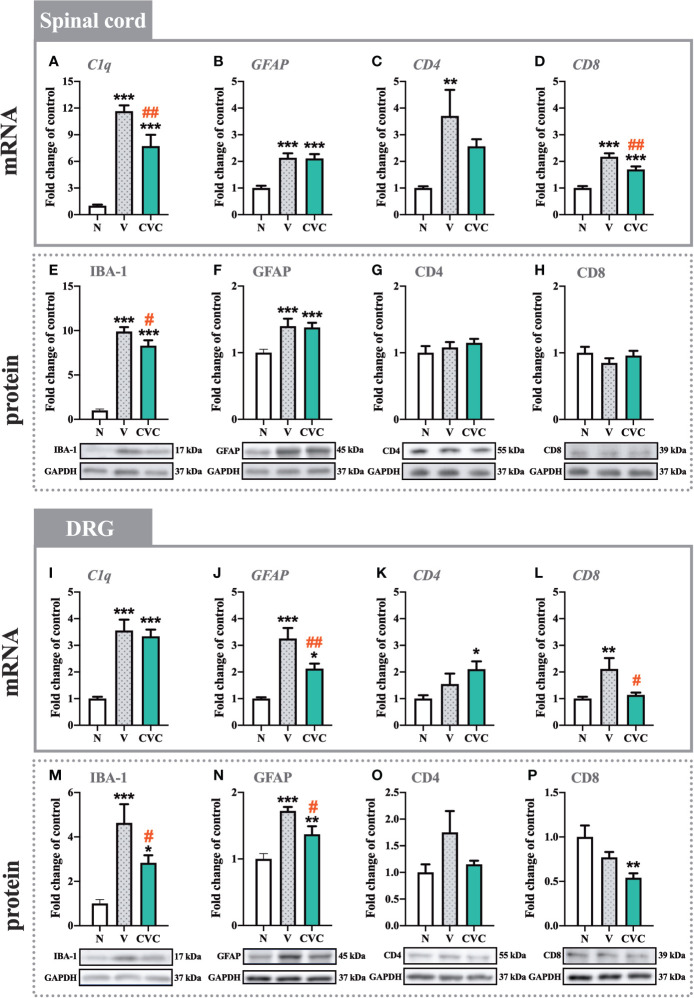
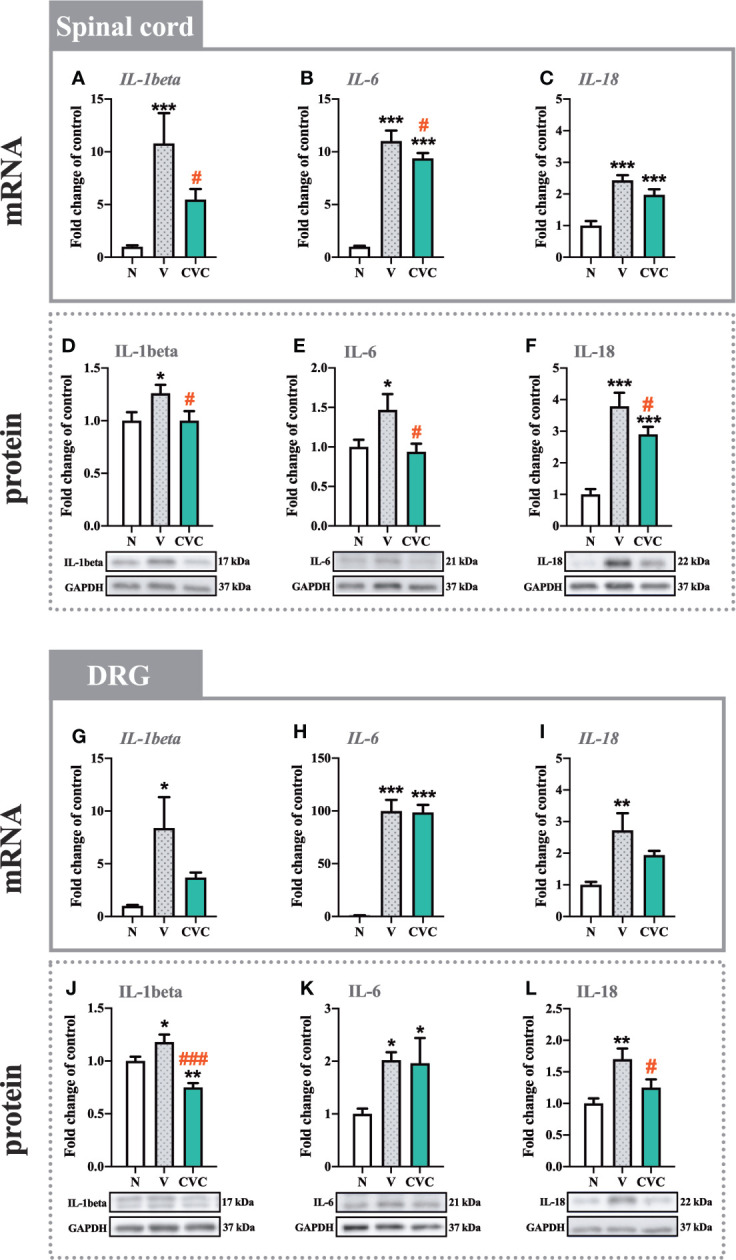
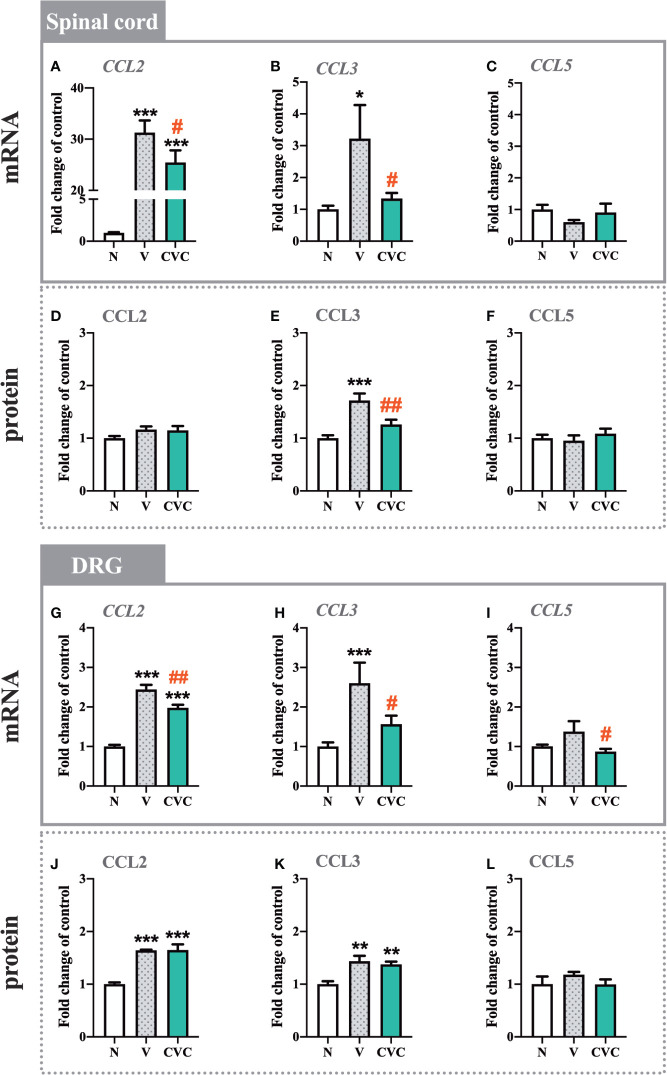
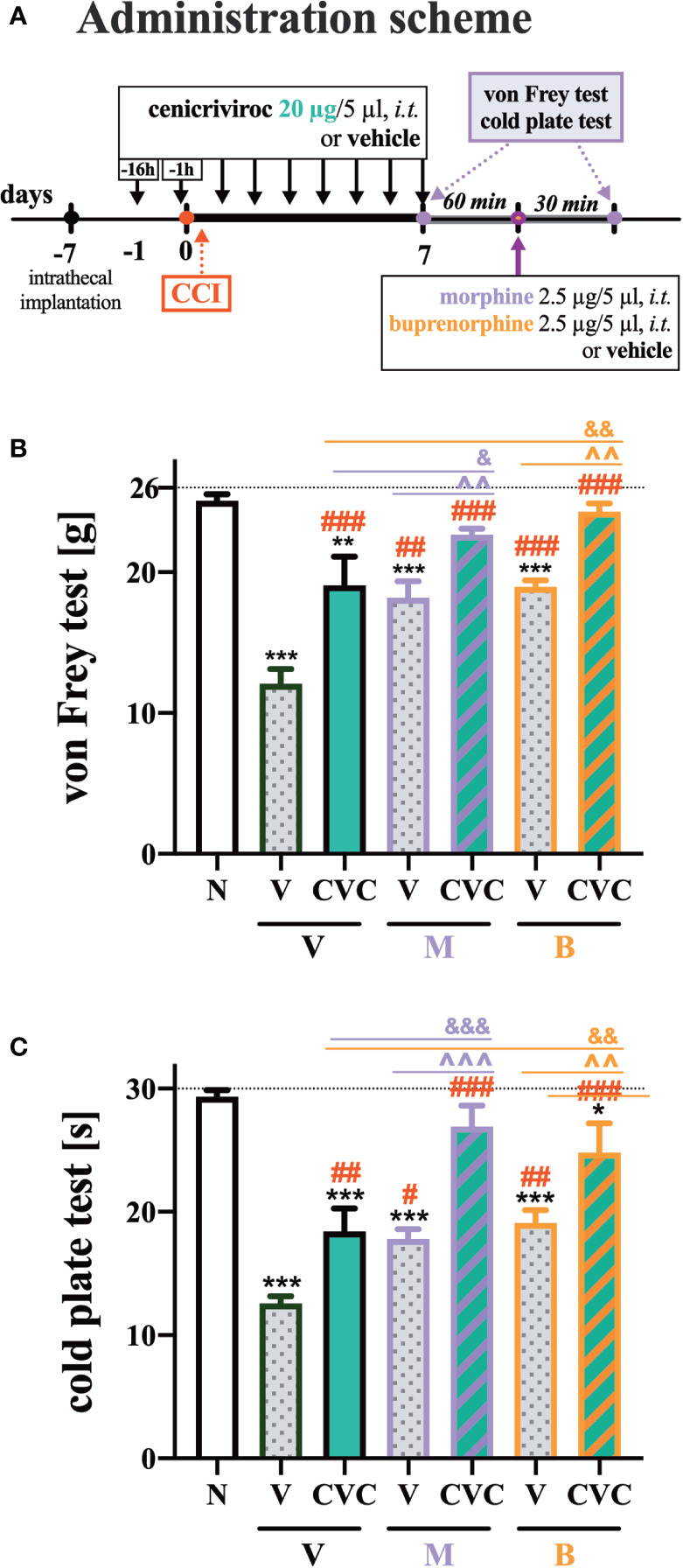
Clinical management of neuropathic pain is unsatisfactory, mainly due to its resistance to the effects of available analgesics, including opioids. Converging evidence indicates the functional interactions between chemokine and opioid receptors and their influence on nociceptive processes. Recent studies highlight that the CC chemokine receptors type 2 (CCR2) and 5 (CCR5) seem to be of particular interest. Therefore, in this study, we investigated the effects of the dual CCR2/CCR5 antagonist, cenicriviroc, on pain-related behaviors, neuroimmune processes, and the efficacy of opioids in rats after chronic constriction injury (CCI) of the sciatic nerve. To define the mechanisms of action of cenicriviroc, we studied changes in the activation/influx of glial and immune cells and, simultaneously, the expression level of , , and important pronociceptive cytokines in the spinal cord and dorsal root ganglia (DRG). We demonstrated that repeated intrathecal injections of cenicriviroc, in a dose-dependent manner, alleviated hypersensitivity to mechanical and thermal stimuli in rats after sciatic nerve injury, as measured by von Frey and cold plate tests. Behavioral effects were associated with the beneficial impact of cenicriviroc on the activation/influx level of C1q/IBA-1-positive cells in the spinal cord and/or DRG and GFAP-positive cells in DRG. In parallel, administration of cenicriviroc decreased the expression of CCR2 in the spinal cord and CCR5 in DRG. Concomitantly, we observed that the level of important pronociceptive factors (e.g., IL-1beta, IL-6, IL-18, and CCL3) were increased in the lumbar spinal cord and/or DRG 7 days following injury, and cenicriviroc was able to prevent these changes. Additionally, repeated administration of this dual CCR2/CCR5 antagonist enhanced the analgesic effects of morphine and buprenorphine in neuropathic rats, which can be associated with the ability of cenicriviroc to prevent nerve injury-induced downregulation of all opioid receptors at the DRG level. Overall, our results suggest that pharmacological modulation based on the simultaneous blockade of CCR2 and CCR5 may serve as an innovative strategy for the treatment of neuropathic pain, as well as in combination with opioids.
神经病理性疼痛的临床治疗效果并不理想,主要是因为现有的镇痛药物(包括阿片类药物)对其效果有限。越来越多的证据表明趋化因子和阿片受体之间存在功能相互作用,并对伤害性感受过程产生影响。最近的研究强调,趋化因子受体 2(CCR2)和 5(CCR5)似乎特别重要。因此,在这项研究中,我们研究了双重 CCR2/CCR5 拮抗剂 cenicriviroc 对坐骨神经慢性缩窄性损伤(CCI)后大鼠疼痛相关行为、神经免疫过程以及阿片类药物疗效的影响。为了明确 cenicriviroc 的作用机制,我们研究了神经胶质细胞和免疫细胞的激活/流入变化,同时研究了脊髓和背根神经节(DRG)中 、 和重要致痛细胞因子的表达水平。我们证明,鞘内重复注射 cenicriviroc 可剂量依赖性地减轻坐骨神经损伤后大鼠对机械和热刺激的超敏反应,通过 von Frey 和冷板试验进行测量。行为学效应与 cenicriviroc 对脊髓和/或 DRG 中 C1q/IBA-1 阳性细胞和 DRG 中 GFAP 阳性细胞的激活/流入水平的有益影响有关。同时,cenicriviroc 降低了脊髓中 CCR2 和 DRG 中 CCR5 的表达。此外,我们观察到,在损伤后 7 天,重要致痛因子(如 IL-1beta、IL-6、IL-18 和 CCL3)在腰椎脊髓和/或 DRG 中的水平升高,而 cenicriviroc 能够阻止这些变化。此外,重复给予这种双重 CCR2/CCR5 拮抗剂增强了阿片类药物吗啡和丁丙诺啡在神经病理性大鼠中的镇痛效果,这可能与 cenicriviroc 防止神经损伤诱导的所有阿片受体在 DRG 水平下调的能力有关。总的来说,我们的研究结果表明,基于同时阻断 CCR2 和 CCR5 的药物调节可能成为治疗神经病理性疼痛的一种创新策略,并且可能与阿片类药物联合使用。