Martinez Stephane, Kolodny Yuval, Shemesh Eli, Scucchia Federica, Nevo Reinat, Levin-Zaidman Smadar, Paltiel Yossi, Keren Nir, Tchernov Dan, Mass Tali
Department of Marine Biology, The Leon H. Charney School of Marine Sciences, University of Haifa, Haifa, Israel.
Morris Kahn Marine Research Station, The Leon H. Charney School of Marine Sciences, University of Haifa, Sdot Yam, Israel.
Front Mar Sci. 2020 Nov 19;7:988. doi: 10.3389/fmars.2020.566663.
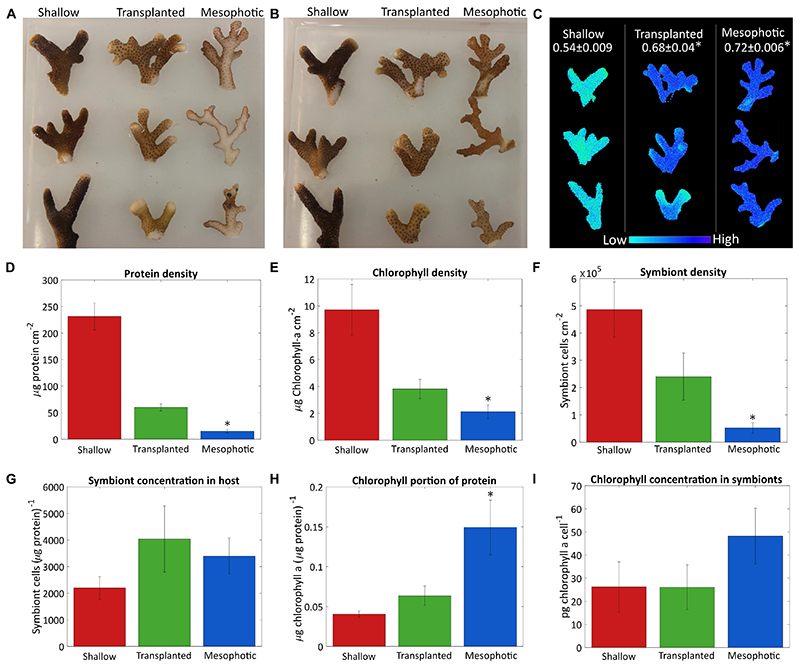
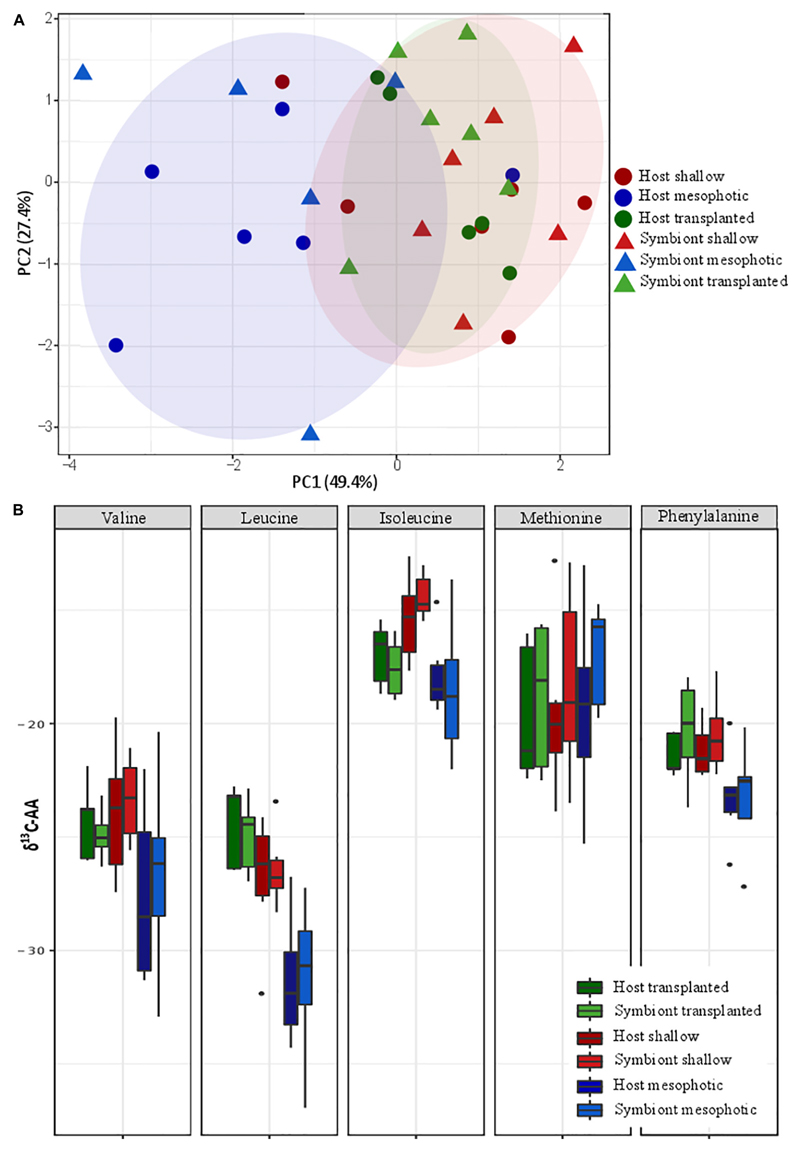
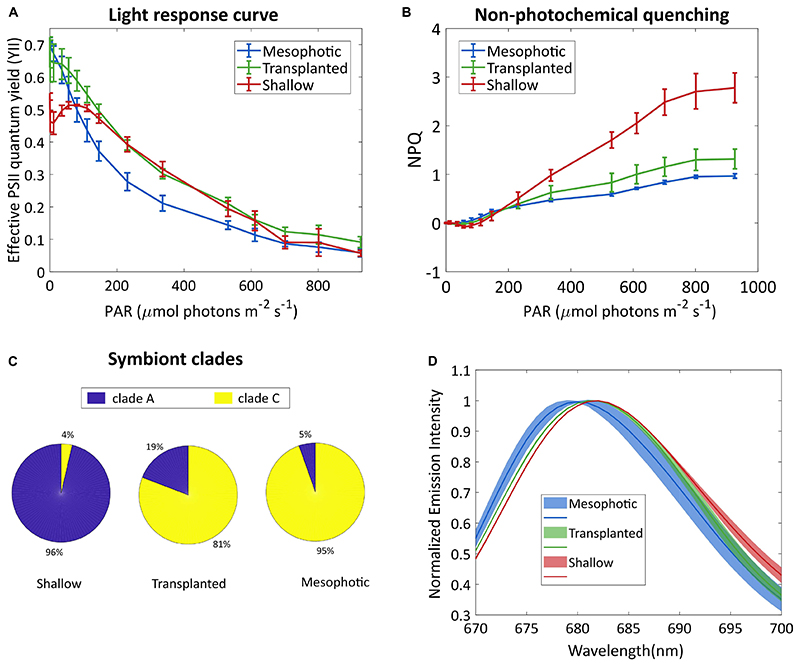
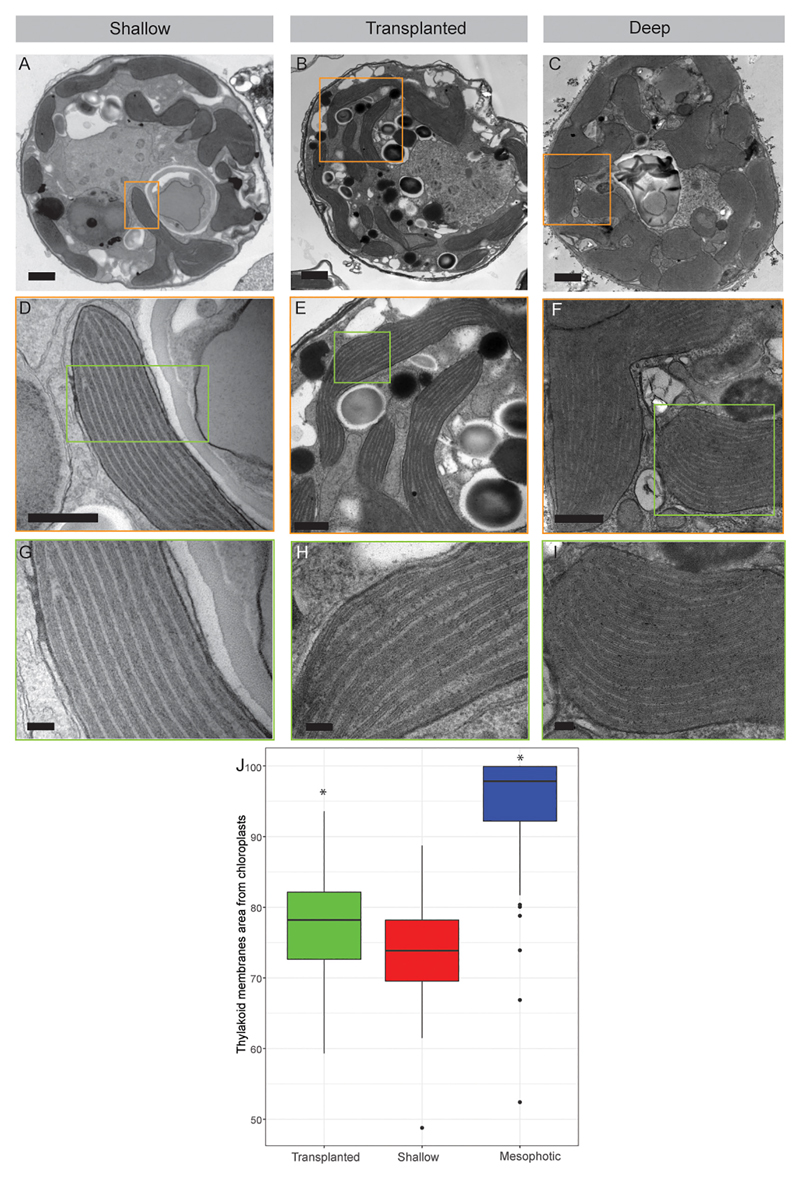
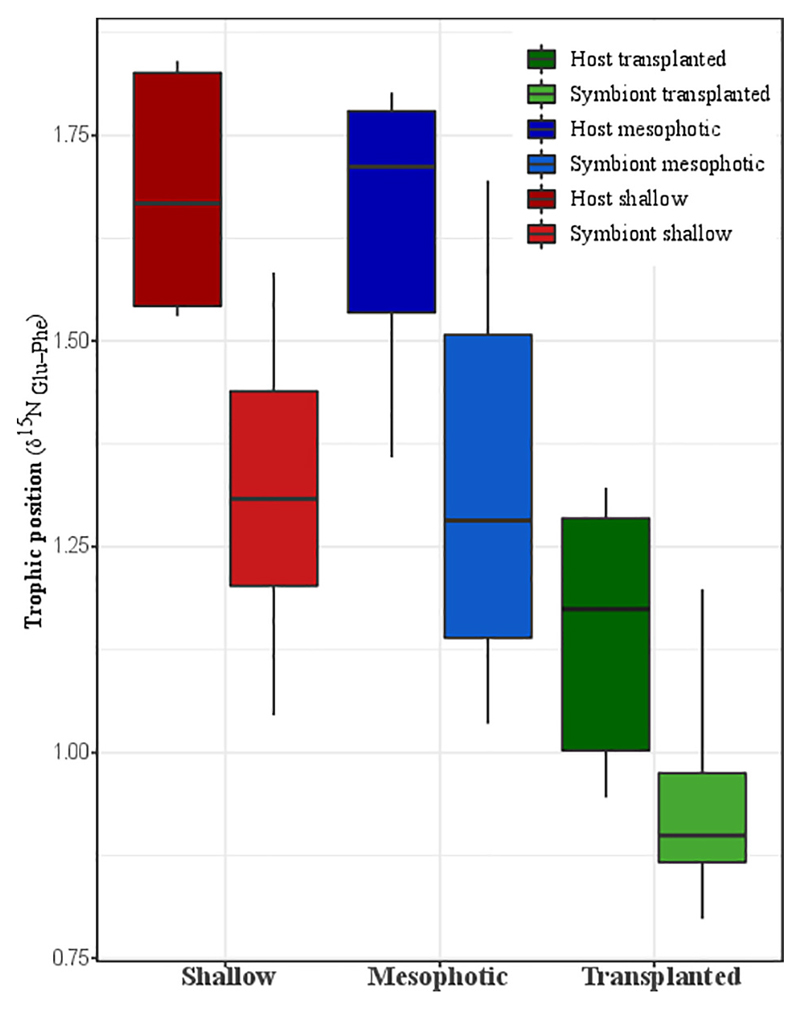
Energy sources of corals, ultimately sunlight and plankton availability, change dramatically from shallow to mesophotic (30-150 m) reefs. Depth-generalist corals, those that occupy both of these two distinct ecosystems, are adapted to cope with such extremely diverse conditions. In this study, we investigated the trophic strategy of the depth-generalist hermatypic coral and the ability of mesophotic colonies to adapt to shallow reefs. We compared symbiont genera composition, photosynthetic traits and the holobiont trophic position and carbon sources, calculated from amino acids compound-specific stable isotope analysis (AA-CSIA), of shallow, mesophotic and translocated corals. This species harbors different Symbiodiniaceae genera at the two depths: (dominant in mesophotic colonies) and (dominant in shallow colonies) with a limited change after transplantation. This allowed us to determine which traits stem from hosting different symbiont species compositions across the depth gradient. Calculation of holobiont trophic position based on amino acid δN revealed that heterotrophy represents the same portion of the total energy budget in both depths, in contrast to the dogma that predation is higher in corals growing in low light conditions. Photosynthesis is the major carbon source to corals growing at both depths, but the photosynthetic rate is higher in the shallow reef corals, implicating both higher energy consumption and higher predation rate in the shallow habitat. In the corals transplanted from deep to shallow reef, we observed extensive photo-acclimation by the Symbiodiniaceae cells, including substantial cellular morphological modifications, increased cellular chlorophyll a, lower antennae to photosystems ratios and carbon signature similar to the local shallow colonies. In contrast, non-photochemical quenching remains low and does not increase to cope with the high light regime of the shallow reef. Furthermore, host acclimation is much slower in these deep-to-shallow transplanted corals as evident from the lower trophic position and tissue density compared to the shallow-water corals, even after long-term transplantation (18 months). Our results suggest that while mesophotic reefs could serve as a potential refuge for shallow corals, the transition is complex, as even after a year and a half the acclimation is only partial.
珊瑚的能量来源,归根结底是阳光和浮游生物的可利用性,从浅水珊瑚礁到中光层(30 - 150米)珊瑚礁会发生显著变化。深度泛化的珊瑚,即占据这两个截然不同生态系统的珊瑚,已适应应对如此极端多样的条件。在本研究中,我们调查了深度泛化的造礁珊瑚的营养策略以及中光层珊瑚群落适应浅水珊瑚礁的能力。我们比较了浅水、中光层和移植珊瑚的共生体属组成、光合特性以及全生物营养级位置和碳源,这些是通过氨基酸化合物特异性稳定同位素分析(AA - CSIA)计算得出的。该物种在两个深度拥有不同的共生藻属:中光层群落中占主导的 和浅水区群落中占主导的 ,移植后变化有限。这使我们能够确定哪些特征源于在深度梯度上拥有不同的共生体物种组成。基于氨基酸δN计算全生物营养级位置表明,异养在两个深度占总能量预算的比例相同,这与低光照条件下生长的珊瑚捕食率更高的观点相反。光合作用是两个深度生长的珊瑚的主要碳源,但浅水珊瑚礁中的珊瑚光合速率更高,这意味着浅水环境中的能量消耗和捕食率更高。在从深水移植到浅水珊瑚礁的珊瑚中,我们观察到共生藻细胞有广泛的光适应,包括大量细胞形态改变、细胞叶绿素a增加、天线与光系统比率降低以及碳特征与当地浅水群落相似。相比之下,非光化学猝灭仍然很低,并且不会增加以应对浅水珊瑚礁的高光环境。此外,从这些深到浅移植的珊瑚中宿主的适应要慢得多,从与浅水珊瑚相比更低的营养级位置和组织密度可以明显看出,即使经过长期移植(18个月)也是如此。我们的结果表明,虽然中光层珊瑚礁可能成为浅水珊瑚的潜在避难所,但这种转变很复杂,因为即使经过一年半,适应也只是部分的。