Kim Ki Jung, Diaz Juan Ramiro, Presa Jessica L, Muller P Robinson, Brands Michael W, Khan Mohammad B, Hess David C, Althammer Ferdinand, Stern Javier E, Filosa Jessica A
Department of Physiology, Augusta University, Augusta, GA, 30912, USA.
Department of Neurology, Medical College of Georgia, Augusta University, Augusta, GA, USA.
Geroscience. 2021 Jun;43(3):1405-1422. doi: 10.1007/s11357-020-00305-x. Epub 2021 Jan 7.
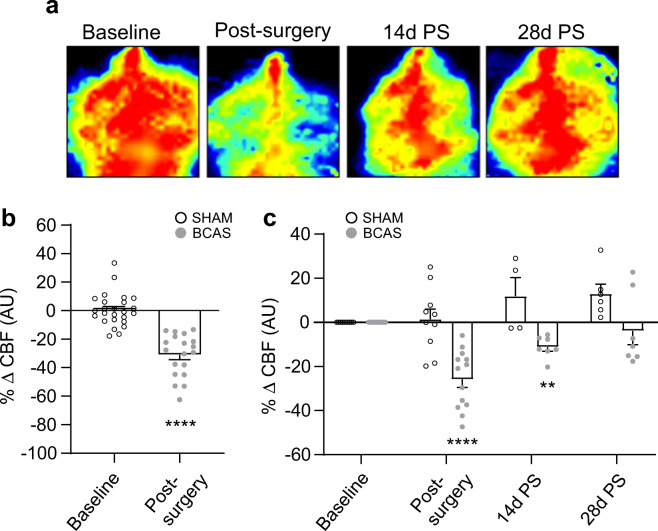
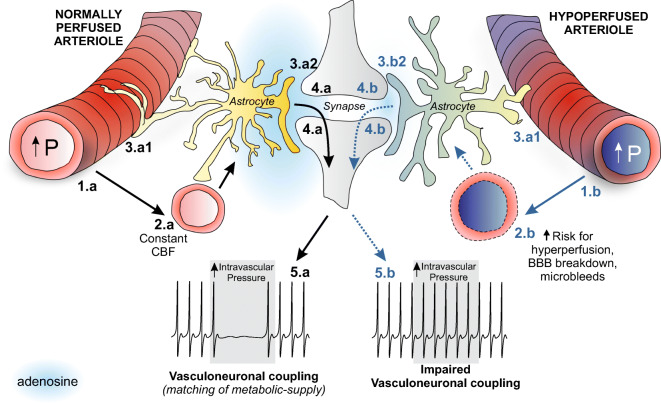
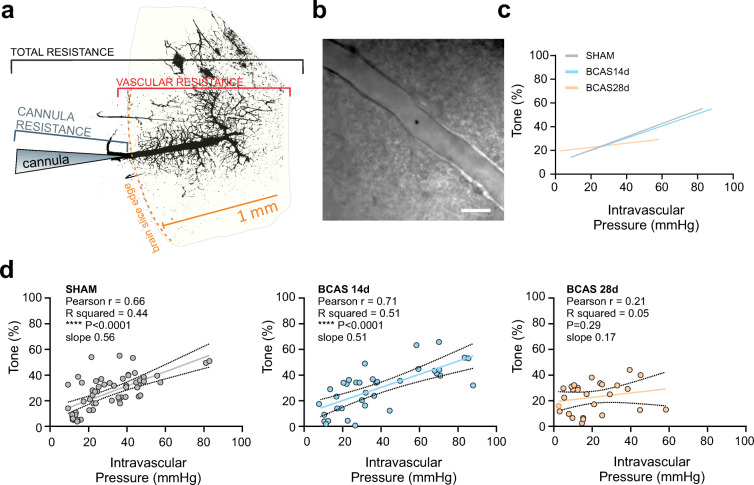
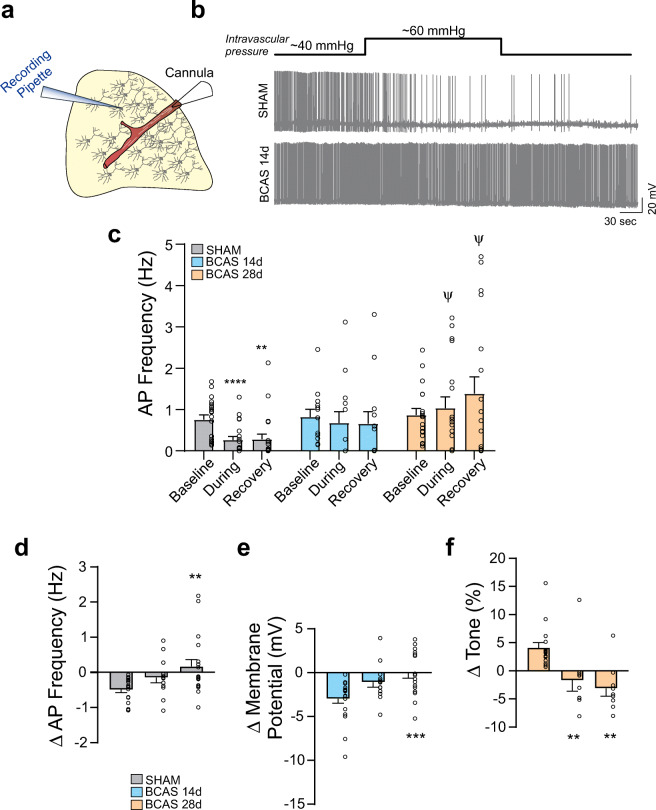
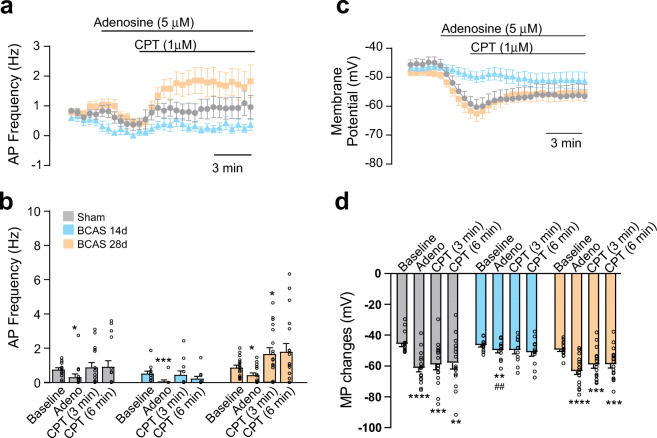
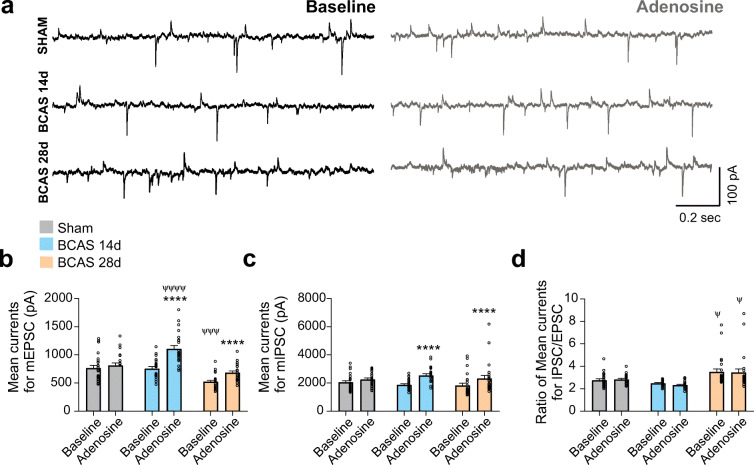
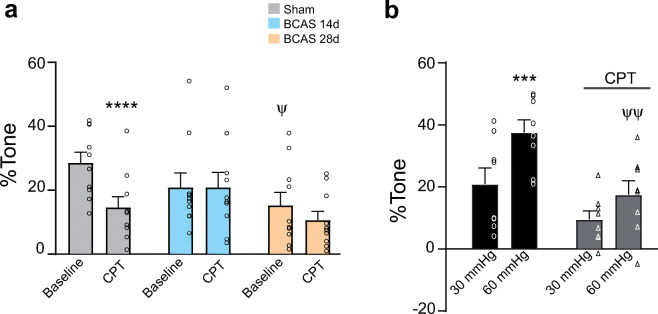
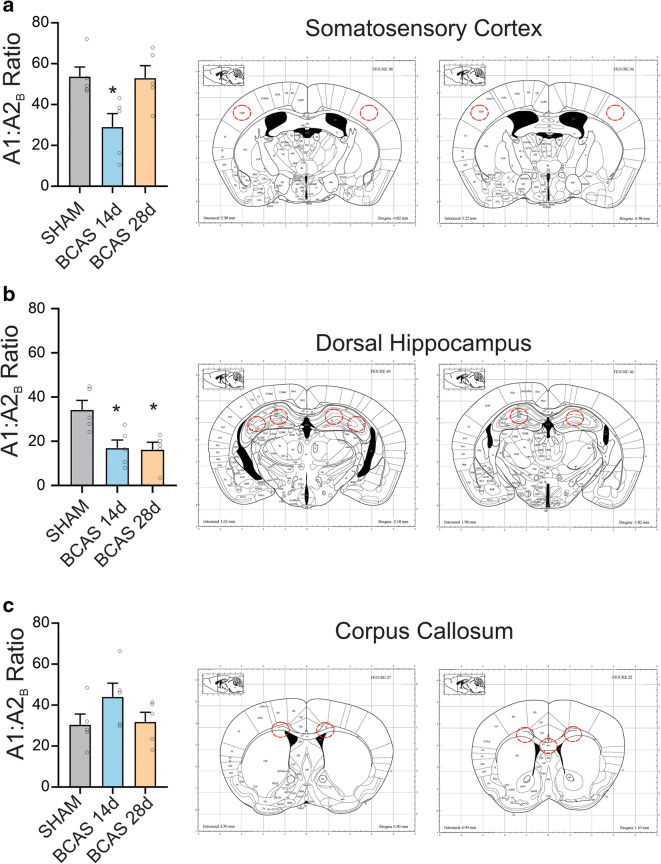
Chronic hypoperfusion is a key contributor to cognitive decline and neurodegenerative conditions, but the cellular mechanisms remain ill-defined. Using a multidisciplinary approach, we sought to elucidate chronic hypoperfusion-evoked functional changes at the neurovascular unit. We used bilateral common carotid artery stenosis (BCAS), a well-established model of vascular cognitive impairment, combined with an ex vivo preparation that allows pressurization of parenchymal arterioles in a brain slice. Our results demonstrate that mild (~ 30%), chronic hypoperfusion significantly altered the functional integrity of the cortical neurovascular unit. Although pial cerebral perfusion recovered over time, parenchymal arterioles progressively lost tone, exhibiting significant reductions by day 28 post-surgery. We provide supportive evidence for reduced adenosine 1 receptor-mediated vasoconstriction as a potential mechanism in the adaptive response underlying the reduced baseline tone in parenchymal arterioles. In addition, we show that in response to the neuromodulator adenosine, the action potential frequency of cortical pyramidal neurons was significantly reduced in all groups. However, a significant decrease in adenosine-induced hyperpolarization was observed in BCAS 14 days. At the microvascular level, constriction-induced inhibition of pyramidal neurons was significantly compromised in BCAS mice. Collectively, these results suggest that BCAS uncouples vessel-to-neuron communication-vasculo-neuronal coupling-a potential early event in cognitive decline.
慢性灌注不足是认知功能下降和神经退行性疾病的关键因素,但细胞机制仍不明确。我们采用多学科方法,试图阐明慢性灌注不足引起的神经血管单元的功能变化。我们使用双侧颈总动脉狭窄(BCAS),这是一种成熟的血管性认知障碍模型,并结合一种离体标本,该标本可使脑切片中的实质小动脉受压。我们的结果表明,轻度(约30%)慢性灌注不足会显著改变皮质神经血管单元的功能完整性。尽管软脑膜脑灌注随时间恢复,但实质小动脉的张力逐渐丧失,在术后第28天显著降低。我们提供了支持性证据,表明腺苷1受体介导的血管收缩减少是实质小动脉基线张力降低的适应性反应中的一种潜在机制。此外,我们表明,在所有组中,对神经调质腺苷的反应中,皮质锥体神经元的动作电位频率显著降低。然而,在BCAS组术后14天时,观察到腺苷诱导的超极化显著降低。在微血管水平,BCAS小鼠中锥体神经元的收缩诱导抑制作用显著受损。总的来说,这些结果表明,BCAS破坏了血管与神经元之间的通讯——血管-神经元耦合——这可能是认知功能下降的早期事件。