Nilsson Oktawia, Lindvall Mikaela, Obici Laura, Ekström Simon, Lagerstedt Jens O, Del Giudice Rita
Department of Experimental Medical Science, Lund University, Lund, Sweden.
Amyloidosis Research & Treatment Centre, Fondazione IRCCS Policlinico San Matteo, Pavia, Italy.
J Lipid Res. 2021;62:100004. doi: 10.1194/jlr.RA120000920. Epub 2020 Nov 24.
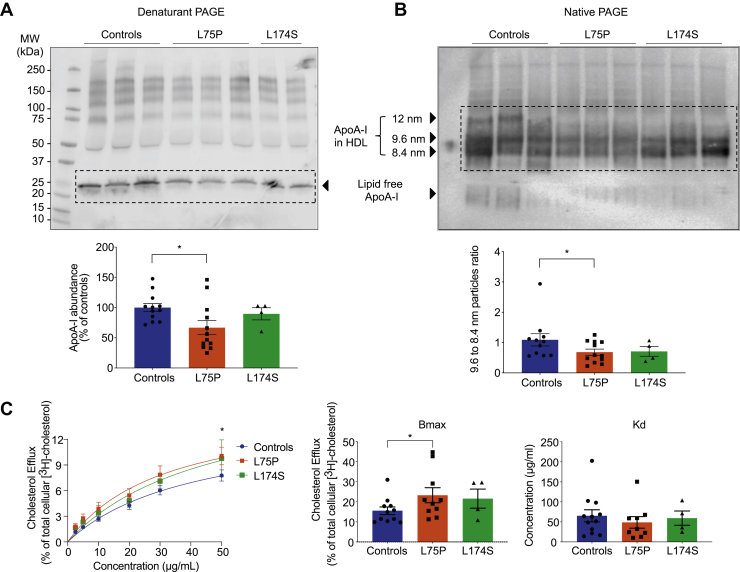
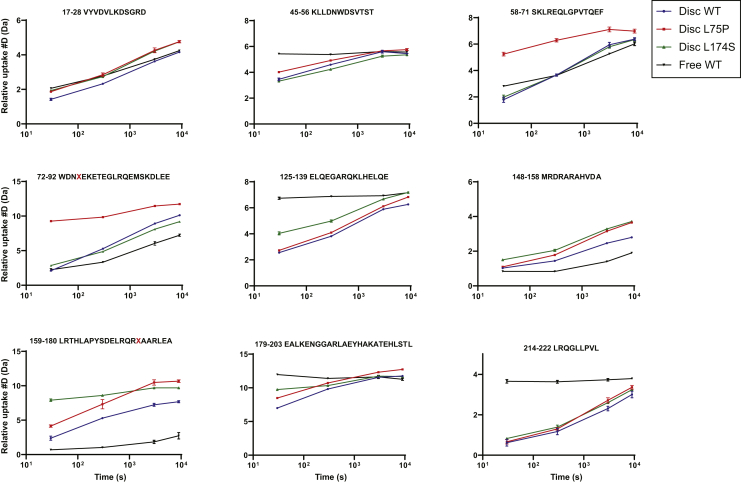
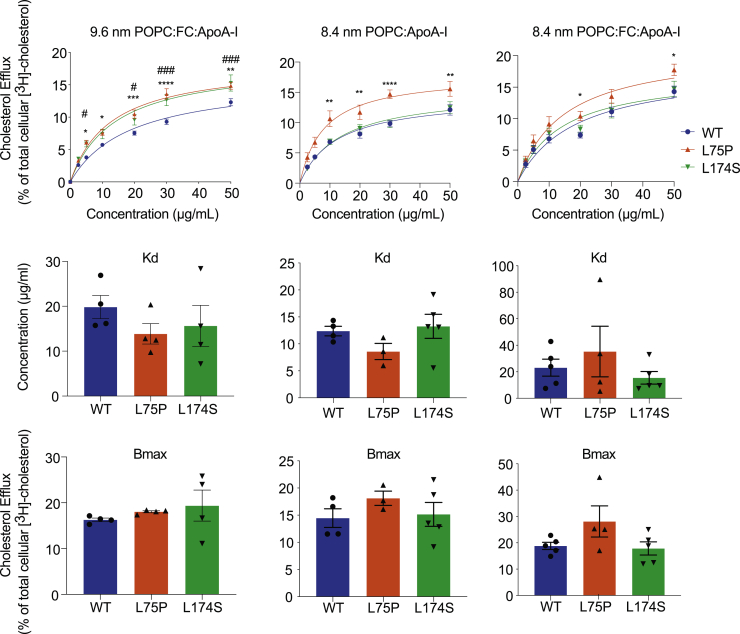
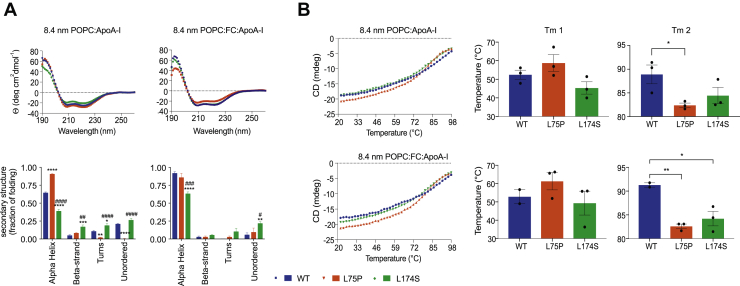
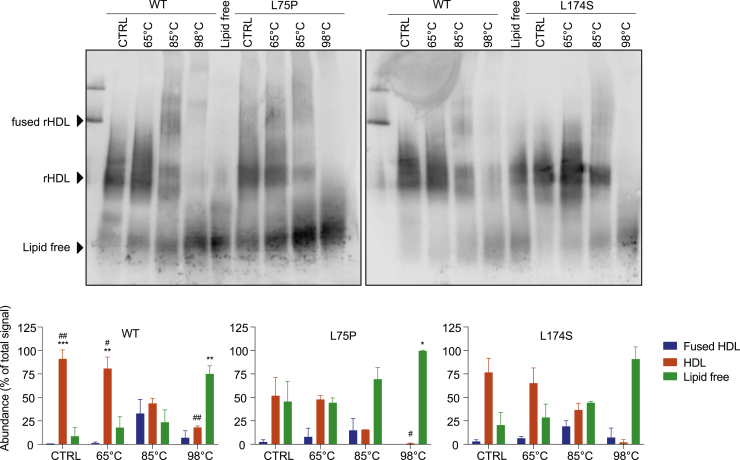
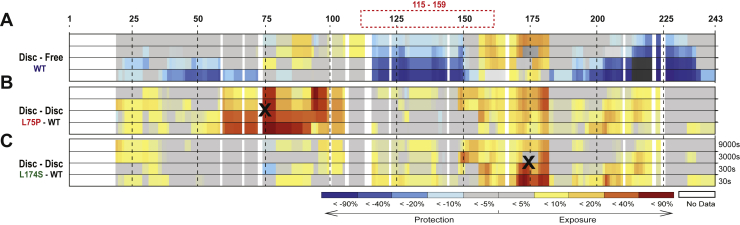
Apolipoprotein A-I (ApoA-I) of high density lipoproteins (HDLs) is essential for the transportation of cholesterol between peripheral tissues and the liver. However, specific mutations in ApoA-I of HDLs are responsible for a late-onset systemic amyloidosis, the pathological accumulation of protein fibrils in tissues and organs. Carriers of these mutations do not exhibit increased cardiovascular disease risk despite displaying reduced levels of ApoA-I/HDL cholesterol. To explain this paradox, we show that the HDL particle profiles of patients carrying either L75P or L174S ApoA-I amyloidogenic variants show a higher relative abundance of the 8.4-nm versus 9.6-nm particles and that serum from patients, as well as reconstituted 8.4- and 9.6-nm HDL particles (rHDL), possess increased capacity to catalyze cholesterol efflux from macrophages. Synchrotron radiation circular dichroism and hydrogen-deuterium exchange revealed that the variants in 8.4-nm rHDL have altered secondary structure composition and display a more flexible binding to lipids than their native counterpart. The reduced HDL cholesterol levels of patients carrying ApoA-I amyloidogenic variants are thus balanced by higher proportion of small, dense HDL particles, and better cholesterol efflux due to altered, region-specific protein structure dynamics.
高密度脂蛋白(HDL)中的载脂蛋白A-I(ApoA-I)对于外周组织与肝脏之间的胆固醇运输至关重要。然而,HDL的ApoA-I中的特定突变会导致迟发性全身性淀粉样变性,即蛋白质原纤维在组织和器官中的病理性积累。尽管携带这些突变的个体ApoA-I/HDL胆固醇水平降低,但他们并未表现出心血管疾病风险增加。为了解释这一矛盾现象,我们发现携带L75P或L174S ApoA-I淀粉样变性变体的患者的HDL颗粒谱显示,与9.6纳米颗粒相比,8.4纳米颗粒的相对丰度更高,并且患者的血清以及重组的8.4纳米和9.6纳米HDL颗粒(rHDL)具有增强的催化巨噬细胞胆固醇流出的能力。同步辐射圆二色性和氢-氘交换表明,8.4纳米rHDL中的变体具有改变的二级结构组成,并且与脂质的结合比其天然对应物更灵活。因此,携带ApoA-I淀粉样变性变体的患者HDL胆固醇水平的降低被较高比例的小而致密的HDL颗粒以及由于改变的、区域特异性蛋白质结构动力学导致的更好的胆固醇流出所平衡。