Institute of Environmental Systems Research, Barbarastr. 12, 49076, Osnabrück, Germany.
Environ Sci Pollut Res Int. 2021 May;28(17):21926-21935. doi: 10.1007/s11356-020-12189-7. Epub 2021 Jan 7.
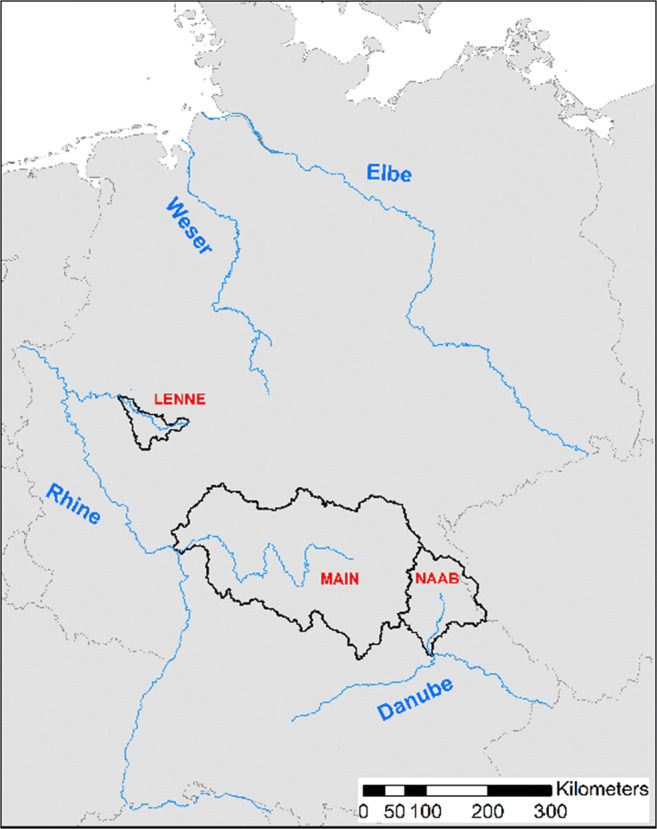
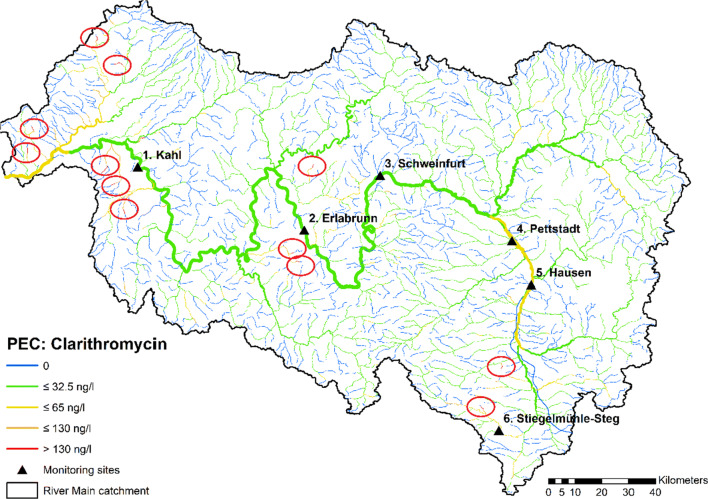
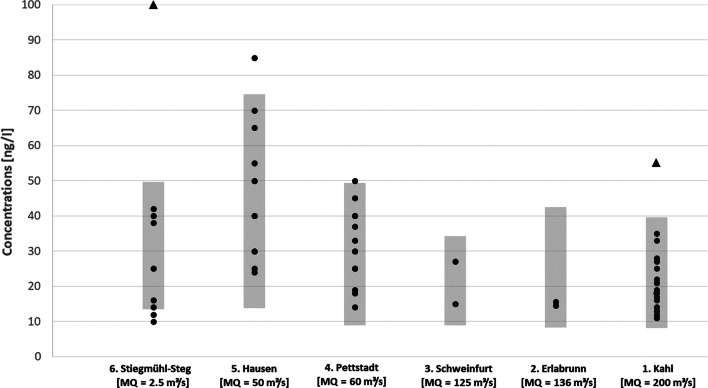
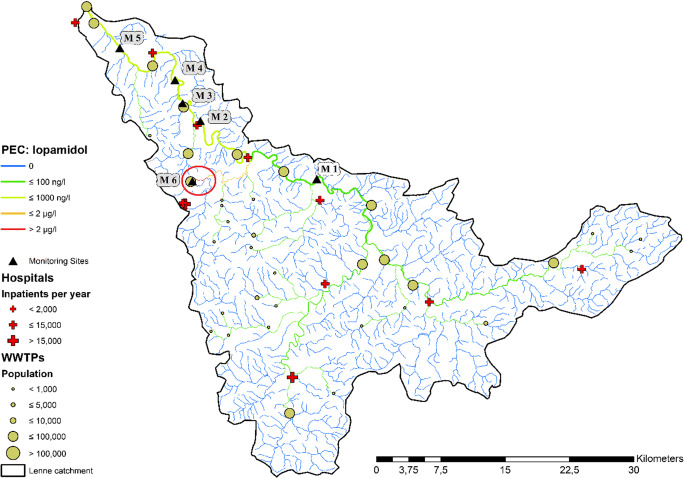
The geo-referenced regional exposure assessment tool for European rivers (GREAT-ER) is designed to support river basin management or the implementation process within the EU Water Framework Directive by predicting spatially resolved exposure concentrations in whole watersheds. The usefulness of the complimentary application of targeted monitoring and GREAT-ER simulations is demonstrated with case studies for three pharmaceuticals in selected German watersheds. Comparison with monitoring data corroborates the capability of the probabilistic model approach to predict the expected range of spatial surface water concentrations. Explicit consideration of local pharmaceutical emissions from hospitals or private doctor's offices (e.g., for X-ray contrast agents) can improve predictions on the local scale without compromising regional exposure assessment. Pharmaceuticals exhibiting low concentrations hardly detectable with established analytical methods (e.g., EE2) can be evaluated with model simulations. Management scenarios allow for a priori assessment of risk reduction measures. In combination with targeted monitoring approaches, the GREAT-ER model can serve as valuable support tool for exposure and risk assessment of pharmaceuticals in whole watersheds.
用于欧洲河流的地理参考区域暴露评估工具(GREAT-ER)旨在通过预测整个流域的空间分辨暴露浓度,支持流域管理或欧盟水框架指令的实施过程。通过对选定德国流域的三种药物进行案例研究,展示了目标监测和 GREAT-ER 模拟的互补应用的有用性。与监测数据的比较证实了概率模型方法预测空间地表水浓度预期范围的能力。明确考虑从医院或私人医生办公室(例如,用于 X 射线造影剂)排放的局部药物可以在不影响区域暴露评估的情况下提高局部预测。可以使用模型模拟评估用现有分析方法难以检测到的低浓度药物(例如,EE2)。管理方案允许对减少风险措施进行事先评估。与目标监测方法相结合,GREAT-ER 模型可以作为整个流域药物暴露和风险评估的有价值的支持工具。