Division of Pediatric Gastroenterology, Hepatology, and Nutrition, Department of Pediatrics, Ann and Robert H Lurie Children's Hospital of Chicago, Chicago, Illinois, United States of America.
Division of Rheumatology, Department of Medicine, Northwestern University, Chicago, Illinois, United States of America.
PLoS One. 2021 Jan 7;16(1):e0244743. doi: 10.1371/journal.pone.0244743. eCollection 2021.
BACKGROUND & AIMS: Limited understanding of the role for specific macrophage subsets in the pathogenesis of cholestatic liver injury is a barrier to advancing medical therapy. Macrophages have previously been implicated in both the mal-adaptive and protective responses in obstructive cholestasis. Recently two macrophage subsets were identified in non-diseased human liver; however, no studies to date fully define the heterogeneous macrophage subsets during the pathogenesis of cholestasis. Here, we aim to further characterize the transcriptional profile of macrophages in pediatric cholestatic liver disease.
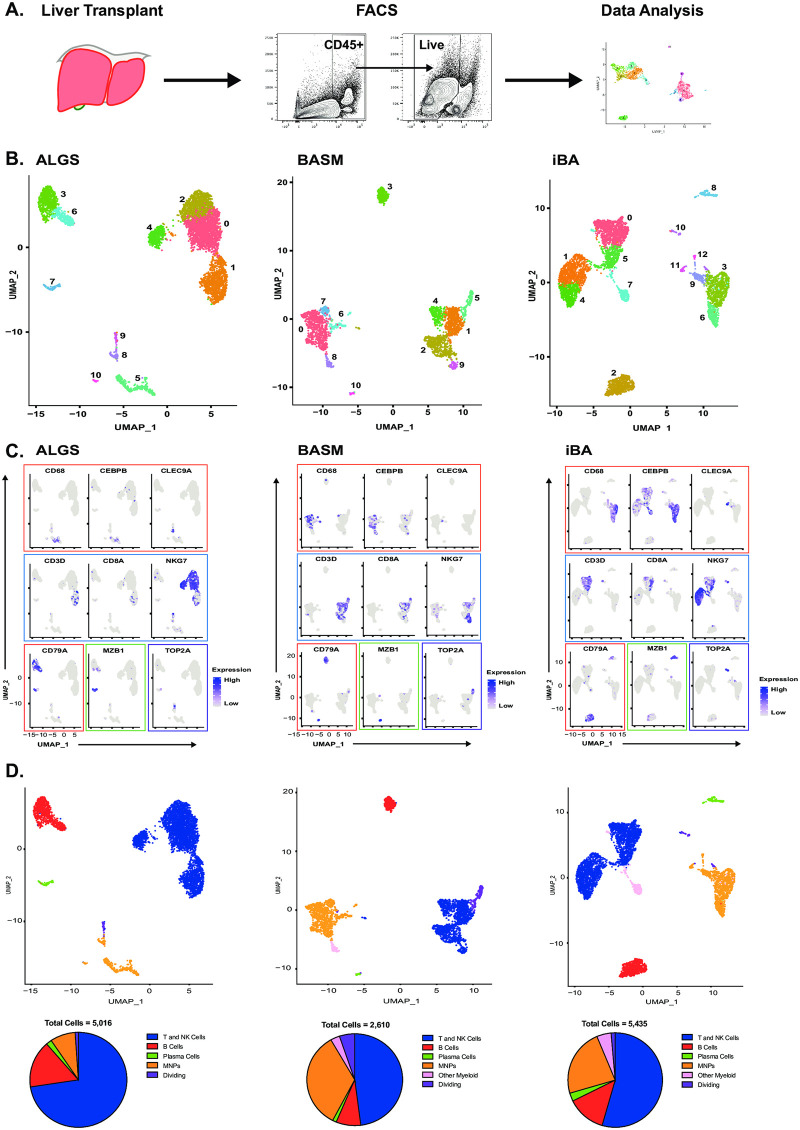
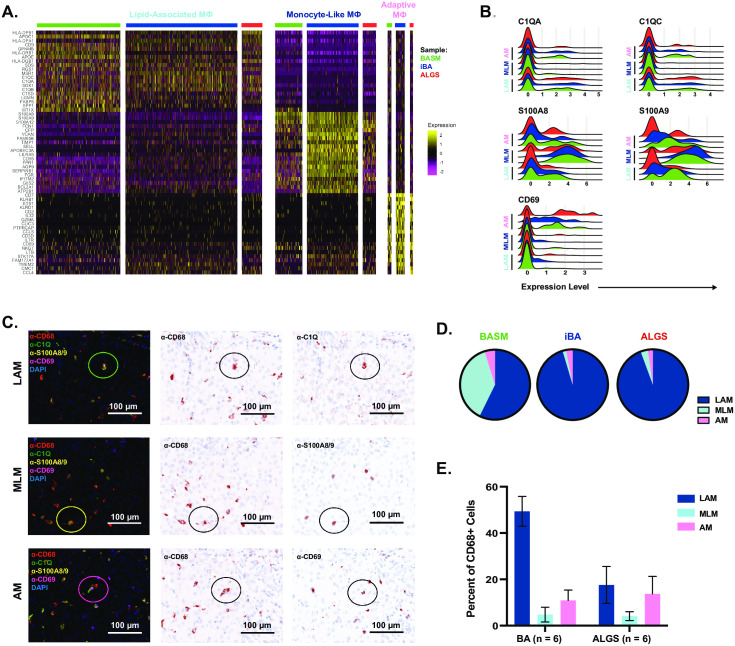
We isolated live hepatic immune cells from patients with biliary atresia (BA), Alagille syndrome (ALGS), and non-cholestatic pediatric liver by fluorescence activated cell sorting. Through single-cell RNA sequencing analysis and immunofluorescence, we characterized cholestatic macrophages. We next compared the transcriptional profile of pediatric cholestatic and non-cholestatic macrophage populations to previously published data on normal adult hepatic macrophages.
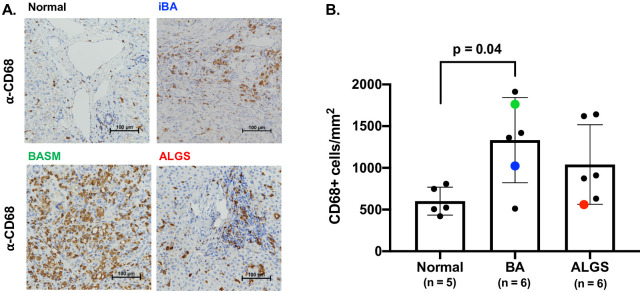
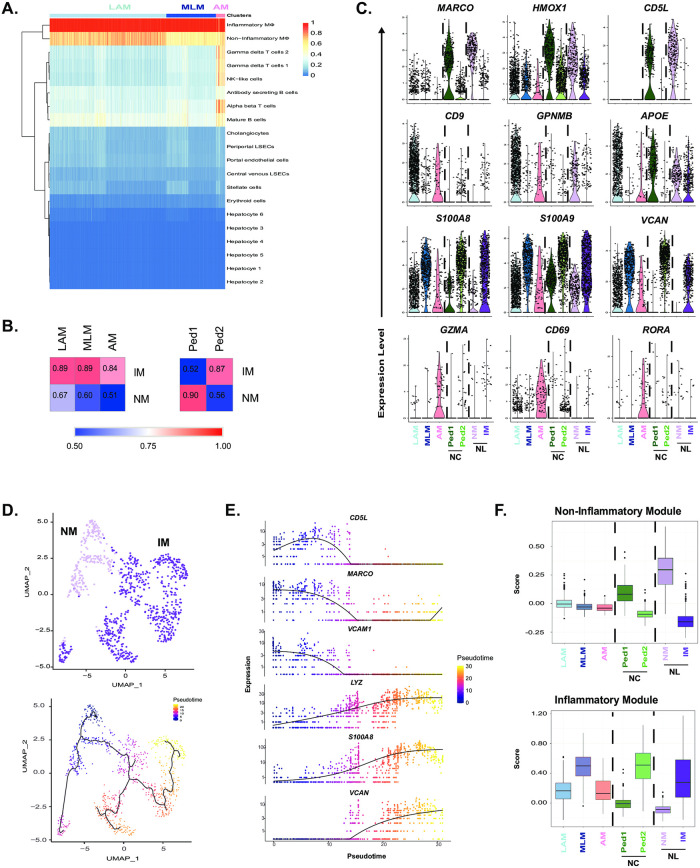
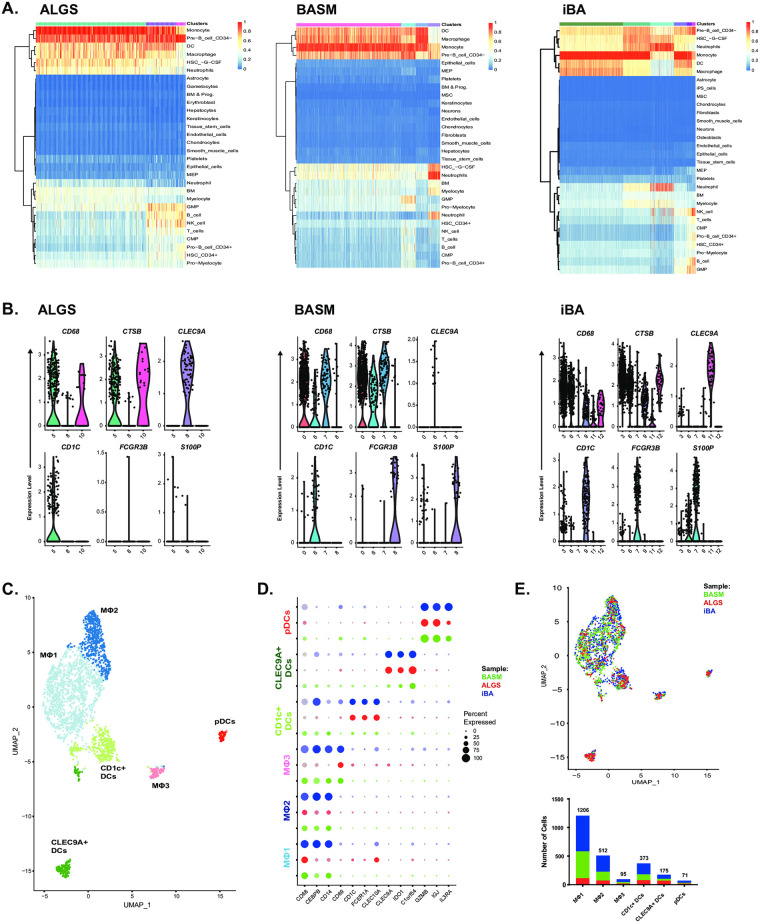
We identified 3 distinct macrophage populations across cholestatic liver samples and annotated them as lipid-associated macrophages, monocyte-like macrophages, and adaptive macrophages based on their transcriptional profile. Immunofluorescence of liver tissue using markers for each subset confirmed their presence across BA (n = 6) and ALGS (n = 6) patients. Cholestatic macrophages demonstrated reduced expression of immune regulatory genes as compared to normal hepatic macrophages and were distinct from macrophage populations defined in either healthy adult or pediatric non-cholestatic liver.
We are the first to perform single-cell RNA sequencing on human pediatric cholestatic liver and identified three macrophage subsets with distinct transcriptional signatures from healthy liver macrophages. Further analyses will identify similarities and differences in these macrophage sub-populations across etiologies of cholestatic liver disease. Taken together, these findings may allow for future development of targeted therapeutic strategies to reprogram macrophages to an immune regulatory phenotype and reduce cholestatic liver injury.
对特定巨噬细胞亚群在胆汁淤积性肝损伤发病机制中的作用认识有限,这是推进医学治疗的障碍。巨噬细胞先前被认为在阻塞性胆汁淤积的适应性和保护性反应中都发挥作用。最近在非病变的人类肝脏中鉴定出两种巨噬细胞亚群;然而,迄今为止尚无研究充分定义在胆汁淤积发病机制过程中的异质性巨噬细胞亚群。在此,我们旨在进一步描述小儿胆汁淤积性肝病中巨噬细胞的转录特征。
我们通过荧光激活细胞分选从胆道闭锁(BA)、Alagille 综合征(ALGS)和非胆汁淤积性小儿肝脏患者中分离活的肝免疫细胞。通过单细胞 RNA 测序分析和免疫荧光,我们对胆汁淤积性巨噬细胞进行了特征描述。然后,我们将小儿胆汁淤积性和非胆汁淤积性巨噬细胞群体的转录谱与之前发表的正常成人肝巨噬细胞的数据进行了比较。
我们在胆汁淤积性肝样本中鉴定出 3 种不同的巨噬细胞群体,并根据其转录谱将其标记为脂质相关巨噬细胞、单核细胞样巨噬细胞和适应性巨噬细胞。使用每个亚群的标志物对肝组织进行免疫荧光染色,证实了它们在 BA(n=6)和 ALGS(n=6)患者中的存在。与正常肝巨噬细胞相比,胆汁淤积性巨噬细胞表现出免疫调节基因表达减少,并且与健康成人或小儿非胆汁淤积性肝脏中定义的巨噬细胞群体不同。
我们首次对人类小儿胆汁淤积性肝脏进行了单细胞 RNA 测序,并鉴定出具有与健康肝巨噬细胞不同转录特征的 3 种巨噬细胞亚群。进一步的分析将确定这些巨噬细胞亚群在各种胆汁淤积性肝病病因中的相似性和差异性。总之,这些发现可能为未来开发靶向治疗策略以重新编程巨噬细胞为免疫调节表型并减少胆汁淤积性肝损伤提供依据。