Mooses Kerli, Vihalemm Triin, Uibu Marko, Mägi Katrin, Korp Leene, Kalma Maarja, Mäestu Evelin, Kull Merike
Institute of Sport Sciences and Physiotherapy, Faculty of Medicine, University of Tartu, Ujula 4, 51008, Tartu, Estonia.
Institute of Computer Science, Faculty of Science and Technology, University of Tartu, Narva mnt 18, 51009, Tartu, Estonia.
BMC Public Health. 2021 Jan 7;21(1):92. doi: 10.1186/s12889-020-10111-x.
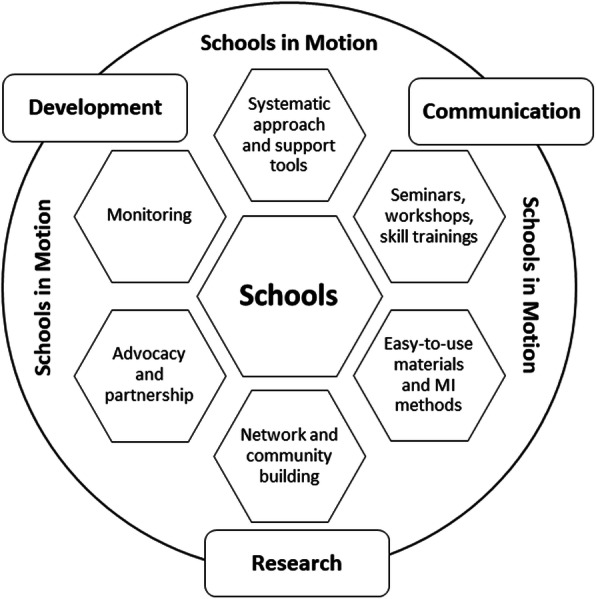
This article focuses on the process of designing the vital, participatory school-based intervention program aiming to increase the physical activity in schools. The program analyzed is Estonian nationwide comprehensive physical activity program Schools in Motion (SiM) that recently received European Commission's #BeActive Education Award. The program has a good performance in terms of willingness of schools to participate in co-creation of program development, the high interest to join the program and zero dropouts, and strong partnership with ministries which enables to actively participate in policy making. Authors analyze the key elements of the planning, piloting, implementation, and scaling phases of the SiM program and share their lessons learnt in co-working with schools. The difficulties faced during the development process, the strengths and challenges associated with an interdisciplinary approach, and involvement of schools as experts have been addressed.
本文重点关注旨在增加学校体育活动的重要的、参与性校本干预项目的设计过程。所分析的项目是爱沙尼亚全国性综合体育活动项目“运动中的学校”(SiM),该项目最近获得了欧盟委员会的“积极教育奖”。该项目在学校参与项目开发共同创造的意愿、参与项目的高兴趣度和零辍学率方面表现良好,并且与各部委建立了强有力的伙伴关系,这使得能够积极参与政策制定。作者分析了SiM项目规划、试点、实施和推广阶段的关键要素,并分享了在与学校合作过程中吸取的经验教训。探讨了开发过程中面临的困难、跨学科方法的优势和挑战,以及学校作为专家的参与情况。