Hyroššová Petra, Aragó Marc, Moreno-Felici Juan, Fu Xiarong, Mendez-Lucas Andrés, García-Rovés Pablo M, Burgess Shawn, Figueras Agnès, Viñals Francesc, Perales Jose C
Department of Physiological Sciences, School of Medicine, University of Barcelona, Feixa Llarga s/n, 08907, L'Hospitalet del Llobregat, Spain.
Center for Human Nutrition and Department of Pharmacology, University of Texas, Dallas, 75390, USA.
Cancer Metab. 2021 Jan 7;9(1):1. doi: 10.1186/s40170-020-00236-3.
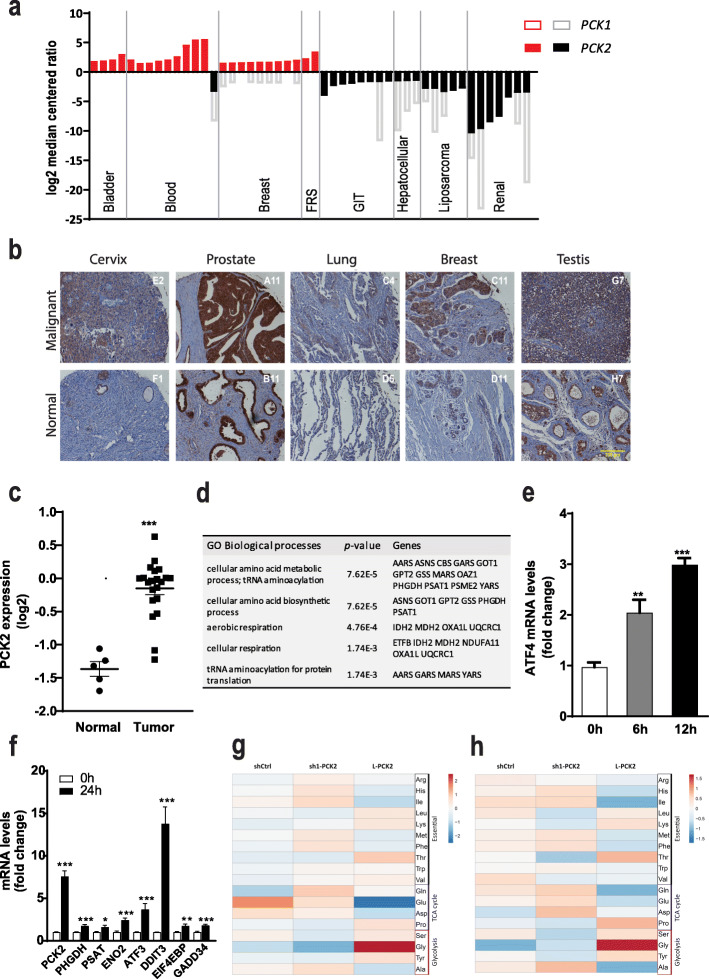
Mitochondrial phosphoenolpyruvate carboxykinase (PEPCK-M; PCK2) is expressed in all cancer types examined and in neuroprogenitor cells. The gene is upregulated by amino acid limitation and ER-stress in an ATF4-dependent manner, and its activity modulates the PEP/Ca signaling axis, providing clear arguments for a functional relationship with metabolic adaptations for cell survival. Despite its potential relevance to cancer metabolism, the mechanisms responsible for its pro-survival activity have not been completely elucidated.
[U-C]glutamine and [U-C]glucose labeling of glycolytic and TCA cycle intermediates and their anabolic end-products was evaluated quantitatively using LC/MS and GC/MS in conditions of abundant glucose and glucose limitation in loss-of-function (shRNA) and gain-of-function (lentiviral constitutive overexpression) HeLa cervix carcinoma cell models. Cell viability was assessed in conjunction with various glucose concentrations and in xenografts in vivo.
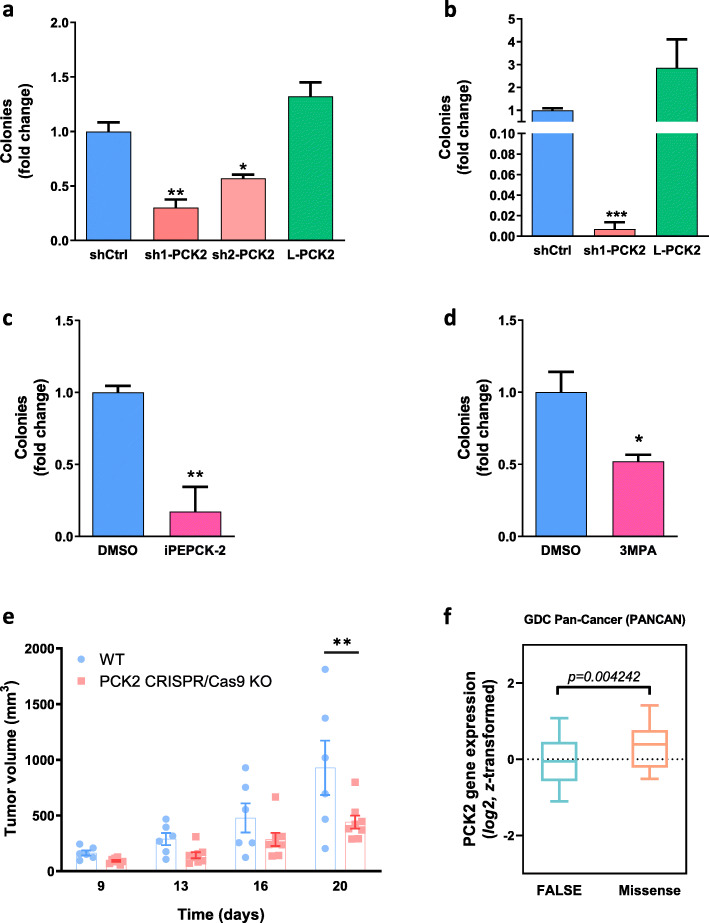
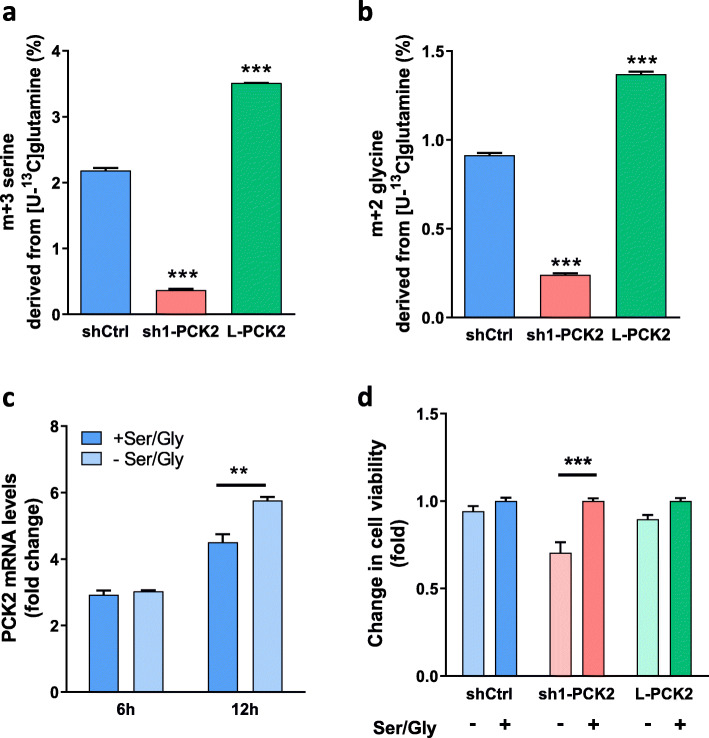
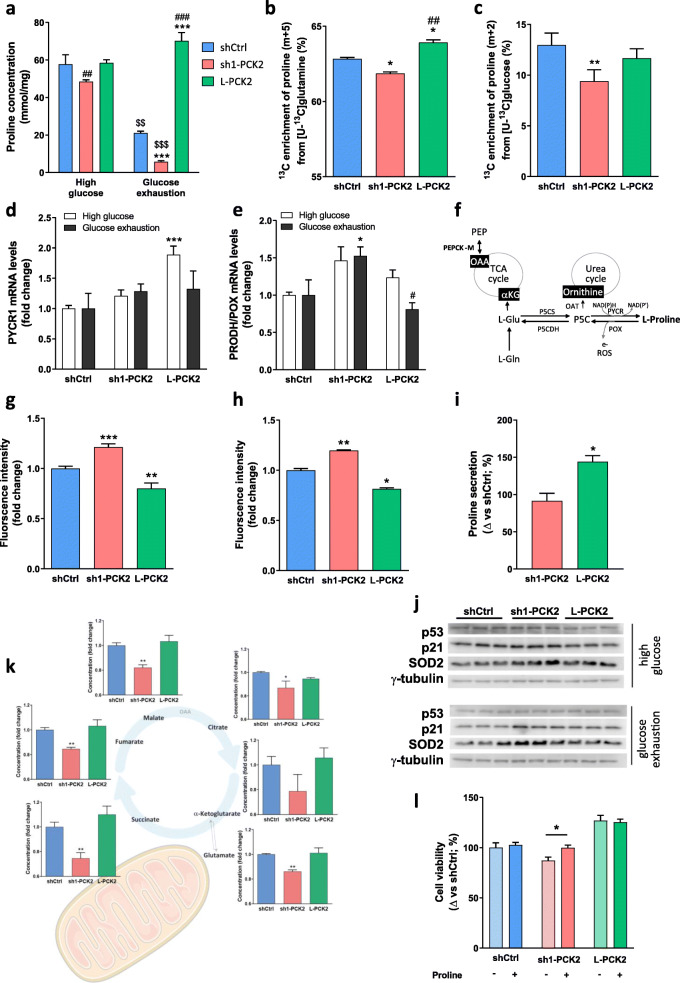
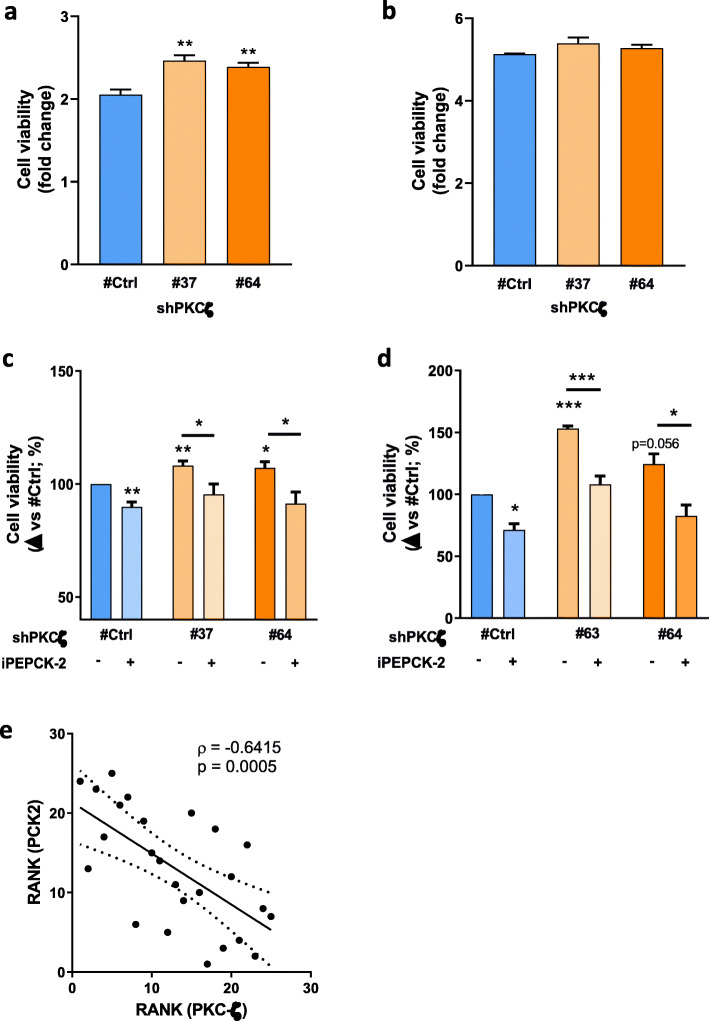
PEPCK-M levels linearly correlated with [U-C]glutamine label abundance in most glycolytic and TCA cycle intermediate pools under nutritional stress. In particular, serine, glycine, and proline metabolism, and the anabolic potential of the cell, were sensitive to PEPCK-M activity. Therefore, cell viability defects could be rescued by supplementing with an excess of those amino acids. PEPCK-M silenced or inhibited cells in the presence of abundant glucose showed limited growth secondary to TCA cycle blockade and increased ROS. In limiting glucose conditions, downregulation of PKC-ζ tumor suppressor has been shown to enhance survival. Consistently, HeLa cells also sustained a survival advantage when PKC-ζ tumor suppressor was downregulated using shRNA, but this advantage was abolished in the absence of PEPCK-M, as its inhibition restores cell growth to control levels. The relationship between these two pathways is also highlighted by the anti-correlation observed between PEPCK-M and PKC-ζ protein levels in all clones tested, suggesting co-regulation in the absence of glucose. Finally, PEPCK-M loss negatively impacted on anchorage-independent colony formation and xenograft growth in vivo.
All in all, our data suggest that PEPCK-M might participate in the mechanisms to regulate proteostasis in the anabolic and stalling phases of tumor growth. We provide molecular clues into the clinical relevance of PEPCK-M as a mechanism of evasion of cancer cells in conditions of nutrient stress.
线粒体磷酸烯醇式丙酮酸羧激酶(PEPCK-M;PCK2)在所有检测的癌症类型以及神经祖细胞中均有表达。该基因在氨基酸限制和内质网应激条件下以ATF4依赖的方式上调,其活性调节磷酸烯醇式丙酮酸/钙信号轴,为其与细胞存活的代谢适应功能关系提供了明确依据。尽管其与癌症代谢潜在相关,但其促存活活性的机制尚未完全阐明。
在功能缺失(shRNA)和功能获得(慢病毒组成型过表达)的宫颈癌HeLa细胞模型中,利用液相色谱/质谱(LC/MS)和气相色谱/质谱(GC/MS)在葡萄糖丰富和葡萄糖限制条件下,对糖酵解和三羧酸循环中间体及其合成代谢终产物的[U-C]谷氨酰胺和[U-C]葡萄糖标记进行定量评估。结合不同葡萄糖浓度和体内异种移植评估细胞活力。
在营养应激下,大多数糖酵解和三羧酸循环中间池中的PEPCK-M水平与[U-C]谷氨酰胺标记丰度呈线性相关。特别是,丝氨酸、甘氨酸和脯氨酸代谢以及细胞的合成代谢潜力对PEPCK-M活性敏感。因此,补充过量的这些氨基酸可以挽救细胞活力缺陷。在葡萄糖丰富的情况下,PEPCK-M沉默或抑制的细胞由于三羧酸循环阻滞和活性氧增加而生长受限。在葡萄糖限制条件下,蛋白激酶C-ζ肿瘤抑制因子的下调已被证明可提高存活率。同样,当使用shRNA下调蛋白激酶C-ζ肿瘤抑制因子时,HeLa细胞也具有存活优势,但在没有PEPCK-M的情况下这种优势消失,因为其抑制将细胞生长恢复到对照水平。在所有测试克隆中观察到的PEPCK-M与蛋白激酶C-ζ蛋白水平之间的负相关也突出了这两条途径之间的关系,表明在没有葡萄糖的情况下存在共同调节。最后,PEPCK-M的缺失对体内非锚定依赖性集落形成和异种移植生长产生负面影响。
总而言之,我们的数据表明PEPCK-M可能参与肿瘤生长的合成代谢和停滞阶段调节蛋白质稳态的机制。我们提供了分子线索,揭示了PEPCK-M作为营养应激条件下癌细胞逃避机制的临床相关性。