
应用以人为本的设计以最大化肯尼亚移动技术监管的可接受性、可行性和可用性:一项混合方法试点研究方案
Applying human-centered design to maximize acceptability, feasibility, and usability of mobile technology supervision in Kenya: a mixed methods pilot study protocol.
作者信息
Triplett Noah S, Munson Sean, Mbwayo Anne, Mutavi Teresia, Weiner Bryan J, Collins Pamela, Amanya Cyrilla, Dorsey Shannon
机构信息
Department of Psychology, University of Washington, Guthrie Hall 119A, Box 351525, Seattle, WA, 98195, USA.
Department of Human Centered Design & Engineering, University of Washington, 428 Sieg Hall, Box 352315, Seattle, WA, 98195, USA.
出版信息
Implement Sci Commun. 2021 Jan 7;2(1):2. doi: 10.1186/s43058-020-00102-9.
BACKGROUND
Although research continues to support task-shifting as an effective model of delivering evidence-based practices (EBPs), little scholarship has focused how to scale up and sustain task-shifting in low- and middle-income countries, including how to sustainably supervise lay counselors. Ongoing supervision is critical to ensure EBPs are delivered with fidelity; however, the resources and expertise required to provide ongoing supervision may limit the potential to scale up and sustain task shifting. Opportunities may exist to leverage mobile technology to replace or supplement in-person supervision in low-resource contexts, but contextual variables, such as network connectivity and lay counselor preferences surrounding mobile technology, must be examined and considered when designing and implementing mobile technology supervision.
METHODS
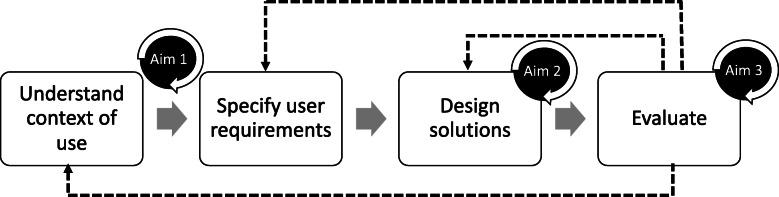
This study builds from an existing randomized trial in Kenya, wherein teachers and community health volunteers have been trained to provide trauma-focused cognitive behavioral therapy as lay counselors. The study will use an iterative and mixed methods approach, with qualitative interviews and a Human-Centered Design (HCD) workshop informing a non-randomized pilot trial. Semi-structured interviews will be conducted with lay counselors and supervisors to understand how mobile technology is currently being used for supervision and determine the barriers and facilitators to mobile technology supervision. Data from these interviews will inform an HCD workshop, where lay counselors and supervisors "re-design" supervision to most effectively leverage mobile technology. Workshop participants will also participate in focus groups to gather perceptions on the use of HCD techniques. The final outcome of the workshop will be a set of refined workflows, which will be tested in a mixed method, nonrandomized pilot with newly trained lay counselors and existing supervisors. The pilot trial will evaluate the acceptability, feasibility, and usability of mobile technology supervision through self-report questionnaires as well as perceptions of effectiveness through qualitative interviews with a subset of lay counselors and all supervisors.
DISCUSSION
This study will provide a launching point for future research on supervision and methods to engage stakeholders to design and tailor interventions and implementation supports to fit low-resourced contexts.
TRIAL REGISTRATION
The parent trial from which this study builds was registered on ClinicalTrials.gov on August 9, 2017 ( NCT03243396 ).
背景
尽管研究持续支持任务转移作为提供循证实践(EBPs)的有效模式,但很少有学术研究关注如何在低收入和中等收入国家扩大并维持任务转移,包括如何可持续地监督非专业咨询师。持续监督对于确保循证实践的忠实实施至关重要;然而,提供持续监督所需的资源和专业知识可能会限制扩大和维持任务转移的潜力。在资源匮乏的环境中,可能存在利用移动技术来替代或补充面对面监督的机会,但在设计和实施移动技术监督时,必须审视和考虑诸如网络连接以及非专业咨询师对移动技术的偏好等背景变量。
方法
本研究基于肯尼亚现有的一项随机试验展开,在该试验中,教师和社区卫生志愿者已接受培训,作为非专业咨询师提供以创伤为重点的认知行为疗法。该研究将采用迭代式混合方法,通过定性访谈和以人为中心的设计(HCD)研讨会为一项非随机试点试验提供信息。将与非专业咨询师和监督员进行半结构化访谈,以了解移动技术目前在监督中的使用情况,并确定移动技术监督的障碍和促进因素。这些访谈的数据将为一个HCD研讨会提供信息,在该研讨会上,非专业咨询师和监督员将“重新设计”监督方式,以最有效地利用移动技术。研讨会参与者还将参加焦点小组,以收集对使用HCD技术的看法。研讨会的最终成果将是一套完善的工作流程,这些流程将在一项混合方法、非随机的试点试验中进行测试,该试验的对象是新培训的非专业咨询师和现有的监督员。试点试验将通过自我报告问卷评估移动技术监督的可接受性、可行性和可用性,并通过对一部分非专业咨询师和所有监督员进行定性访谈来评估其有效性。
讨论
本研究将为未来关于监督以及让利益相关者参与设计和定制干预措施及实施支持以适应资源匮乏环境的方法的研究提供一个起点。
试验注册
本研究基于的母试验于2017年8月9日在ClinicalTrials.gov上注册(NCT03243396)。


 Zotero 插件