Türkbay Dursun, Canpolat Fuat Emre, Derme Turan, Altuğ Nahide, Yılmaz Yavuz
Department of Neonatology, Ankara City Hospital, Ankara, Turkey.
Division of Pediatric Cardiology, Department of Pediatrics, Health Sciences University, Faculty of Medicine, Ankara City Hospital, Ankara, Turkey.
Turk Pediatri Ars. 2020 Dec 16;55(4):393-400. doi: 10.14744/TurkPediatriArs.2020.36097. eCollection 2020.
To evaluate the birth prevalence of specifically selected major congenital anomalies and to determine the correlated neonatal and maternal characteristics.
Data were collected retrospectively from hospital-based records of infants who were born at 22 completed weeks of gestation with a birth weight of more than 500 g in Zekai Tahir Burak Gynecology Training and Research Hospital between 2013 and 2018. Abortions, stillbirths, and terminated pregnancies due to fetal anomalies were excluded. Average annual prevalences were calculated for each selected major congenital anomaly.
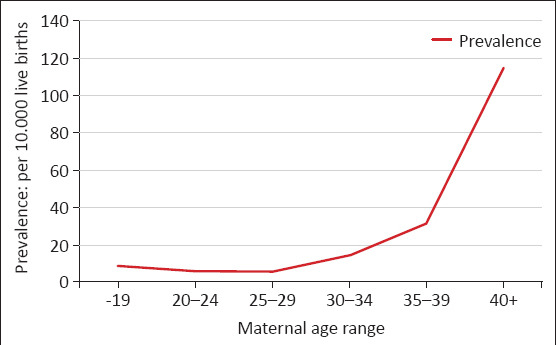
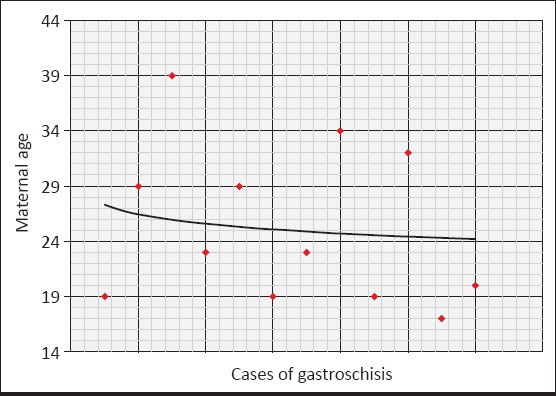
The total prevalence of congenital anomalies was 9.97 per 1000 in 102 379 live birth cohorts. The prevalence of severe congenital heart anomalies (SI-SII) was found as 21.1 per 10 000 live births. Down syndrome and meningomyelocele were the second and third most common anomalies, after congenital heart defects (13.87 and 9.97 per 10 000 live births, respectively). The prevalence of anomalies requiring specific surgery was found as 4.3 per 1000 live births. Congenital heart disease was present in 31.7% of patients who had Down syndrome. Atrioventricular septal defect accounted for 53.3% of congenital heart anomalies detected in Down syndrome. The prevalence of Down syndrome in babies of mothers aged 35 years and older was found as 46.67 per 10 000, which was significantly higher than in the group aged under 35 years (8.24 per 10 000). On the other hand, the prevalence of gastroschisis in babies of mothers aged 19 years and under was found as 5.81 per 10 000, which was higher than in the group aged 20 years and over (0.84 per 10 000).
The actual magnitude of the number of births affected by congenital anomalies in Turkey is unknown. In our study, congenital heart diseases, Down syndrome, and meningomyelocele were found to be the most common congenital anomalies, respectively.
评估特定选择的主要先天性异常的出生患病率,并确定相关的新生儿和母亲特征。
回顾性收集2013年至2018年在泽凯·塔希尔·布拉克妇科培训与研究医院出生、妊娠满22周且出生体重超过500克的婴儿的医院记录数据。排除因胎儿异常导致的流产、死产和终止妊娠。计算每种选定主要先天性异常的年均患病率。
在102379例活产队列中,先天性异常的总患病率为每1000例中有9.97例。严重先天性心脏异常(SI - SII)的患病率为每10000例活产中有21.1例。唐氏综合征和脊髓脊膜膨出分别是先天性心脏缺陷之后第二和第三常见的异常(每10000例活产中分别为13.87例和9.97例)。需要特定手术的异常患病率为每1000例活产中有4.3例。唐氏综合征患者中31.7%患有先天性心脏病。房室间隔缺损占唐氏综合征中检测到的先天性心脏异常的53.3%。35岁及以上母亲所生婴儿中唐氏综合征的患病率为每10000例中有46.67例,显著高于35岁以下组(每10000例中有8.24例)。另一方面,19岁及以下母亲所生婴儿中腹裂的患病率为每10000例中有5.81例,高于20岁及以上组(每10000例中有0.84例)。
土耳其受先天性异常影响的出生数量的实际规模尚不清楚。在我们的研究中,先天性心脏病、唐氏综合征和脊髓脊膜膨出分别是最常见的先天性异常。