Alldredge Jill, Randall Leslie, De Robles Gabriela, Agrawal Anshu, Mercola Dan, Liu Marisa, Randhawa Pavneet, Edwards Robert, McClelland Michael, Rahmatpanah Farah
Department of Obstetrics and Gynecology, University of Colorado, Aurora, CO, United States.
Department of Obstetrics and Gynecology, Virginia Commonwealth University, Richmond, VA, United States.
Front Oncol. 2020 Dec 22;10:598579. doi: 10.3389/fonc.2020.598579. eCollection 2020.
Ovarian and uterine clear cell carcinomas (CCCs) are rare but associated with poor prognosis. This study explored RNA transcription patterns characteristic of these tumors.
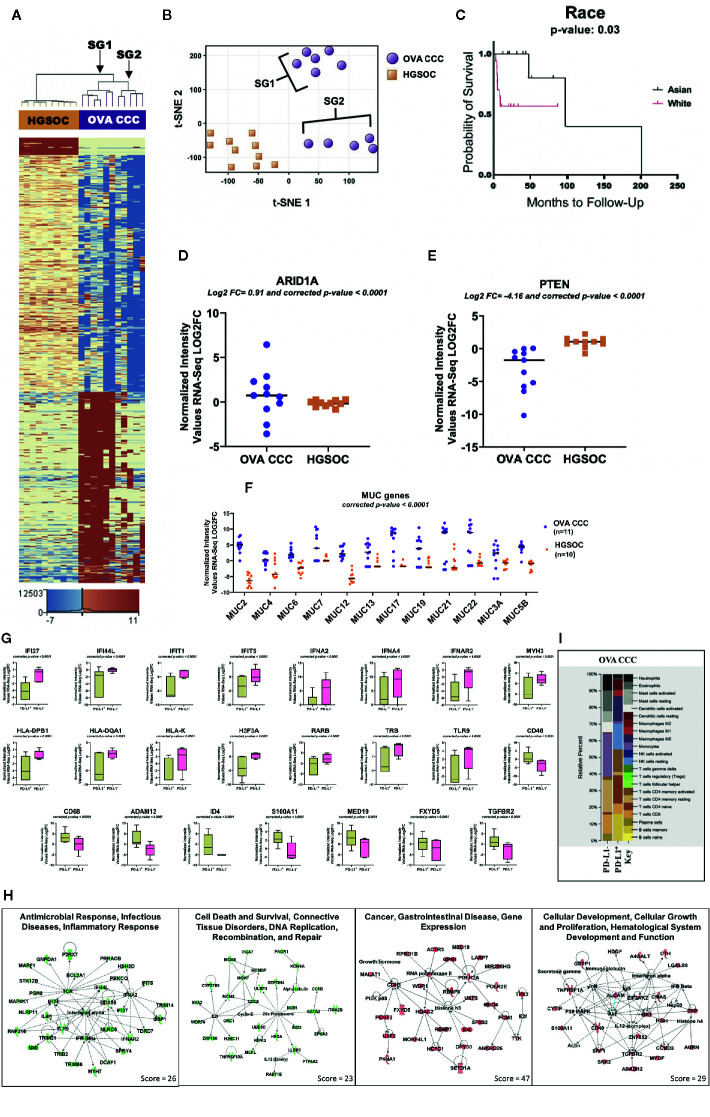
RNA sequencing (RNA-seq) of 11 ovarian CCCs and five uterine CCCs was performed and compared to publicly available data from high grade serous ovarian cancers (HGSOCs). Ingenuity Pathway Analyses were performed. CIBERSORT analyses estimated relative fractions of 22 immune cell types in each RNA-seq sample. Sequencing data was correlated with PD-L1 immunohistochemical expression.
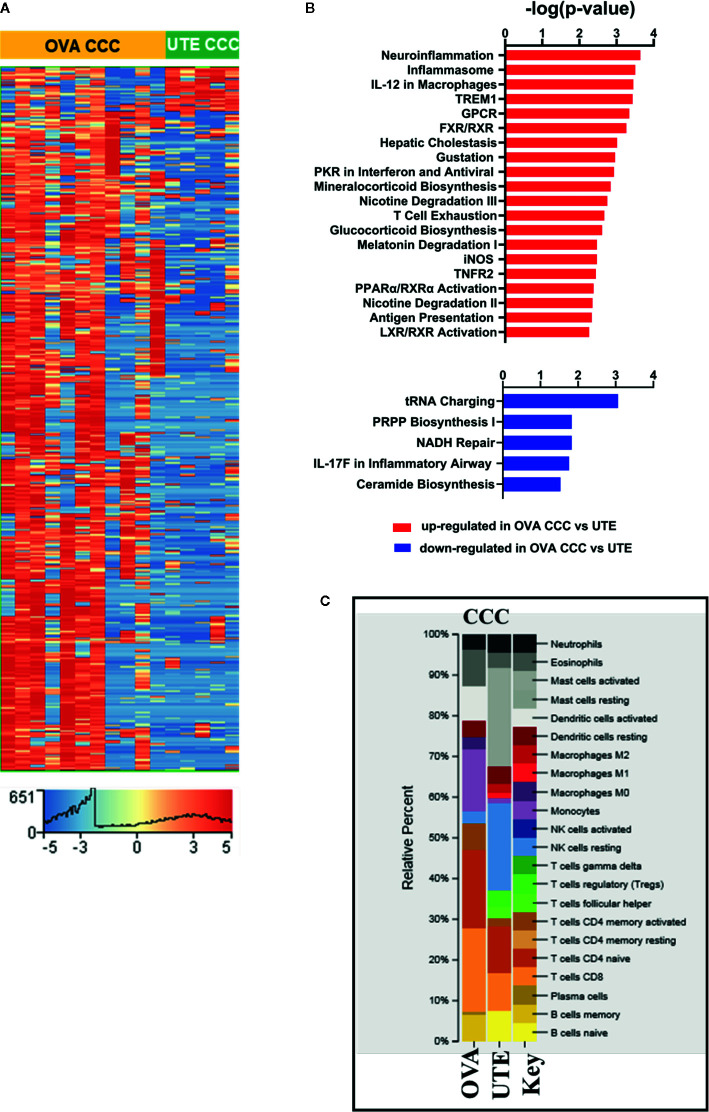
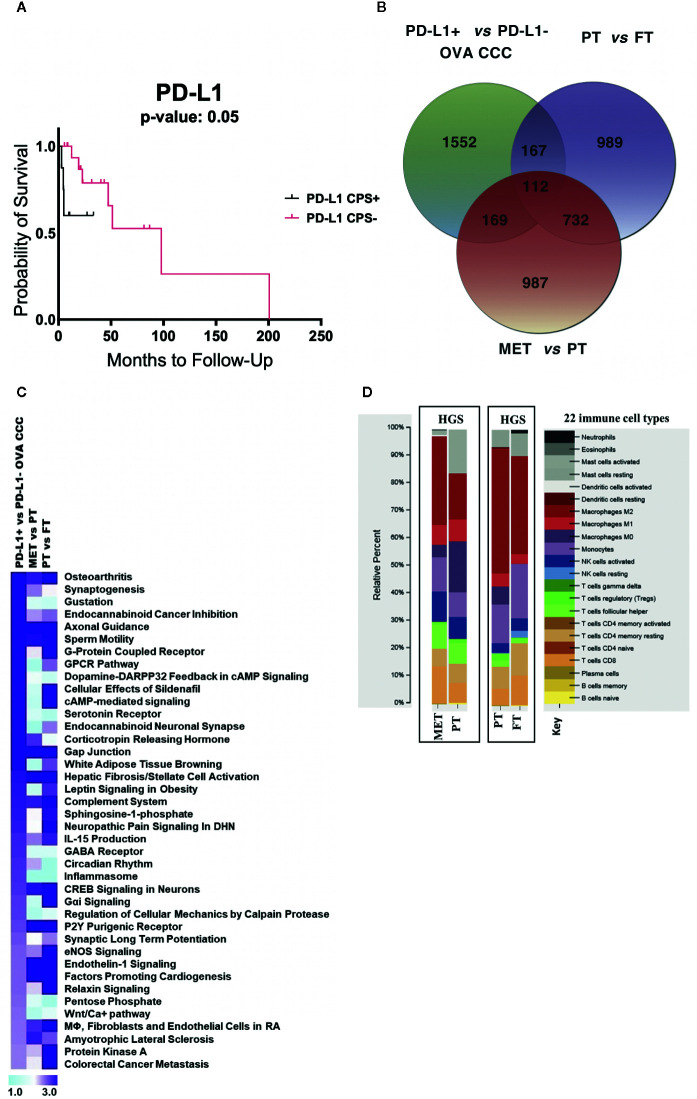
RNA-seq revealed 1,613 downregulated and 1,212 upregulated genes (corrected p < 0.05, |FC |≥10) in ovarian CCC HGSOC. Two subgroups were identified in the ovarian CCC, characterized by ethnicity and expression differences in . There were 3,252 differentially expressed genes between PD-L1+/- ovarian CCCs, revealing immune response, cell death, and DNA repair networks, negatively correlated with PD-L1 expression, whereas cellular proliferation networks positively correlated with expression. In clear cell ovarian clear cell uterine cancer, 1,607 genes were significantly upregulated, and 109 genes were significantly downregulated (corrected p < 0.05, |FC|≥10). Comparative pathway analysis of late and early stage ovarian CCCs revealed unique metabolic and pathways, whereas uterine CCCs had unique Wnt/Ca+, estrogen receptor, and CCR5 signaling. CIBERSORT analysis revealed that activated mast cells and regulatory T cell populations were relatively enriched in uterine CCCs. The PD-L1+ ovarian CCCs had enriched resting NK cells and memory B cell populations, while PD-L1- had enriched CD8 T-cells, monocytes, eosinophils, and activated dendritic cells.
Unique transcriptional expression profiles distinguish clear cell uterine and ovarian cancers from each other and from other more common histologic subtypes. These insights may aid in devising novel therapeutics.
卵巢和子宫透明细胞癌(CCC)较为罕见,但预后较差。本研究探索了这些肿瘤的RNA转录模式。
对11例卵巢CCC和5例子宫CCC进行RNA测序(RNA-seq),并与高级别浆液性卵巢癌(HGSOC)的公开可用数据进行比较。进行了 Ingenuity 通路分析。CIBERSORT分析估计了每个RNA-seq样本中22种免疫细胞类型的相对比例。测序数据与PD-L1免疫组化表达相关。
RNA-seq显示卵巢CCC与HGSOC相比,有1613个基因下调,1212个基因上调(校正p<0.05,|FC|≥10)。在卵巢CCC中鉴定出两个亚组,其特征在于种族和某些基因的表达差异。PD-L1阳性/阴性卵巢CCC之间有3252个差异表达基因,揭示了免疫反应、细胞死亡和DNA修复网络,与PD-L1表达呈负相关,而细胞增殖网络与表达呈正相关。在透明细胞卵巢癌和透明细胞子宫癌中,1607个基因显著上调,109个基因显著下调(校正p<0.05,|FC|≥10)。晚期和早期卵巢CCC的比较通路分析揭示了独特的代谢和其他通路,而子宫CCC具有独特的Wnt/Ca+、雌激素受体和CCR5信号通路。CIBERSORT分析显示,活化的肥大细胞和调节性T细胞群体在子宫CCC中相对富集。PD-L1阳性卵巢CCC中静息NK细胞和记忆B细胞群体富集,而PD-L1阴性则有富集的CD8 T细胞、单核细胞, 嗜酸性粒细胞和活化的树突状细胞。
独特的转录表达谱将透明细胞子宫癌和卵巢癌彼此区分开来,并与其他更常见的组织学亚型区分开来。这些见解可能有助于设计新的治疗方法。