Department of General Surgery, The Second Affiliated Hospital of Harbin Medical University, Harbin, Heilongjiang 150001, P.R. China.
Oncol Rep. 2021 Jan;45(1):202-216. doi: 10.3892/or.2020.7825. Epub 2020 Oct 26.
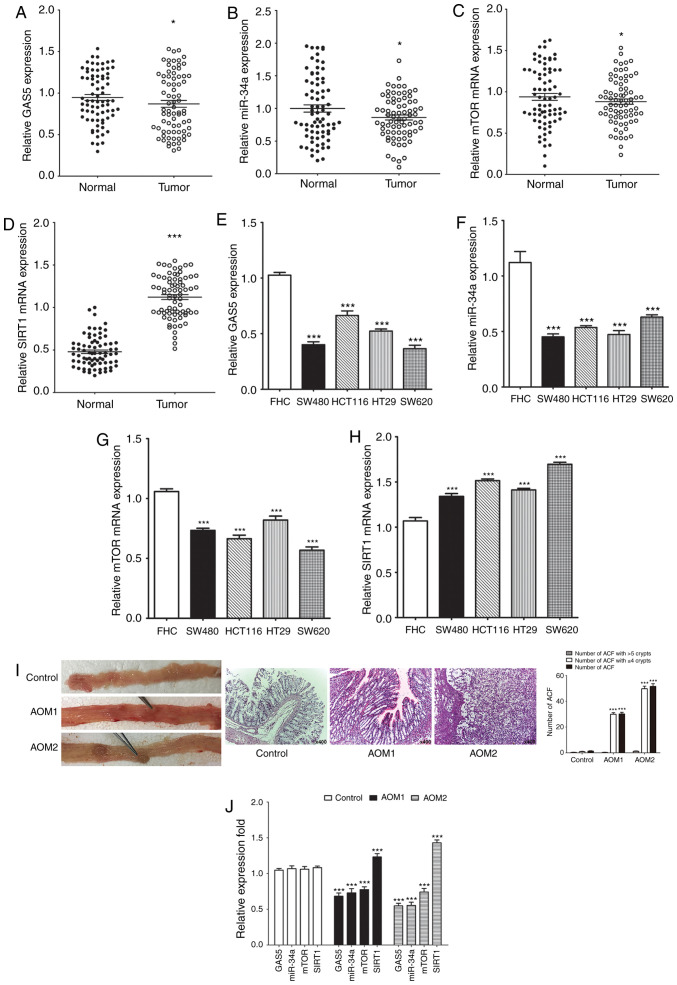
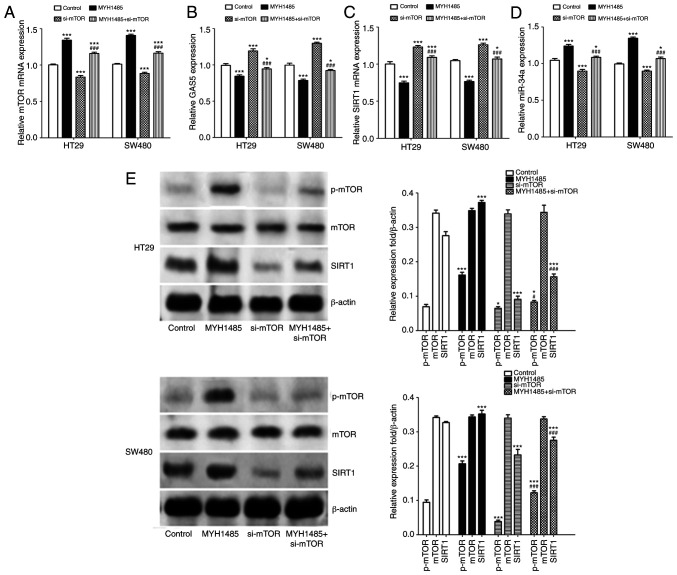
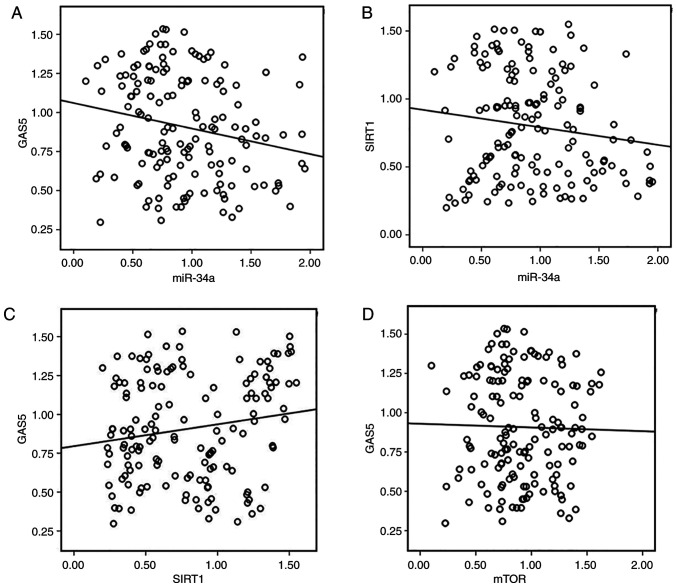
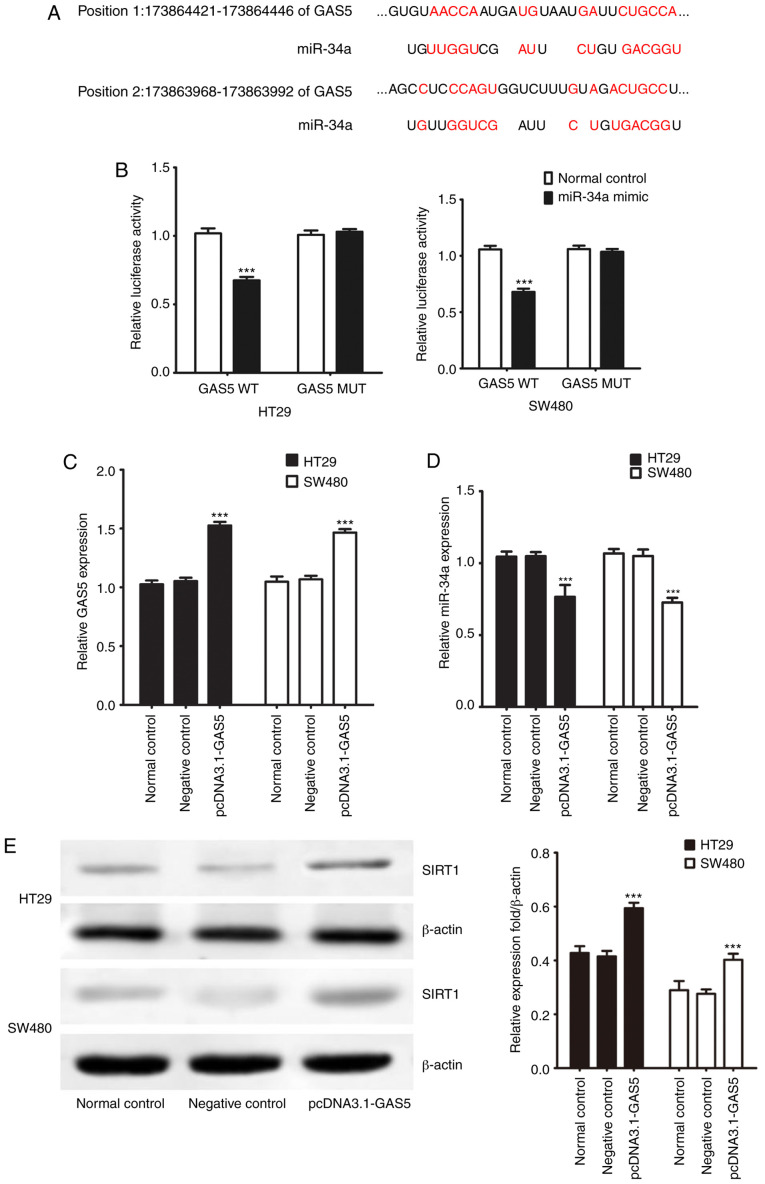
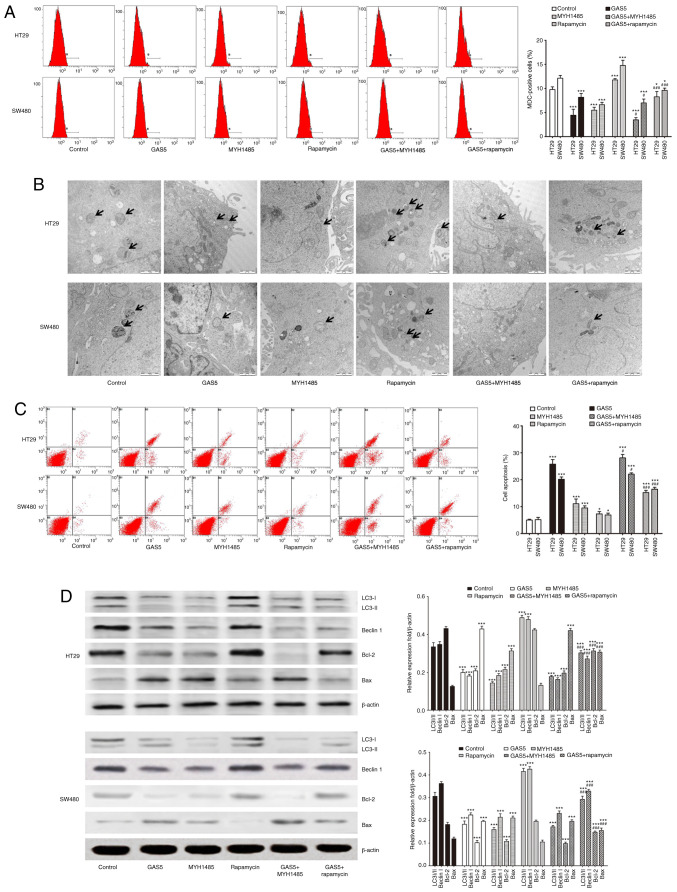
Long non‑coding RNA growth arrest specific 5 (GAS5) exerts inhibitory effects through the modulation of several target microRNAs (miRs) in cancer. However, its potential roles and underlying relationship during colorectal cancer (CRC) progression are unclear. Therefore, we explored the role of the negative feedback loop formed by the GAS5/miR‑34a axis and mammalian target of rapamycin/sirtuin 1 (mTOR/SIRT1) pathway on macroautophagy and apoptosis in CRC. Expression of GAS5, miR‑34a, SIRT1 and mTOR in CRC patients and cell lines was detected by quantitative reverse transcription polymerase chain reaction. Online bioinformatic analysis was used to predict the downstream miRs of GAS5. Luciferase assay and western blotting were performed to demonstrate miR‑34a as a downstream target gene of GAS5 in CRC cells. The effects of the GAS5/miR‑34a axis on apoptosis, macroautophagy, and the mTOR/SIRT1 pathway were assessed by flow cytometry, transmission electron microscopy and western blotting, respectively. Our results suggested that GAS5 was downregulated and acted as a molecular sponge of miR‑34a during CRC progression. miR‑34a participated in regulating GAS5‑suppressed CRC cell macroautophagy and induced apoptosis through the mTOR/SIRT1 pathway. GAS5‑mediated macroautophagy was maintained in an equilibrium state that might have a protective effect on CRC cell apoptosis. The mTOR signaling pathway suppressed GAS5 expression and formed a negative regulation feedback loop with miR‑34a in CRC cells. Our results suggested that the GAS5/miR‑34a/SIRT1/mTOR negative regulatory feedback loop mediated CRC cell macroautophagy, and maintained the cells in an autonomous equilibrium state, but not excessive activation state, which functions as a strong antiapoptotic phenotype during human CRC progression.
长链非编码 RNA 生长停滞特异性 5(GAS5)通过调节癌症中的几种靶微小 RNA(miR)发挥抑制作用。然而,其在结直肠癌(CRC)进展过程中的潜在作用和潜在关系尚不清楚。因此,我们探讨了 GAS5/miR-34a 轴和哺乳动物雷帕霉素靶蛋白/沉默调节蛋白 1(mTOR/SIRT1)途径形成的负反馈环对 CRC 中巨自噬和细胞凋亡的作用。通过实时定量聚合酶链反应检测 CRC 患者和细胞系中 GAS5、miR-34a、SIRT1 和 mTOR 的表达。利用在线生物信息学分析预测 GAS5 的下游 miR。通过荧光素酶测定和 Western blot 证实 miR-34a 是 CRC 细胞中 GAS5 的下游靶基因。通过流式细胞术、透射电子显微镜和 Western blot 分别评估 GAS5/miR-34a 轴对凋亡、巨自噬和 mTOR/SIRT1 途径的影响。结果表明,在 CRC 进展过程中,GAS5 下调并作为 miR-34a 的分子海绵。miR-34a 通过 mTOR/SIRT1 途径参与调节 GAS5 抑制的 CRC 细胞巨自噬并诱导细胞凋亡。GAS5 介导的巨自噬在一个平衡状态下得到维持,这可能对 CRC 细胞凋亡具有保护作用。mTOR 信号通路抑制 GAS5 表达并与 CRC 细胞中的 miR-34a 形成负调节反馈环。我们的结果表明,GAS5/miR-34a/SIRT1/mTOR 负调节反馈环介导 CRC 细胞巨自噬,并维持细胞处于自主平衡状态,而不是过度激活状态,在人类 CRC 进展过程中表现出强烈的抗凋亡表型。