Department of Pathology, Stanford University School of Medicine, Stanford, CA 94304, United States.
Department of Pathology, Stanford University School of Medicine, Stanford, CA 94304, United States; Institute for Stem Cell Biology and Regenerative Medicine, Stanford University School of Medicine, Stanford, CA 94304, United States.
Curr Opin Genet Dev. 2021 Feb;66:63-69. doi: 10.1016/j.gde.2020.12.004. Epub 2021 Jan 7.
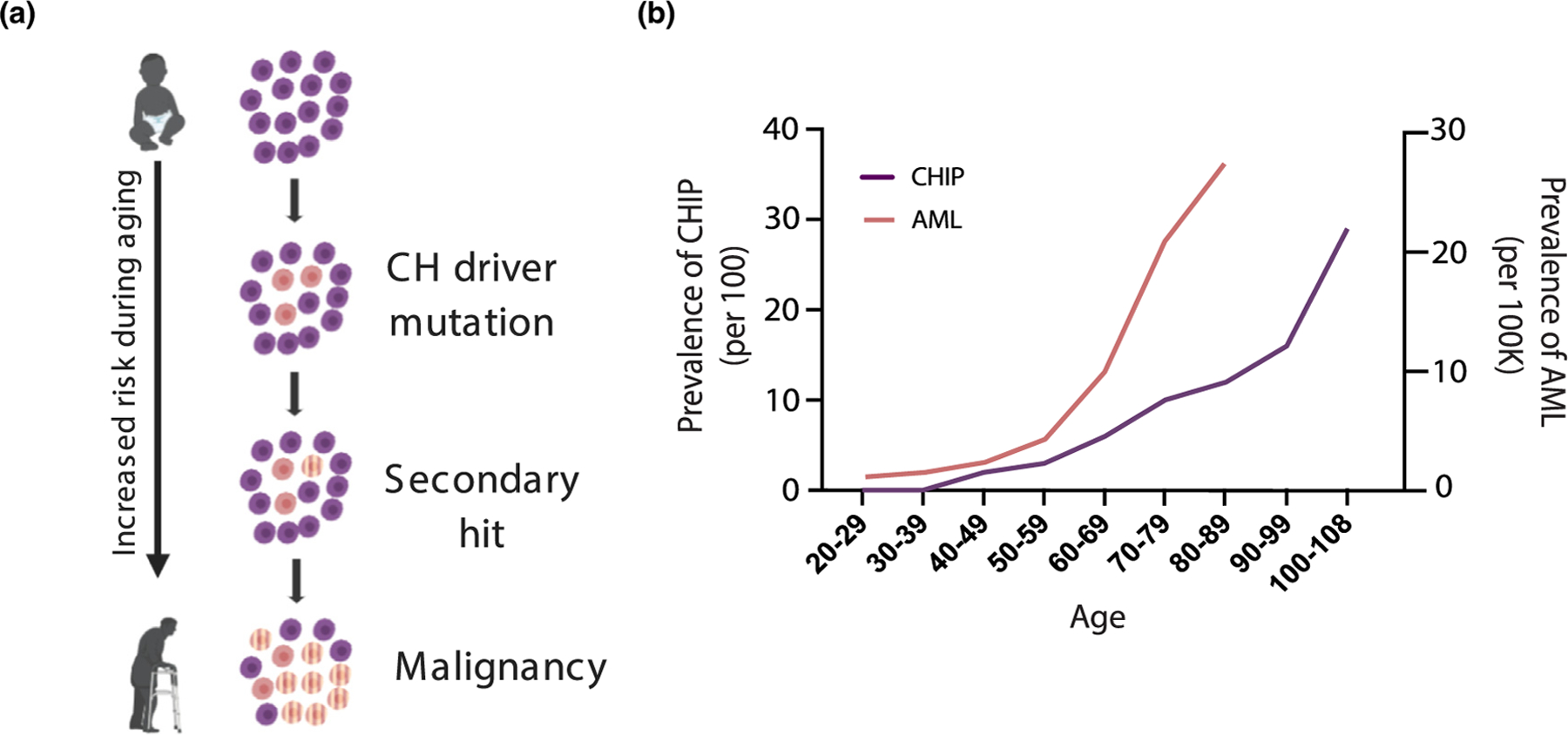
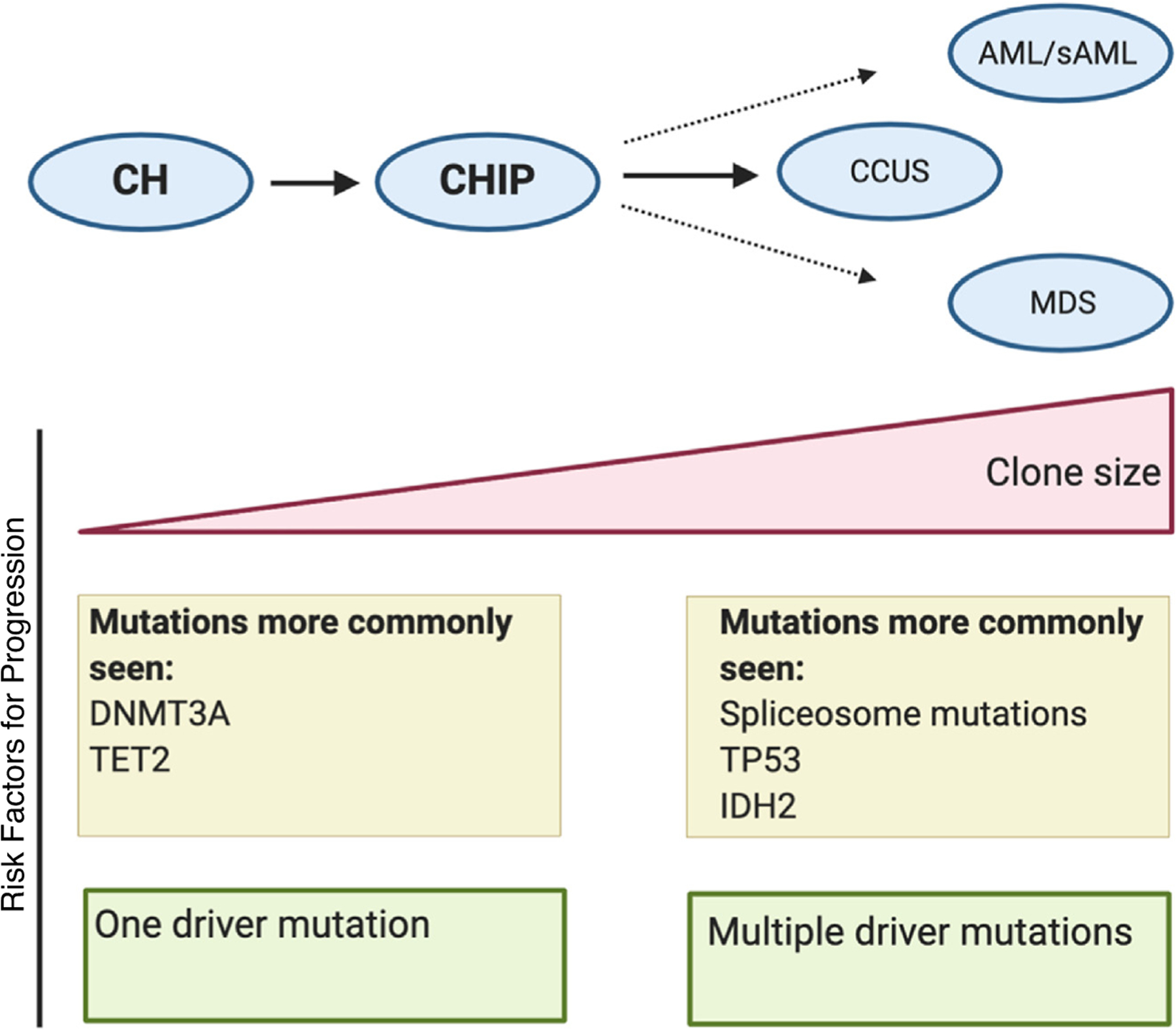
In the multi-hit model of carcinogenesis, a precancerous state often precedes overt malignancy. Identification of these states has been of great interest as they allow for early identification of at-risk individuals before the appearance of a future cancer. One such condition has recently been described for blood cancers: Clonal Hematopoiesis of Indeterminate Potential (CHIP). Recent research advances have elucidated the risk of progression of CHIP to myeloid malignancies, its potential as a precursor for non-myeloid blood cancers, and its association with non-hematological cancers. Understanding the evolution of CHIP to hematological malignancy may help identify CHIP carriers at high risk of transformation and lead to the development of targeted therapies that can be deployed preemptively.
在多步骤致癌模型中,癌前状态通常先于明显的恶性肿瘤出现。这些状态的鉴定一直是人们非常感兴趣的,因为它们可以在未来癌症出现之前,早期识别高危人群。最近在血液癌症中描述了这样一种情况:不确定潜能的克隆性造血(CHIP)。最近的研究进展阐明了 CHIP 向髓性恶性肿瘤进展的风险、其作为非髓性血液癌症前体的潜力及其与非血液学癌症的关联。了解 CHIP 向血液恶性肿瘤的演变可能有助于识别具有高转化风险的 CHIP 携带者,并导致开发可以先发制人的靶向治疗。