Zhang Wu, Ji Yanyan, Shen Nan, Jia Qingzhu, Chang Wang
College of Marine and Environment Science, Tianjin Key Laboratory of Marine Resources and Chemistry, Tianjin Marine Environmental Protection and Restoration Technology Engineering Center, Tianjin University of Science and Technology, Tianjin 300457, China.
School of Environmental and Chemical Engineering, State Key Laboratory of Hollow Fiber Membrane Materials and Processes, Tianjin Polytechnic University, Tianjin 300387, China.
Saudi J Biol Sci. 2021 Jan;28(1):163-169. doi: 10.1016/j.sjbs.2020.09.029. Epub 2020 Sep 21.
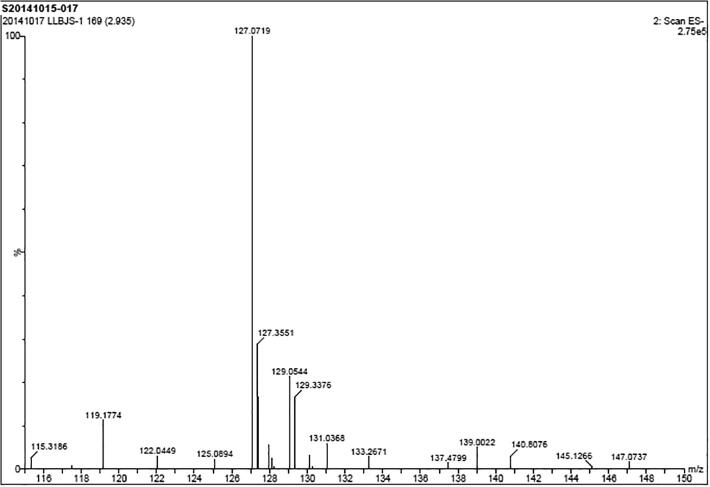
The photodegradation of 2-chlorobenzoic acid (2-CBA) in suspensions of TiO was examined under different operational parameters. The optimal condition could be obtained through the experiment, i.e. that the concentration of 2-CBA was 30 mg/L and the dosing quantity of TiO was 0.01 g under UV light in the case of pH 3.5. Above reaction process was in accordance with first order kinetics model. The influence on photocatalytic degradation caused by typical anions in eutrophicated water body such as NO and HPO was explored in this work, which revealed that both two anions had inhibitory effect on the degradation process. In addition, alcohol was introduced into the process to identify the degradation mechanism of 2-CBA with TiO, and the reaction route of 2-CBA could be predicted through the analysis on the intermediate.
在不同操作参数下,研究了2-氯苯甲酸(2-CBA)在TiO悬浮液中的光降解情况。通过实验可得到最佳条件,即在pH值为3.5的紫外光条件下,2-CBA浓度为30 mg/L,TiO投加量为0.01 g。上述反应过程符合一级动力学模型。本研究探讨了富营养化水体中典型阴离子如NO和HPO对光催化降解的影响,结果表明这两种阴离子均对降解过程有抑制作用。此外,在该过程中引入乙醇以确定2-CBA与TiO的降解机理,并通过对中间产物的分析预测2-CBA的反应路径。