Gimeno-Hernández Roberto, Cantó Antolin, Fernández-Carbonell Angel, Olivar Teresa, Hernández-Rabaza Vicente, Almansa Inmaculada, Miranda María
Departamento Ciencias Biomédicas, Universidad Cardenal Herrera-CEU, CEU Universities, Valencia, Spain.
Front Pharmacol. 2020 Dec 23;11:590572. doi: 10.3389/fphar.2020.590572. eCollection 2020.
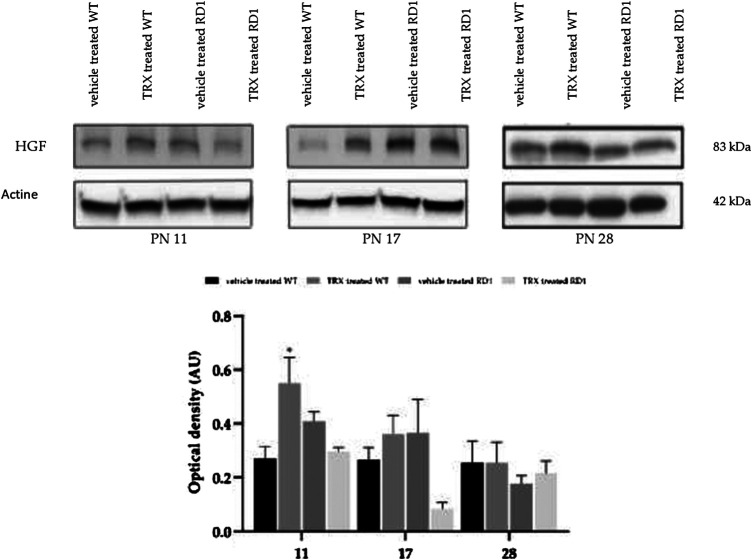
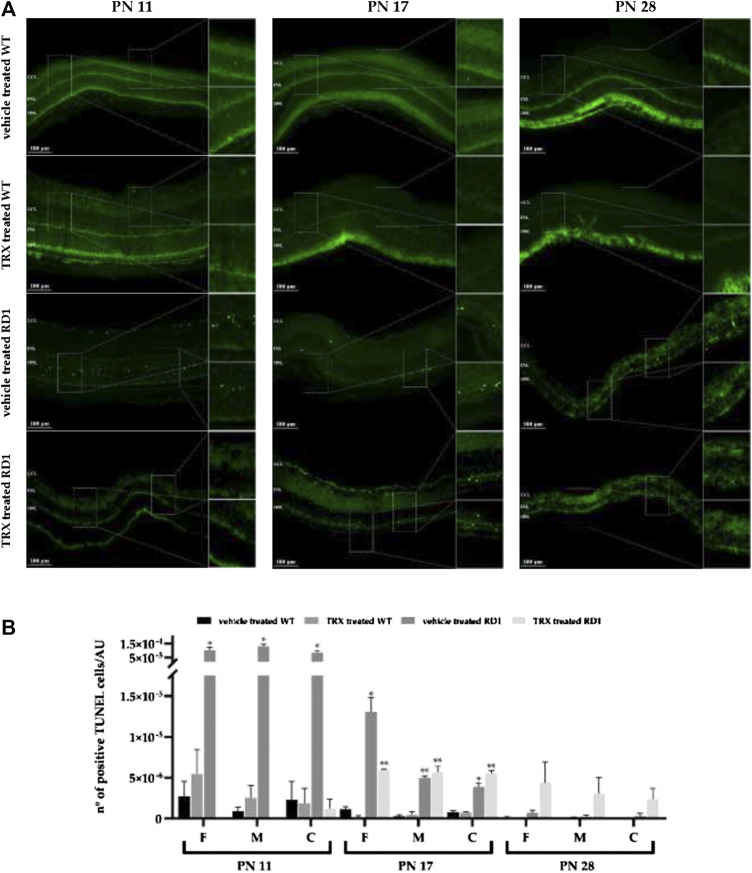
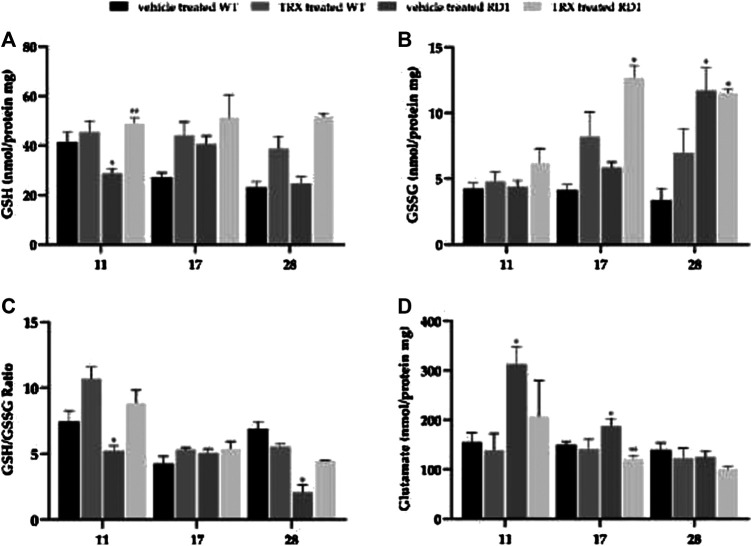
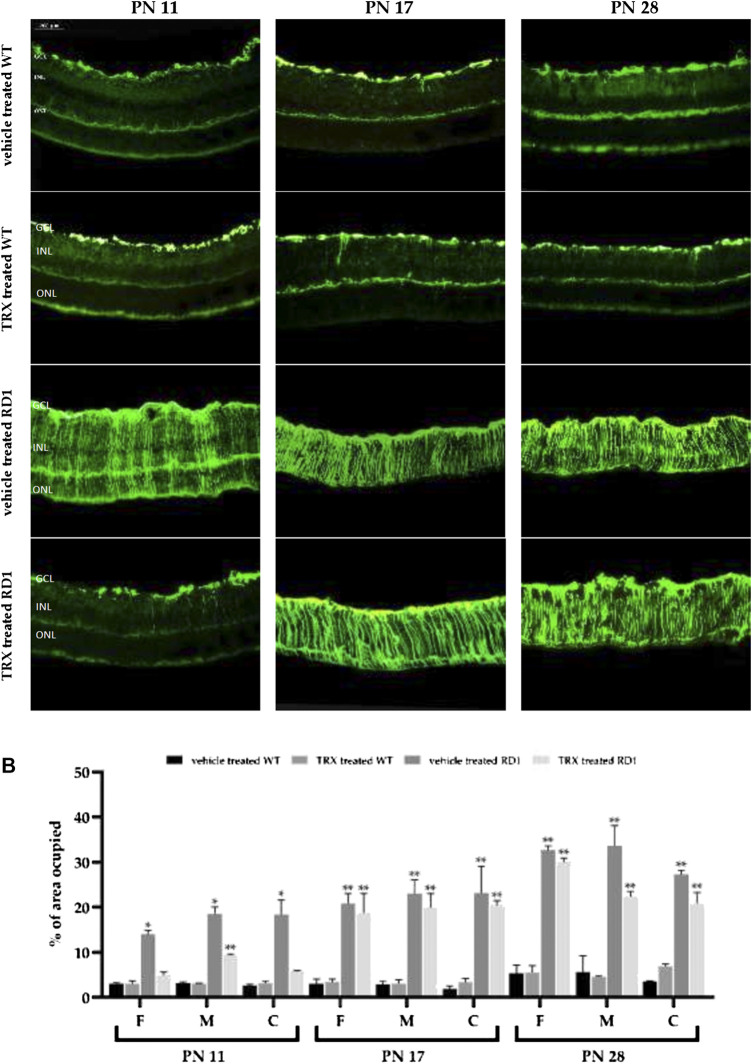
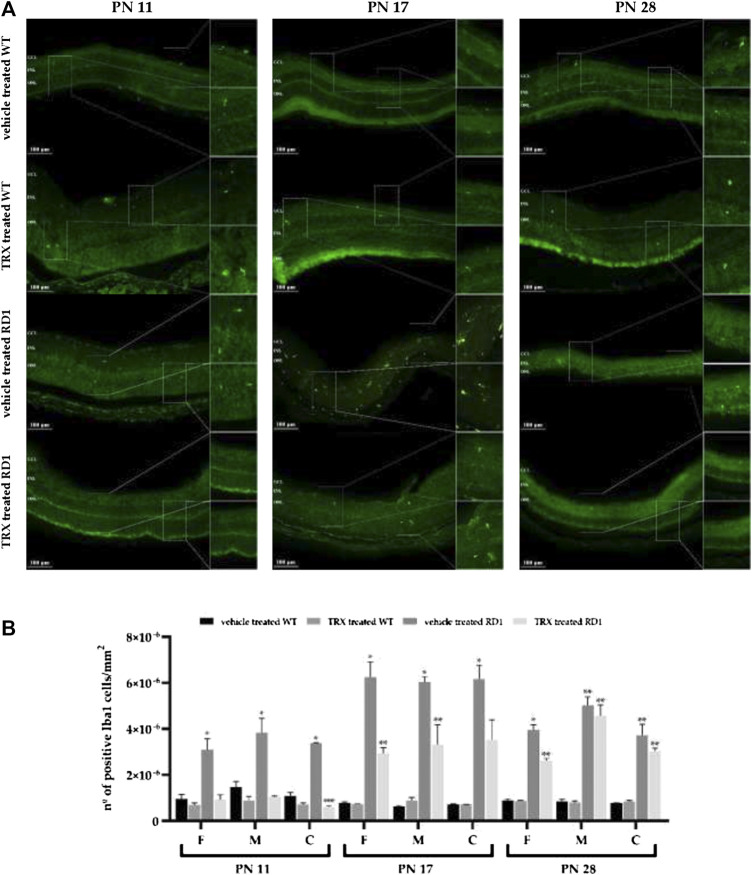
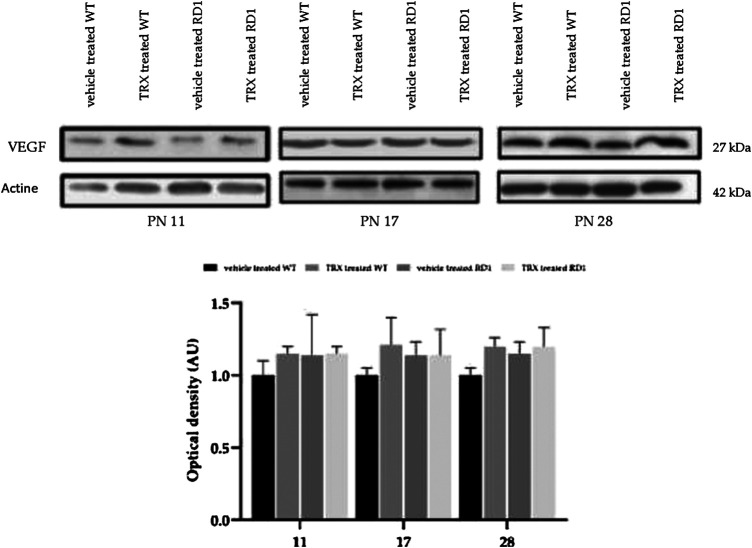
Retinitis pigmentosa (RP) is an inherited ocular disorder with no effective treatment. RP onset and progression trigger a cascade of retinal disorders that lead to the death of photoreceptors. After photoreceptors death, neuronal, glial and vascular remodeling can be observed in the retina. The purpose of this study was to study if thioredoxin (TRX) administration is able to decrease photoreceptor death in an animal model of RP (rd1 mouse), but also if it is able to modulate the retinal oxidative stress, glial and vascular changes that can be observed as the disease progresses. Wild type and rd1 mice received several doses of TRX. After treatment, animals were euthanized at postnatals days 11, 17, or 28. Glutathione (GSH) and other thiol compounds were determined by high performance liquid chromatography (HPLC). Glial fibrilary acidic protein (GFAP) and anti-ionized calcium binding adaptor molecule 1 (Iba1) were studied by immunohistochemistry. Vascular endothelial growth factor (VEGF) and hepatic growth factor (HGF) expression were determined by western blot. TRX administration significantly diminished cell death in rd1 mouse retinas and increased GSH retinal concentrations at postnatal day 11 (PN11). TRX was also able to reverse glial alterations at PN11 and PN17. No alterations were observed in retinal VEGF and HGF expression in rd1 mice. In conclusion, TRX treatment decreases photoreceptor death in the first stages of RP and this protective effect may be due in part to the GSH system activation and to a partially decrease in inflammation.
视网膜色素变性(RP)是一种遗传性眼部疾病,尚无有效治疗方法。RP的发病和进展引发一系列视网膜疾病,导致光感受器死亡。光感受器死亡后,可在视网膜中观察到神经元、神经胶质和血管重塑。本研究的目的是研究给予硫氧还蛋白(TRX)是否能够减少RP动物模型(rd1小鼠)中的光感受器死亡,以及它是否能够调节随着疾病进展而可观察到的视网膜氧化应激、神经胶质和血管变化。野生型和rd1小鼠接受了几剂TRX。治疗后,在出生后第11、17或28天对动物实施安乐死。通过高效液相色谱法(HPLC)测定谷胱甘肽(GSH)和其他硫醇化合物。通过免疫组织化学研究胶质纤维酸性蛋白(GFAP)和抗离子钙结合衔接分子1(Iba1)。通过蛋白质印迹法测定血管内皮生长因子(VEGF)和肝细胞生长因子(HGF)的表达。给予TRX可显著减少rd1小鼠视网膜中的细胞死亡,并在出生后第11天(PN11)增加视网膜GSH浓度。TRX还能够在PN11和PN17时逆转神经胶质改变。在rd1小鼠的视网膜VEGF和HGF表达中未观察到改变。总之,TRX治疗可减少RP第一阶段的光感受器死亡,这种保护作用可能部分归因于GSH系统的激活和炎症的部分减轻。