Dessu Samuel, Dawit Zinabu
Department of Public Health, College of Medicine and Health Sciences, Wolkite University, Wolkite, Ethiopia.
Department of Nursing, Arba Minch Health Science College, Arba Minch, Ethiopia.
Front Pediatr. 2020 Dec 23;8:586747. doi: 10.3389/fped.2020.586747. eCollection 2020.
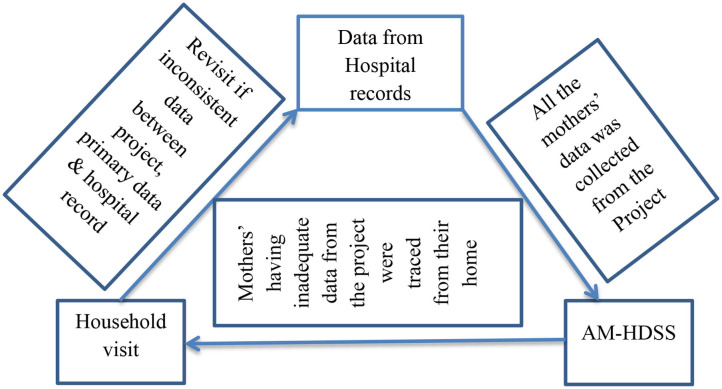
Perinatal mortality is the death of a baby between 28 weeks of gestation onwards and before the first 7 days of life. According to WHO, Ethiopia is one of the most commonly noticed country in the world in considering perinatal mortality rate. The overall perinatal mortality rate in Ethiopia was around 66-124 per 1,000 births. To determine the magnitude of perinatal mortality and associated factors among mothers who attended antenatal care at public hospitals in Gamo Zone, Southern Ethiopia. A cross-sectional study was conducted at Arba Minch General Hospital and Chencha District Hospital antenatal care attended by pregnant mothers from the 1st of February to the 28th of March 2019, among the mothers enrolled at ANC clinic from the 1st of January to the 30th of December 2018 using a simple random sampling method for the pre-determined 1,820 records. Both bivariate and multivariable logistic regression analysis was conducted. Variables which had a -value <0.25 in bivariate analysis were considered as a candidate variable for multivariable analysis and variables which had a -value <0.05 in multivariable analysis were declared as statically significant. The prevalence of perinatal mortality was 12.6% (95% CI: 11.80, 13.40) and grand multiparity (AOR: 7.40; 95% CI: 2.77, 20.26), having one antenatal visit (AOR: 4.40; 95% CI: 1.64, 11.91), spontaneous vaginal delivery (AOR: 0.36; 95% CI: 0.16, 0.82), being pre-term (AOR: 6.78; 95% CI: 2.41, 19.09), birth weight <2,500 gram (AOR: 3.10; 95% CI: 1.48, 6.46), maternal ever hemoglobin level <10 gm/dl (AOR: 4.04; 95% CI: 1.91, 8.57), and pre-partum onset of pregnancy induced hypertension (AOR: 4.01; 95% CI: 2.01, 6.08) were statistically significant in the multivariable logistic regression model. The magnitude of perinatal mortality was high as compared with the Ethiopian Health and Demographic Survey report 2016 and high parity, low in number of antenatal care visits, low gestational age, low birth weight, low maternal hemoglobin level, and pre-partum onset of pregnancy induced hypertension were independent factors which increase the perinatal mortality while spontaneous vaginal delivery reduces the mortality risk. Therefore; the community should be educated to reduce the number of instance of births. In addition; the health care professionals should emphasize on the care provided for the newborns having low birth weight and use spontaneous vaginal delivery as much as possible.
围产期死亡率是指妊娠28周及以后至出生后7天内婴儿的死亡。据世界卫生组织称,在考虑围产期死亡率方面,埃塞俄比亚是世界上最受关注的国家之一。埃塞俄比亚的总体围产期死亡率约为每1000例出生中有66 - 124例。为了确定埃塞俄比亚南部加莫地区公立医院接受产前护理的母亲中围产期死亡率及其相关因素的情况。2019年2月1日至3月28日,在阿尔巴明奇综合医院和陈查区医院对参加产前护理的孕妇进行了一项横断面研究,这些孕妇是在2018年1月1日至12月31日期间登记在产前保健诊所的,采用简单随机抽样方法抽取预定的1820份记录。进行了双变量和多变量逻辑回归分析。在双变量分析中P值<0.25的变量被视为多变量分析的候选变量,在多变量分析中P值<0.05的变量被宣布具有统计学意义。围产期死亡率的患病率为12.6%(95%置信区间:11.80,13.40),多胎妊娠(调整后比值比:7.40;95%置信区间:2.77,20.26)、只进行过一次产前检查(调整后比值比:4.40;95%置信区间:1.64,11.91)、自然阴道分娩(调整后比值比:0.36;95%置信区间:0.16,0.82)、早产(调整后比值比:6.78;95%置信区间:2.41,19.09)、出生体重<2500克(调整后比值比:3.10;95%置信区间:1.48,6.46)、母亲血红蛋白水平曾<10克/分升(调整后比值比:4.04;95%置信区间:1.91,8.57)以及产前发生妊娠高血压(调整后比值比:4.01;95%置信区间:2.01,6.08)在多变量逻辑回归模型中具有统计学意义。与2016年埃塞俄比亚健康与人口调查结果相比,围产期死亡率较高,而高龄多产、产前检查次数少、孕周小、出生体重低、母亲血红蛋白水平低以及产前发生妊娠高血压是增加围产期死亡率的独立因素,而自然阴道分娩可降低死亡风险。因此,应教育社区减少生育次数。此外,医护人员应重视对低出生体重新生儿的护理,并尽可能采用自然阴道分娩。