Saw Swee Hock School of Public Health, National University of Singapore and National University Health System, 12 Science Drive 2, Singapore, 117549, Republic of Singapore.
Natural Capital Singapore, Singapore-ETH Centre, ETH Zurich, Singapore, Singapore.
Parasit Vectors. 2021 Jan 11;14(1):41. doi: 10.1186/s13071-020-04554-9.
Despite the licensure of the world's first dengue vaccine and the current development of additional vaccine candidates, successful Aedes control remains critical to the reduction of dengue virus transmission. To date, there is still limited literature that attempts to explain the spatio-temporal population dynamics of Aedes mosquitoes within a single city, which hinders the development of more effective citywide vector control strategies. Narrowing this knowledge gap requires consistent and longitudinal measurement of Aedes abundance across the city as well as examination of relationships between variables on a much finer scale.
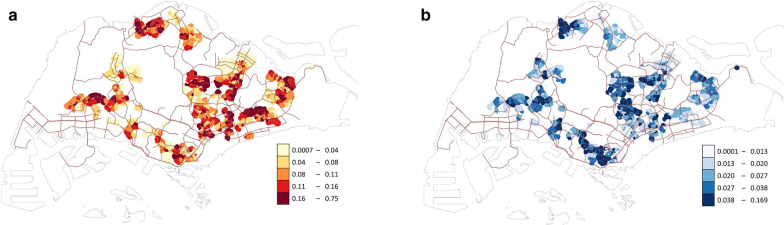
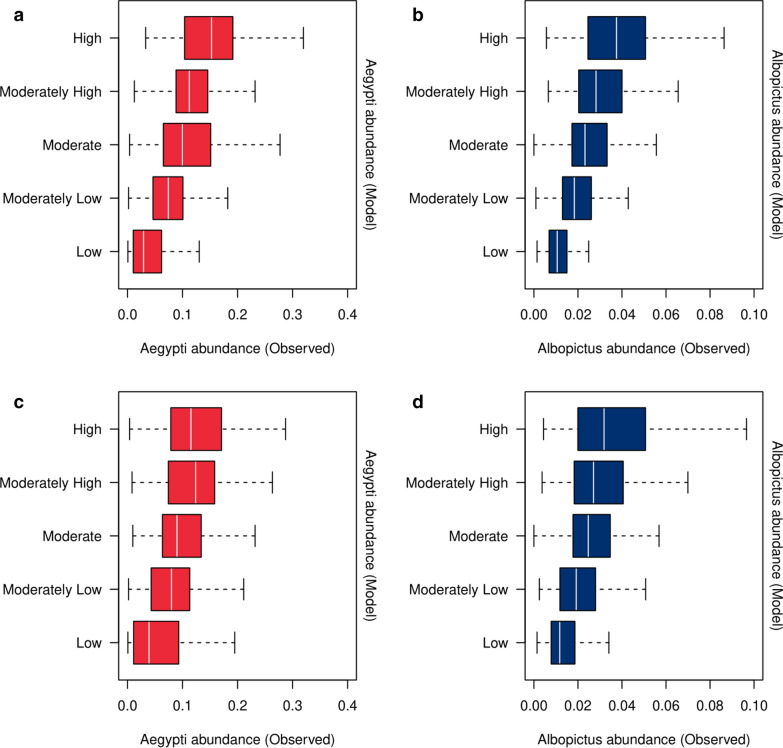
We utilized a high-resolution longitudinal dataset generated from Singapore's islandwide Gravitrap surveillance system over a 2-year period and built a Bayesian hierarchical model to explain the spatio-temporal dynamics of Aedes aegypti and Aedes albopictus in relation to a wide range of environmental and anthropogenic variables. We also created a baseline during our model assessment to serve as a benchmark to be compared with the model's out-of-sample prediction/forecast accuracy as measured by the mean absolute error.
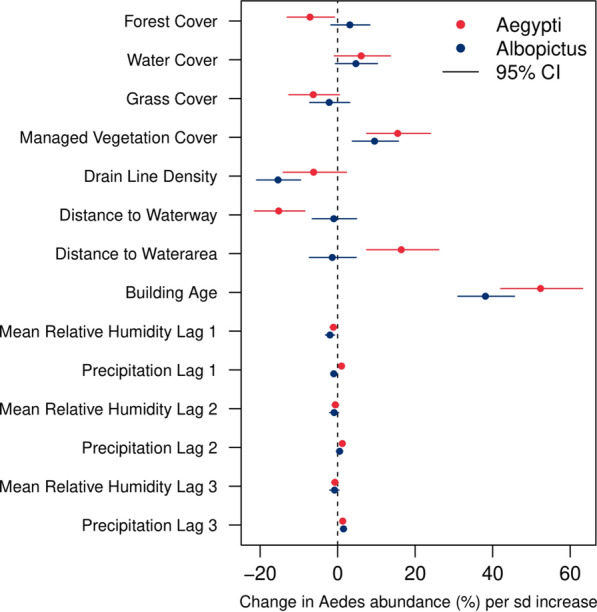
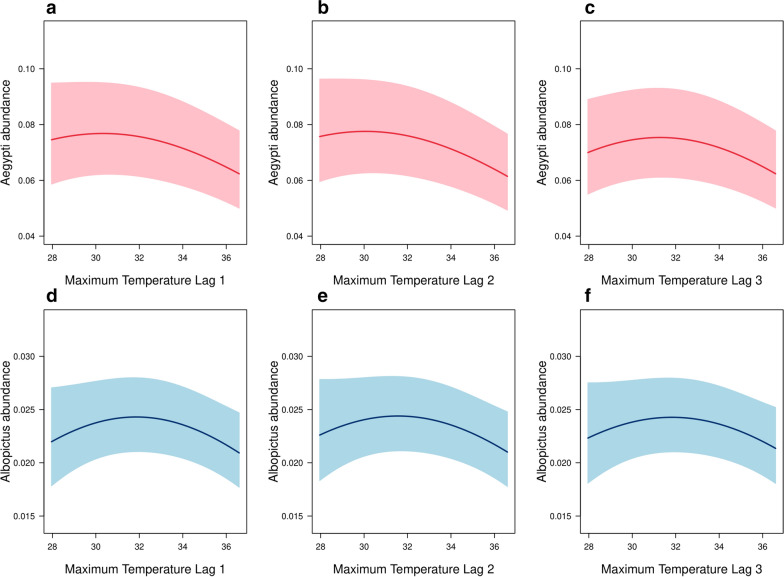
For both Aedes species, building age and nearby managed vegetation cover were found to have a significant positive association with the mean mosquito abundance, with the former being the strongest predictor. We also observed substantial evidence of a nonlinear effect of weekly maximum temperature on the Aedes abundance. Our models generally yielded modest but statistically significant reductions in the out-of-sample prediction/forecast error relative to the baseline.
Our findings suggest that public residential estates with older buildings and more nearby managed vegetation should be prioritized for vector control inspections and community advocacy to reduce the abundance of Aedes mosquitoes and the risk of dengue transmission.
尽管世界上第一种登革热疫苗已经获得许可,并且目前正在开发其他候选疫苗,但成功控制埃及伊蚊仍然是减少登革热病毒传播的关键。迄今为止,仍然很少有文献试图解释单一城市内埃及伊蚊的时空种群动态,这阻碍了更有效的全市范围病媒控制策略的制定。缩小这一知识差距需要在全市范围内持续进行纵向测量埃及伊蚊的丰度,并在更精细的尺度上检查变量之间的关系。
我们利用了新加坡在 2 年内进行的全岛 Gravitrap 监测系统生成的高分辨率纵向数据集,并构建了贝叶斯层次模型,以解释埃及伊蚊和白纹伊蚊的时空动态与广泛的环境和人为变量之间的关系。我们还在模型评估期间创建了一个基线,作为与模型的样本外预测/预报准确性(以平均绝对误差衡量)进行比较的基准。
对于这两种埃及伊蚊,建筑年龄和附近管理的植被覆盖与平均蚊虫丰度呈显著正相关,前者是最强的预测因子。我们还观察到每周最高温度对蚊虫丰度的非线性影响有充分的证据。我们的模型通常会适度降低样本外预测/预报误差,与基线相比具有统计学意义。
我们的研究结果表明,公共住宅区的建筑较老且附近有更多管理植被的地方应优先进行病媒控制检查和社区宣传,以减少埃及伊蚊的数量和登革热传播的风险。