Department of Psychiatry and Behavioral Sciences, Stanford University, Palo Alto, CA, USA.
Department of Genetics, Stanford University, Palo Alto, CA, USA.
Nat Neurosci. 2021 Feb;24(2):186-196. doi: 10.1038/s41593-020-00767-4. Epub 2021 Jan 11.
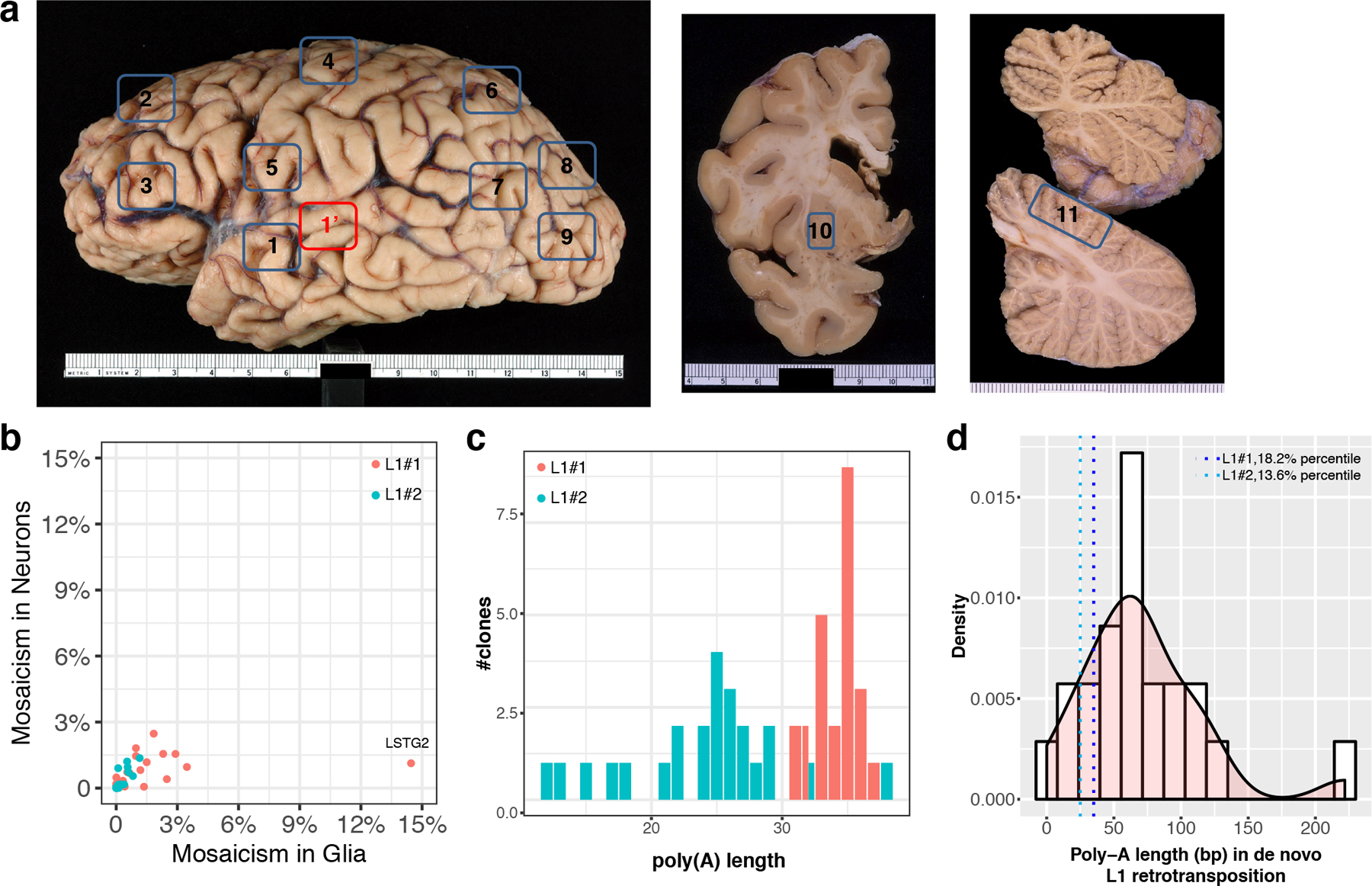
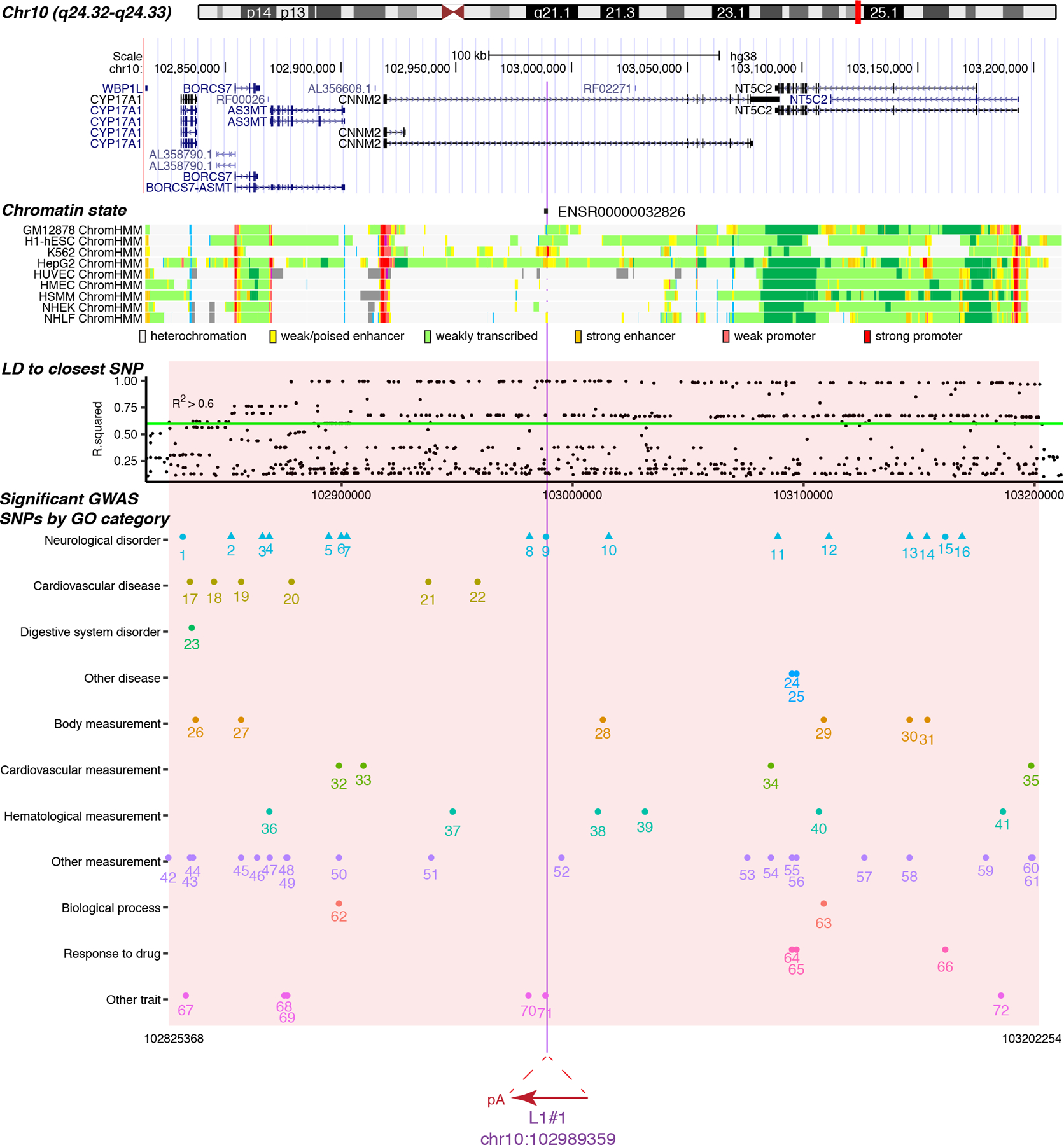
Retrotransposons can cause somatic genome variation in the human nervous system, which is hypothesized to have relevance to brain development and neuropsychiatric disease. However, the detection of individual somatic mobile element insertions presents a difficult signal-to-noise problem. Using a machine-learning method (RetroSom) and deep whole-genome sequencing, we analyzed L1 and Alu retrotransposition in sorted neurons and glia from human brains. We characterized two brain-specific L1 insertions in neurons and glia from a donor with schizophrenia. There was anatomical distribution of the L1 insertions in neurons and glia across both hemispheres, indicating retrotransposition occurred during early embryogenesis. Both insertions were within the introns of genes (CNNM2 and FRMD4A) inside genomic loci associated with neuropsychiatric disorders. Proof-of-principle experiments revealed these L1 insertions significantly reduced gene expression. These results demonstrate that RetroSom has broad applications for studies of brain development and may provide insight into the possible pathological effects of somatic retrotransposition.
逆转座子可引起人类神经系统的体细胞基因组变异,这被假设与大脑发育和神经精神疾病有关。然而,个体体细胞移动元件插入的检测存在信号噪声比的难题。本研究使用机器学习方法(RetroSom)和深度全基因组测序,分析了从人脑分离的神经元和神经胶质细胞中的 L1 和 Alu 逆转座子。我们对一名患有精神分裂症的供体的神经元和神经胶质细胞中的两个脑特异性 L1 插入进行了特征描述。这两个 L1 插入在两个大脑半球的神经元和神经胶质细胞中存在解剖分布,表明逆转座子发生在早期胚胎发育过程中。这两个插入均位于与神经精神疾病相关的基因组位点内的基因(CNNM2 和 FRMD4A)的内含子中。验证实验表明,这些 L1 插入显著降低了基因表达。这些结果表明 RetroSom 广泛适用于大脑发育的研究,并可能为体细胞逆转座的可能病理影响提供见解。