Xiong Liu-Lin, Chen Jie, Du Ruo-Lan, Liu Jia, Chen Yan-Jun, Hawwas Mohammed Al, Zhou Xin-Fu, Wang Ting-Hua, Yang Si-Jin, Bai Xue
National Traditional Chinese Medicine Clinical Research Base and Western Medicine Translational Medicine Research Center, Department of Cardiovascular Disease, Affiliated Traditional Chinese Medicine Hospital, Southwest Medical University, Luzhou, Sichuan Province, China; Cinical and Health Sciences, University of South Australia, Adelaide, Australia.
National Traditional Chinese Medicine Clinical Research Base and Western Medicine Translational Medicine Research Center, Department of Cardiovascular Disease, Affiliated Traditional Chinese Medicine Hospital, Southwest Medical University, Luzhou, Sichuan Province, China.
Neural Regen Res. 2021 Aug;16(8):1453-1459. doi: 10.4103/1673-5374.303033.
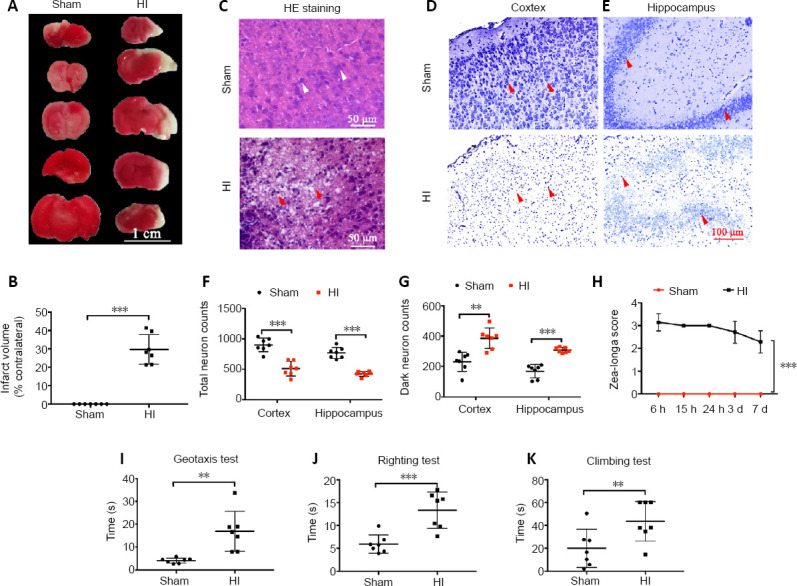
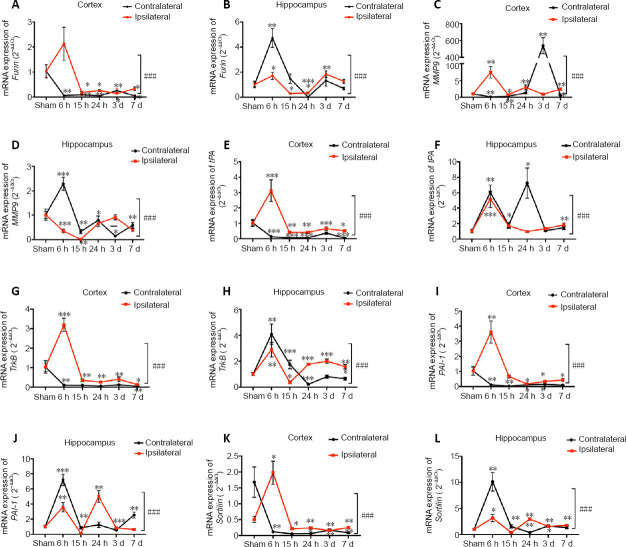
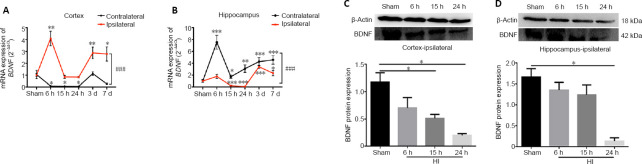
Brain-derived neurotrophic factor (BDNF) regulates many neurological functions and plays a vital role during the recovery from central nervous system injuries. However, the changes in BDNF expression and associated factors following hypoxia-ischemia induced neonatal brain damage, and the significance of these changes are not fully understood. In the present study, a rat model of hypoxic-ischemic brain damage was established through the occlusion of the right common carotid artery, followed by 2 hours in a hypoxic-ischemic environment. Rats with hypoxic-ischemic brain damage presented deficits in both sensory and motor functions, and obvious pathological changes could be detected in brain tissues. The mRNA expression levels of BDNF and its processing enzymes and receptors (Furin, matrix metallopeptidase 9, tissue-type plasminogen activator, tyrosine Kinase receptor B, plasminogen activator inhibitor-1, and Sortilin) were upregulated in the ipsilateral hippocampus and cerebral cortex 6 hours after injury; however, the expression levels of these mRNAs were found to be downregulated in the contralateral hippocampus and cerebral cortex. These findings suggest that BDNF and its processing enzymes and receptors may play important roles in the pathogenesis and recovery from neonatal hypoxic-ischemic brain damage. This study was approved by the Animal Ethics Committee of the University of South Australia (approval No. U12-18) on July 30, 2018.
脑源性神经营养因子(BDNF)调节多种神经功能,在中枢神经系统损伤后的恢复过程中发挥着至关重要的作用。然而,缺氧缺血诱导的新生儿脑损伤后BDNF表达及相关因子的变化,以及这些变化的意义尚未完全明确。在本研究中,通过结扎右侧颈总动脉,随后在缺氧缺血环境中放置2小时,建立了缺氧缺血性脑损伤大鼠模型。缺氧缺血性脑损伤大鼠出现感觉和运动功能缺陷,脑组织中可检测到明显的病理变化。损伤后6小时,同侧海马和大脑皮质中BDNF及其加工酶和受体(弗林蛋白酶、基质金属蛋白酶9、组织型纤溶酶原激活剂、酪氨酸激酶受体B、纤溶酶原激活剂抑制剂-1和sortilin)的mRNA表达水平上调;然而,在对侧海马和大脑皮质中发现这些mRNA的表达水平下调。这些发现表明,BDNF及其加工酶和受体可能在新生儿缺氧缺血性脑损伤的发病机制和恢复过程中发挥重要作用。本研究于2018年7月30日获得南澳大利亚大学动物伦理委员会批准(批准号:U12-18)。