Deng Hong, Zhang Ye, Li Gai-Gai, Yu Hai-Han, Bai Shuang, Guo Guang-Yu, Guo Wen-Liang, Ma Yang, Wang Jia-Hui, Liu Na, Pan Chao, Tang Zhou-Ping
Department of Neurology, Tongji Hospital, Tongji Medical College, Huazhong University of Science and Technology, Wuhan, Hubei Province, China.
Department of Endocrinology, Tongji Hospital, Tongji Medical College, Huazhong University of Science and Technology, Wuhan, Hubei Province, China.
Neural Regen Res. 2021 Aug;16(8):1582-1591. doi: 10.4103/1673-5374.303036.
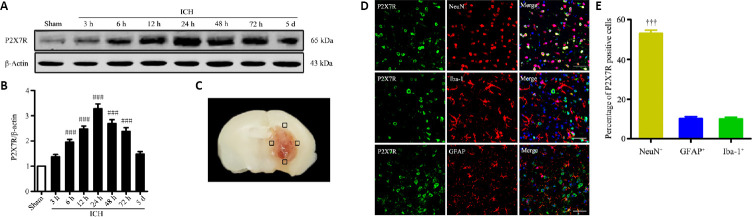
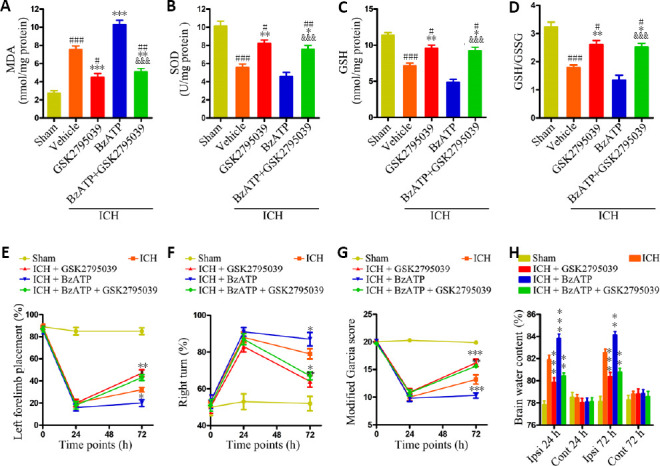
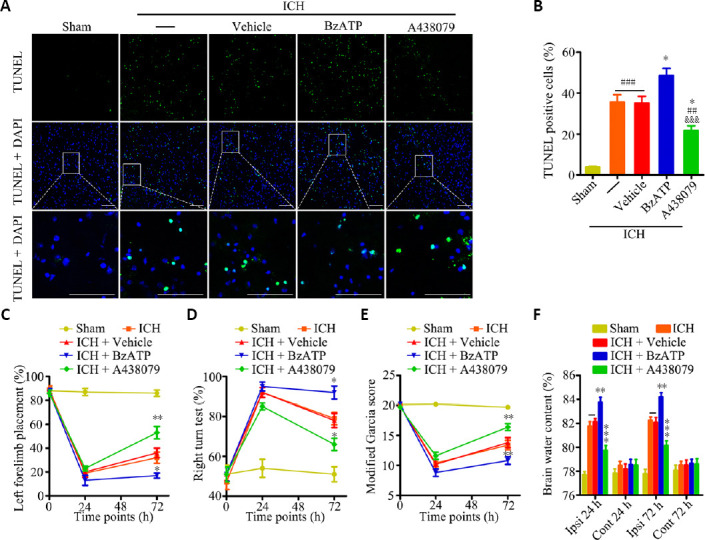
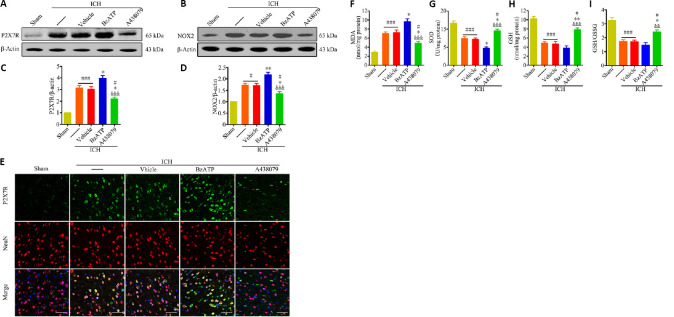
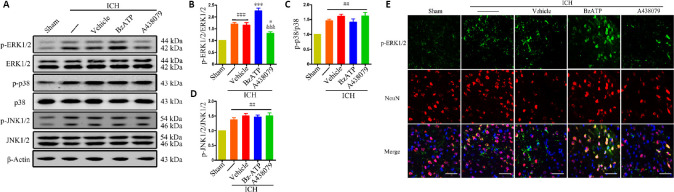
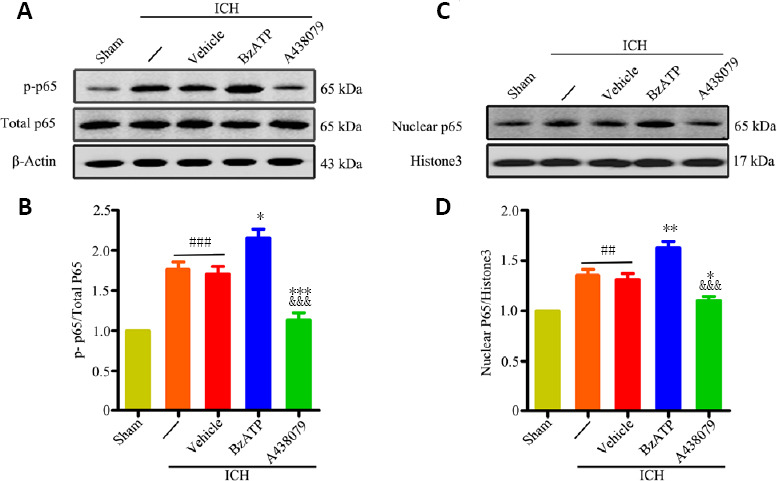
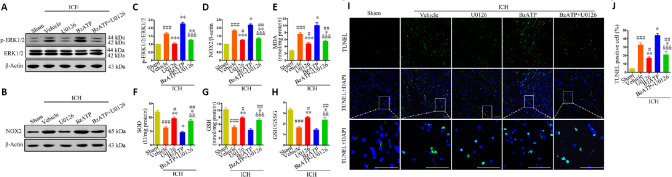
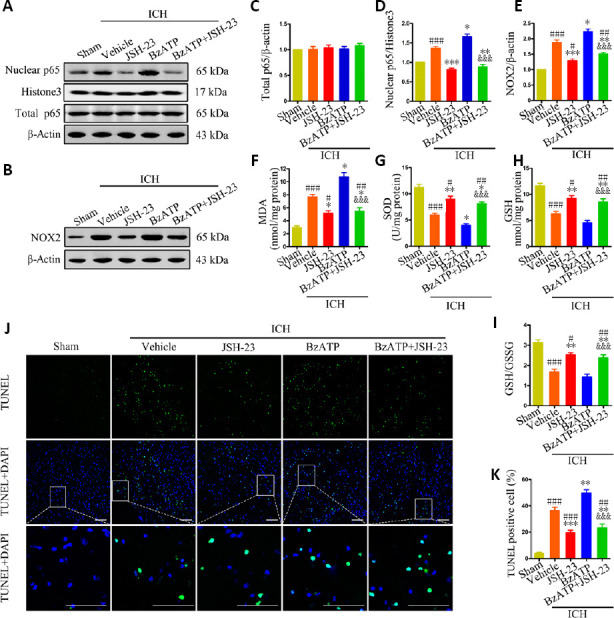
Oxidative stress is a crucial pathological process that contributes to secondary injury following intracerebral hemorrhage. P2X7 receptor (P2X7R), which is activated by the abnormal accumulation of extracellular ATP, plays an important role in the regulation of oxidative stress in the central nervous system, although the effects of activated P2X7R-associated oxidative stress after intracerebral hemorrhage remain unclear. Mouse models of intracerebral hemorrhage were established through the stereotactic injection of 0.075 U VII collagenase into the right basal ganglia. The results revealed that P2X7R expression peaked 24 hours after intracerebral hemorrhage, and P2X7R expressed primarily in neurons. The inhibition of P2X7R, using A438079 (100 mg/kg, intraperitoneal), reduced nicotinamide adenine dinucleotide phosphate oxidase 2 (NOX2) expression and malondialdehyde generation, increased superoxide dismutase and glutathione/oxidized glutathione levels, and alleviated neurological damage, brain edema, and apoptosis after intracellular hemorrhage. The P2X7R inhibitor A438079 (100 mg/kg, intraperitoneal injection) inhibited the activation of extracellular signal-regulated kinase 1/2 (ERK1/2) and nuclear factor kappa-B (NF-κB) after intracerebral hemorrhage. Blocking ERK1/2 activation, using the ERK1/2 inhibitor U0126 (2 µg, intraventricular injection), reduced the level of NOX2-mediated oxidative stress induced by P2X7R activation after intracellular hemorrhage. Similarly, the inhibition of NF-κB, using the NF-κB inhibitor JSH-23 (3.5 µg, intraventricular), reduced the level of NOX2-mediated oxidative stress induced by P2X7R activation. Finally, GSK2795039 (100 mg/kg, intraperitoneal), a NOX2 antagonist, attenuated P2X7R-mediated oxidative stress, neurological damage, and brain edema after intracerebral hemorrhage. The results indicated that P2X7R activation aggravated NOX2-induced oxidative stress through the activation of the ERK1/2 and NF-κB pathways following intracerebral hemorrhage in mice. The present study was approved by the Ethics Committee of Huazhong University of Science and Technology, China (approval No. TJ-A20160805) on August 26, 2016.
氧化应激是导致脑出血后继发性损伤的关键病理过程。P2X7受体(P2X7R)可被细胞外ATP的异常蓄积激活,在中枢神经系统氧化应激调节中发挥重要作用,不过脑出血后激活的P2X7R相关氧化应激的影响仍不清楚。通过立体定向向右侧基底神经节注射0.075 U VII型胶原酶建立脑出血小鼠模型。结果显示,脑出血后24小时P2X7R表达达到峰值,且P2X7R主要在神经元中表达。使用A438079(100 mg/kg,腹腔注射)抑制P2X7R,可降低烟酰胺腺嘌呤二核苷酸磷酸氧化酶2(NOX2)表达和丙二醛生成,提高超氧化物歧化酶以及谷胱甘肽/氧化型谷胱甘肽水平,并减轻脑出血后的神经损伤、脑水肿和细胞凋亡。P2X7R抑制剂A438079(100 mg/kg,腹腔注射)可抑制脑出血后细胞外信号调节激酶1/2(ERK1/2)和核因子κB(NF-κB)的激活。使用ERK1/2抑制剂U0126(2 µg,脑室内注射)阻断ERK1/2激活,可降低脑出血后P2X7R激活诱导的NOX2介导的氧化应激水平。同样,使用NF-κB抑制剂JSH-23(3.5 µg,脑室内注射)抑制NF-κB,也可降低P2X7R激活诱导的NOX2介导的氧化应激水平。最后,NOX2拮抗剂GSK2795039(100 mg/kg,腹腔注射)可减轻脑出血后P2X7R介导的氧化应激、神经损伤和脑水肿。结果表明,脑出血后P2X7R激活通过ERK1/2和NF-κB途径的激活加重了NOX2诱导的氧化应激。本研究于2016年8月26日获得中国华中科技大学伦理委员会批准(批准号:TJ-A20160805)。