Institute of Theoretical Chemistry, Faculty of Chemistry, University of Vienna, A-1090 Vienna, Austria.
Department of Dynamics at Surfaces, Max-Planck-Institute for Biophysical Chemistry, D-37077 Göttingen, Germany.
Inorg Chem. 2021 Feb 1;60(3):1672-1682. doi: 10.1021/acs.inorgchem.0c03163. Epub 2021 Jan 12.
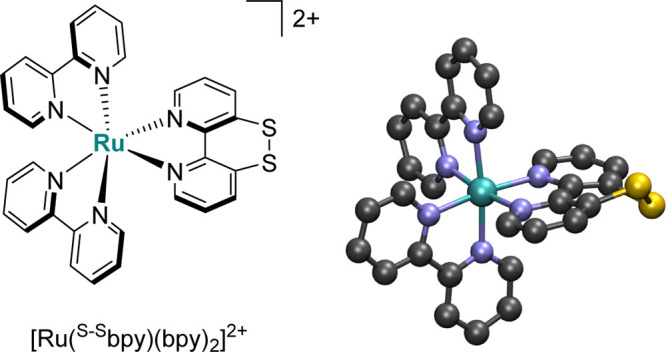
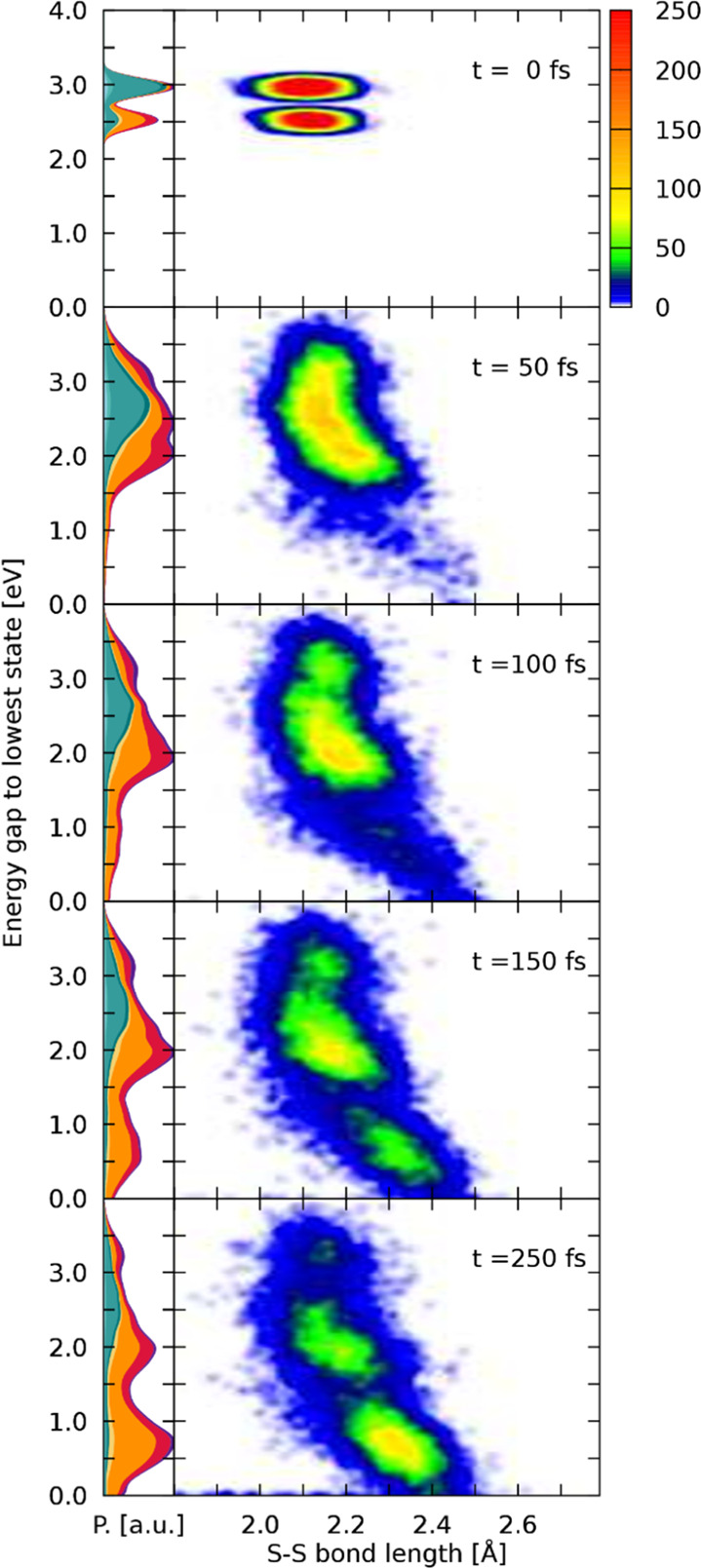
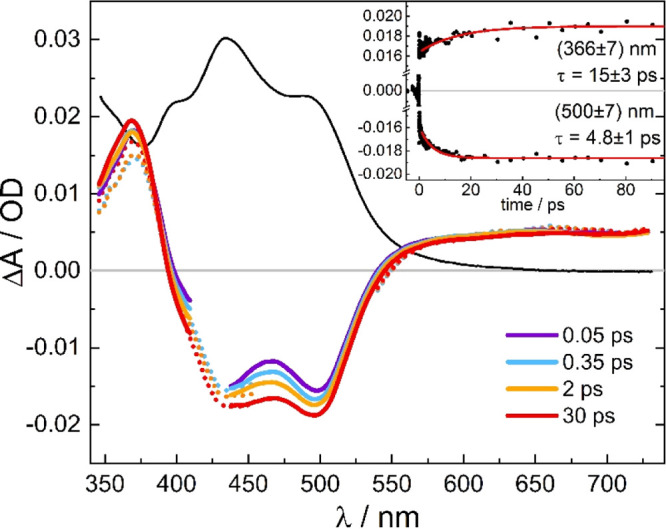
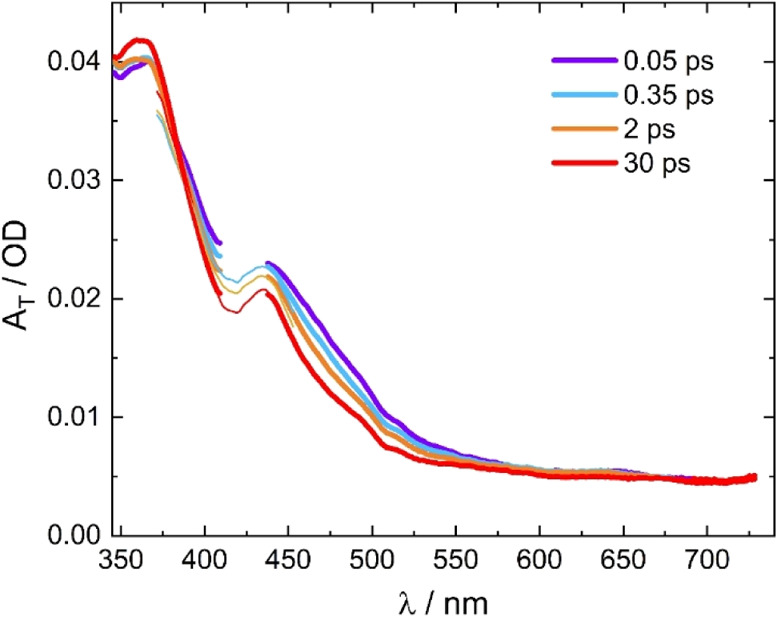
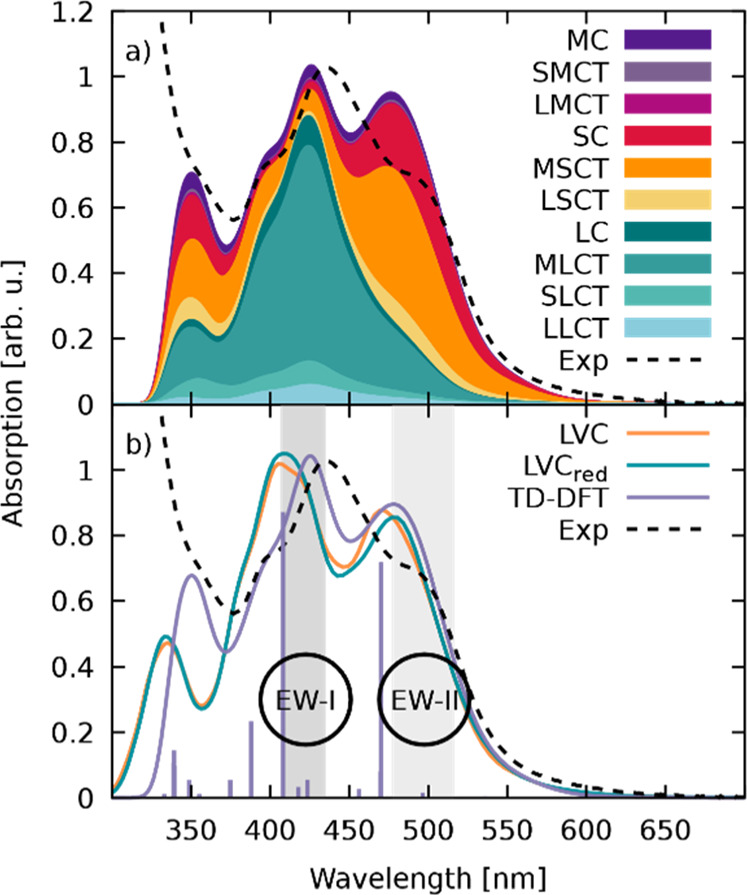
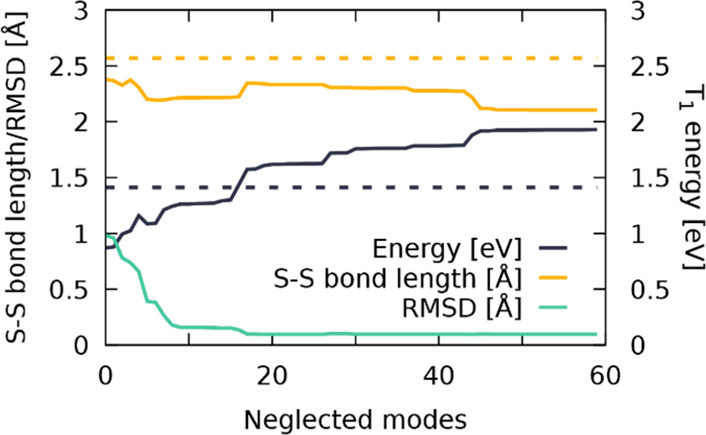
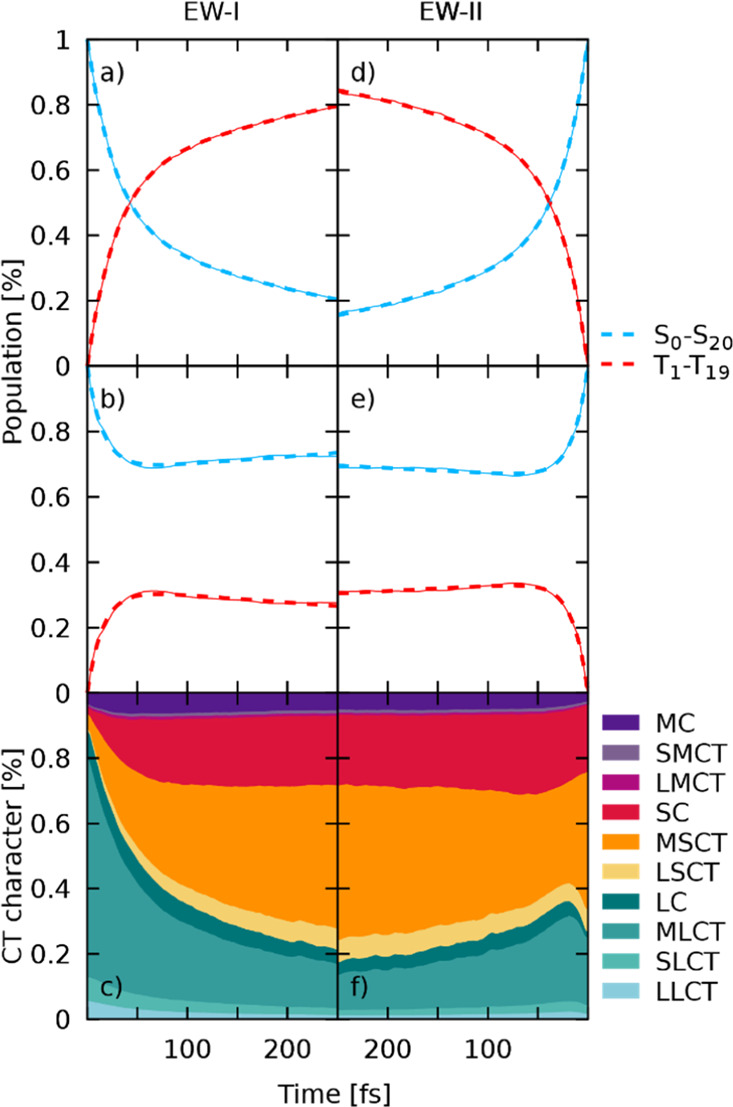
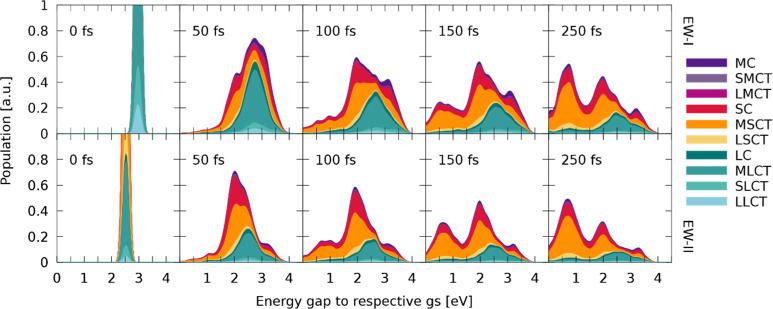
The novel photosensitizer [Ru(bpy)(bpy)] harbors two distinct sets of excited states in the UV/Vis region of the absorption spectrum located on either bpy or bpy ligands. Here, we address the question of whether following excitation into these two types of states could lead to the formation of different long-lived excited states from where energy transfer to a reactive species could occur. Femtosecond transient absorption spectroscopy identifies the formation of the final state within 80 fs for both excitation wavelengths. The recorded spectra hint at very similar dynamics following excitation toward either the parent or sulfur-decorated bpy ligands, indicating ultrafast interconversion into a unique excited-state species regardless of the initial state. Non-adiabatic surface hopping dynamics simulations show that ultrafast spin-orbit-mediated mixing of the states within less than 50 fs strongly increases the localization of the excited electron at the bpy ligand. Extensive structural relaxation within this sulfurated ligand is possible, via S-S bond cleavage that results in triplet state energies that are lower than those in the analogue [Ru(bpy)]. This structural relaxation upon localization of the charge on bpy is found to be the reason for the formation of a single long-lived species independent of the excitation wavelength.
新型光敏剂 [Ru(bpy)(bpy)] 在吸收光谱的 UV/Vis 区域具有两组不同的激发态,分别位于 bpy 或 bpy 配体上。在这里,我们要探讨的问题是,在这两种类型的激发态下,是否会形成不同的长寿命激发态,从而发生能量转移到反应性物质的过程。飞秒瞬态吸收光谱确定了在两种激发波长下,最终态的形成都在 80 fs 内完成。记录的光谱表明,无论初始状态如何,无论是激发到母体或硫修饰的 bpy 配体,都会产生非常相似的动力学,表明超快的相互转换为独特的激发态物质。非绝热表面跳跃动力学模拟表明,在不到 50 fs 的时间内,超快的自旋轨道混合强烈增加了激发电子在 bpy 配体上的局域化。通过 S-S 键的断裂,硫代配体中可能会发生广泛的结构松弛,从而导致三重态能量低于类似物 [Ru(bpy)] 的能量。在 bpy 上电荷局域化时发生的这种结构松弛被发现是形成单一长寿命物种的原因,而与激发波长无关。