School of Public Health, College of Health Sciences and Medicine, Wolaita Sodo University, Sodo, Ethiopia.
Center for Food Science and Nutrition, College of Natural and Computational Sciences, Addis Ababa University, Addis Ababa, Ethiopia.
PLoS One. 2021 Jan 12;16(1):e0240677. doi: 10.1371/journal.pone.0240677. eCollection 2021.
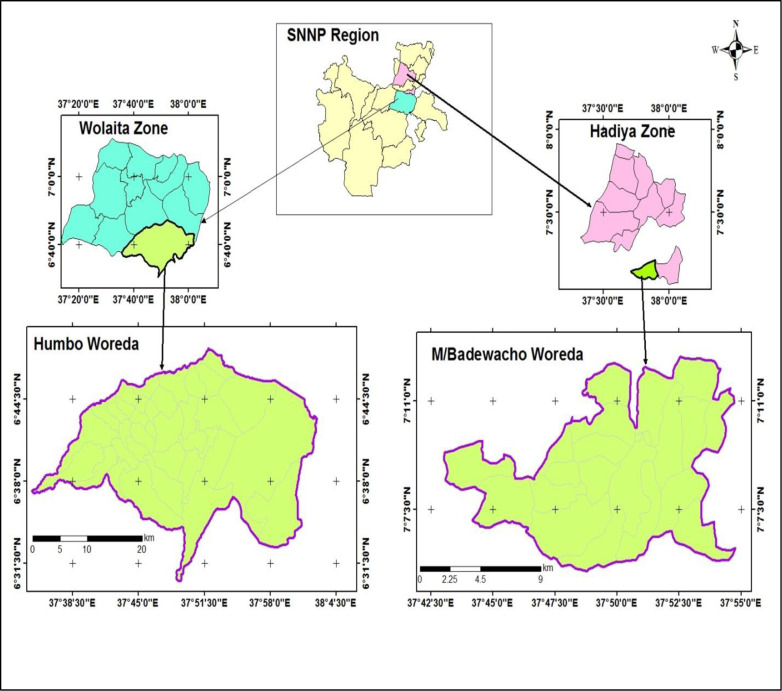
Undernutrition is one of the most common causes of morbidity and mortality among adolescent girls worldwide, especially in South-East Asia and Africa. Even though adolescence is a window of opportunity to break the intergenerational cycle of undernutrition, adolescent girls are a neglected group. The objective of this study was to assess the nutritional status and associated factors among adolescent girls in the Wolaita and Hadiya zones of Southern Ethiopia.
A community-based cross-sectional study was conducted, and a multistage random sampling method was used to select a sample of 843 adolescent girls. Anthropometric measurements were collected from all participants and entered in the WHO Anthro plus software for Z-score analysis. The data was analyzed using EPI-data 4.4.2 and SPSS version 21.0. The odds ratios for logistic regression along with a 95% confidence interval (CI) were generated. A P-value < 0.05 was declared as the level of statistical significance.
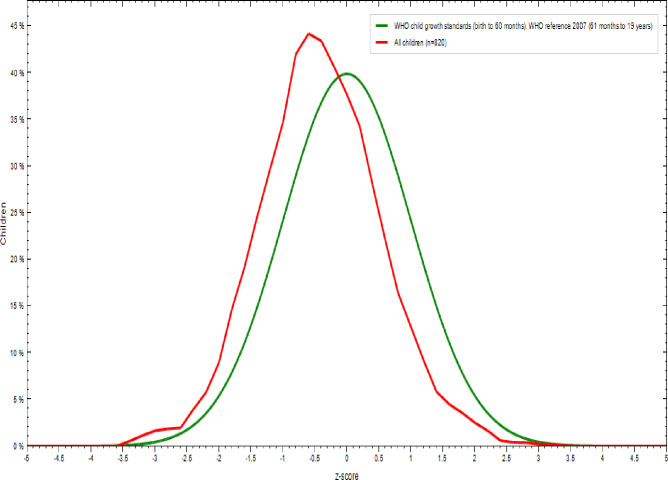
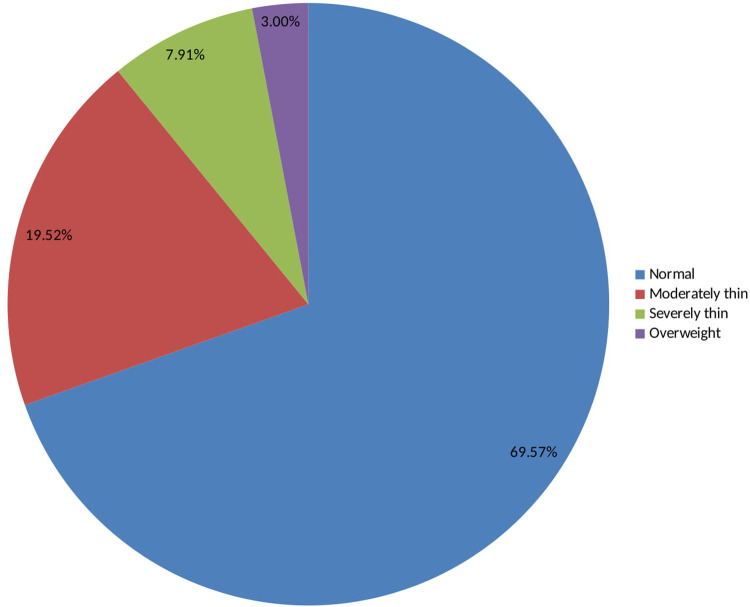
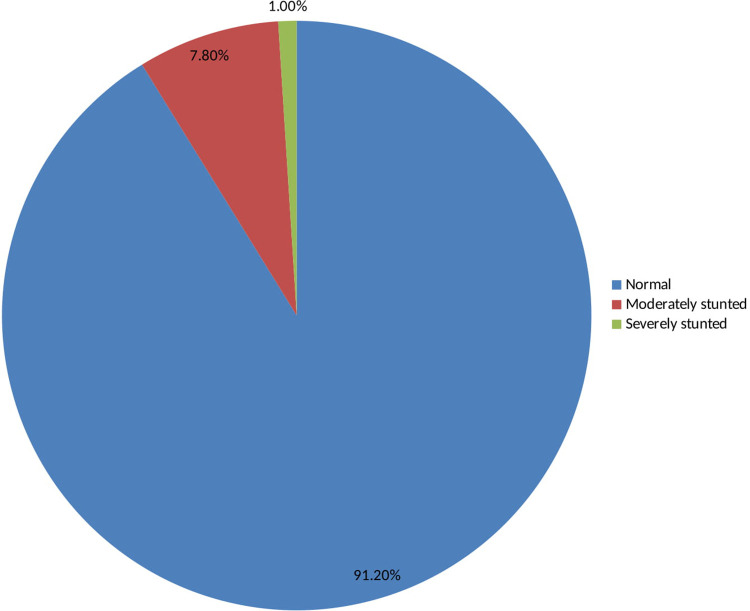
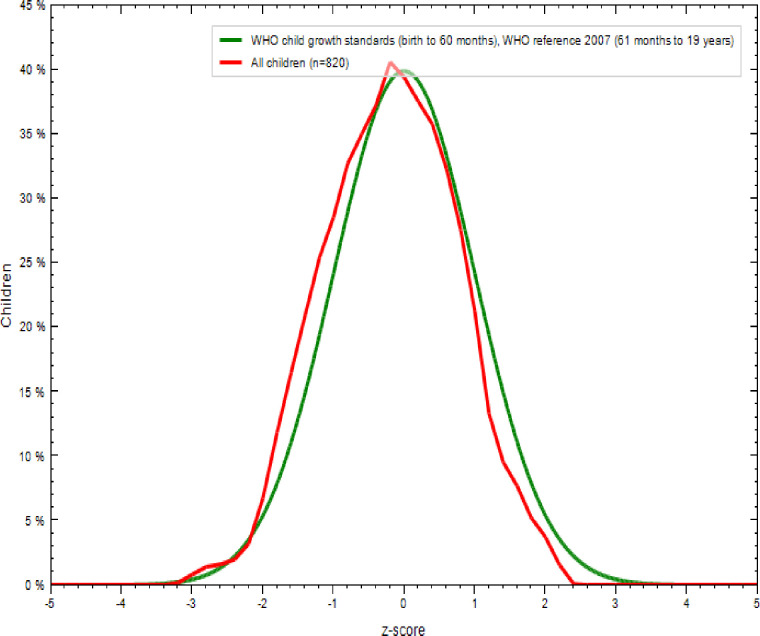
Thinness (27.5%) and stunting (8.8%) are found to be public health problems in the study area. Age [AOR(adjusted odds ratio) (95% CI) = 2.91 (2.03-4.173)], large family size [AOR (95% CI) = 1.63(1.105-2.396)], low monthly income [AOR (95% CI) = 2.54(1.66-3.87)], not taking deworming tablets [AOR (95% CI) = 1.56(1.11-21)], low educational status of the father [AOR (95% CI) = 2.45(1.02-5.86)], the source of food for the family only from market [AOR (95% CI) = 5.14(2.1-12.8)], not visited by health extension workers [AOR (95% CI) = 1.72(1.7-2.4)], and not washing hand with soap before eating and after using the toilet [AOR (95% CI) = 2.25(1.079-4.675)] were positively associated with poor nutritional status of adolescent girls in the Wolaita and Hadiya zones, Southern Ethiopia.
Thinness and stunting were found to be high in the study area. Age, family size, monthly household income, regularly skipping meals, fathers' educational status, visits by health extension workers, and nutrition services decision-making are the main predictors of thinness. Hand washing practice, visits by health extension workers, and nutrition services decision-making are the main predictors of stunting among adolescent girls. Multisectoral community-based, adolescent health and nutrition programs should be implemented.
在全球范围内,营养不良是导致青少年女孩发病和死亡的最常见原因之一,尤其是在东南亚和非洲。尽管青春期是打破代际营养不良循环的机会之窗,但青少年女孩却被忽视了。本研究旨在评估埃塞俄比亚南部沃莱塔和哈迪亚地区青少年女孩的营养状况和相关因素。
本研究采用基于社区的横断面研究,采用多阶段随机抽样方法选择了 843 名青少年女孩作为样本。对所有参与者进行了人体测量学测量,并输入 WHO Anthro plus 软件进行 Z 分数分析。使用 EPI-data 4.4.2 和 SPSS 版本 21.0 对数据进行分析。生成了逻辑回归的比值比(OR)及其 95%置信区间(CI)。P 值<0.05 被认为具有统计学意义。
研究发现,该地区存在消瘦(27.5%)和发育迟缓(8.8%)等公共卫生问题。年龄[调整后的优势比(AOR)(95%CI)=2.91(2.03-4.173)]、大家庭规模[AOR(95%CI)=1.63(1.105-2.396)]、低月收入[AOR(95%CI)=2.54(1.66-3.87)]、未服用驱虫药[AOR(95%CI)=1.56(1.11-21)]、父亲的低教育程度[AOR(95%CI)=2.45(1.02-5.86)]、家庭食物来源仅来自市场[AOR(95%CI)=5.14(2.1-12.8)]、未接受健康推广人员访问[AOR(95%CI)=1.72(1.7-2.4)]和未在用餐前和使用厕所后用肥皂洗手[AOR(95%CI)=2.25(1.079-4.675)]与埃塞俄比亚南部沃莱塔和哈迪亚地区青少年女孩的不良营养状况呈正相关。
研究发现该地区消瘦和发育迟缓的比例较高。年龄、家庭规模、月家庭收入、经常不吃饭、父亲的教育程度、健康推广人员的访问以及营养服务决策是消瘦的主要预测因素。洗手习惯、健康推广人员的访问和营养服务决策是导致青少年女孩发育迟缓的主要预测因素。应实施多部门基于社区的青少年健康和营养计划。