Bajić Dragana, Đajić Vlado, Milovanović Branislav
Faculty of Technical Sciences, University of Novi Sad, Novi Sad 21000, Serbia.
Neurology Clinic, University Clinical Centre of the Republic of Srpska, 78000 Banja Luka, Bosnia and Herzegovina.
Entropy (Basel). 2021 Jan 9;23(1):87. doi: 10.3390/e23010087.
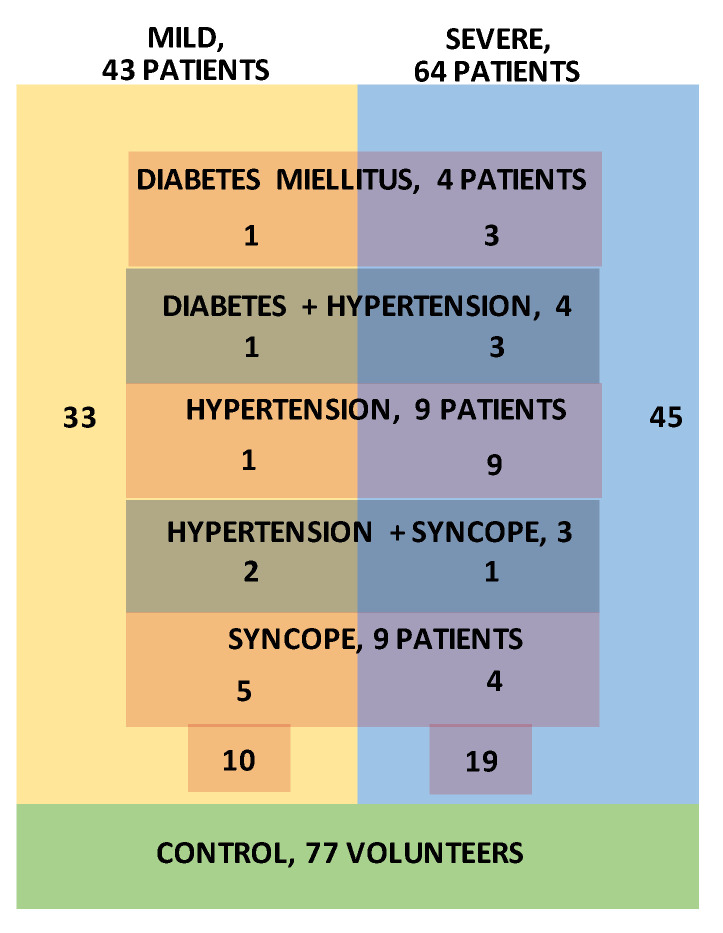
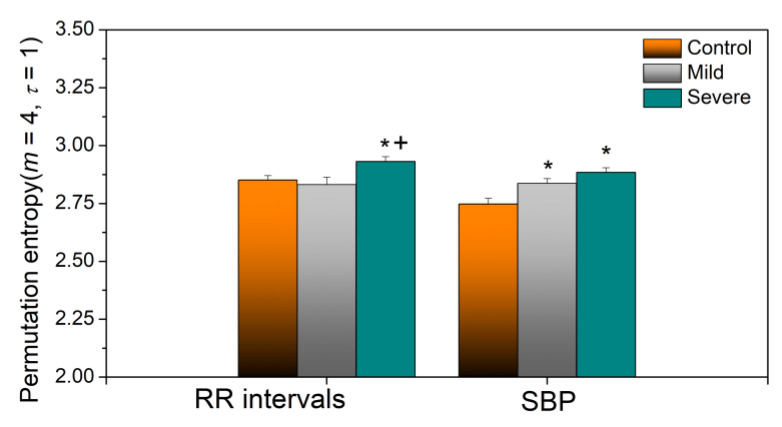
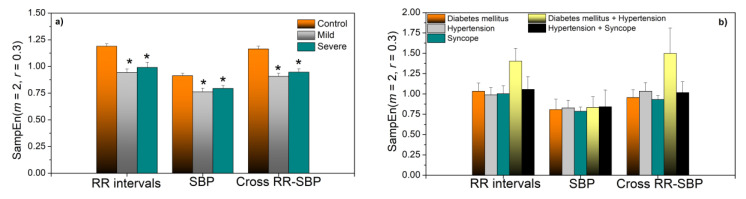
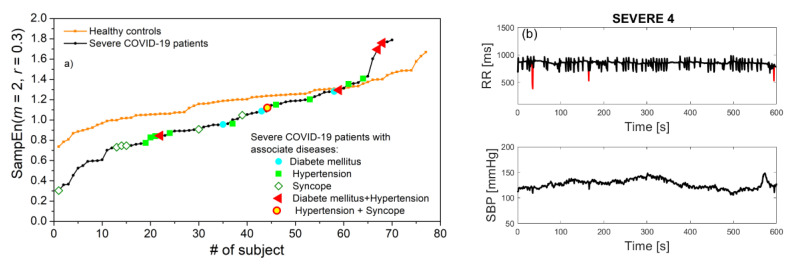
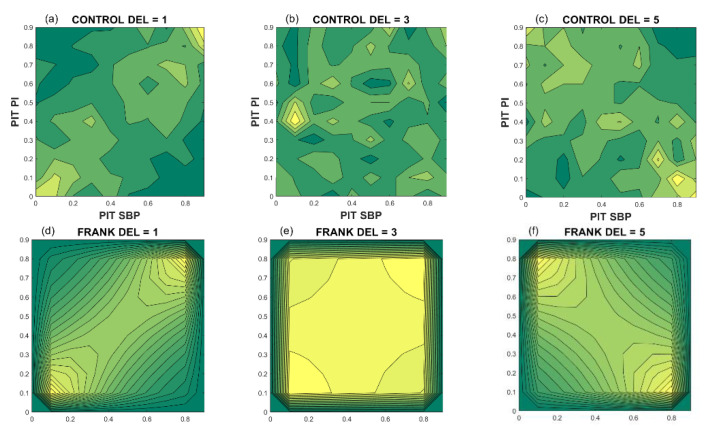
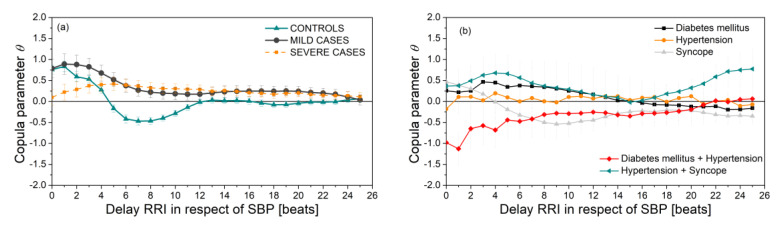
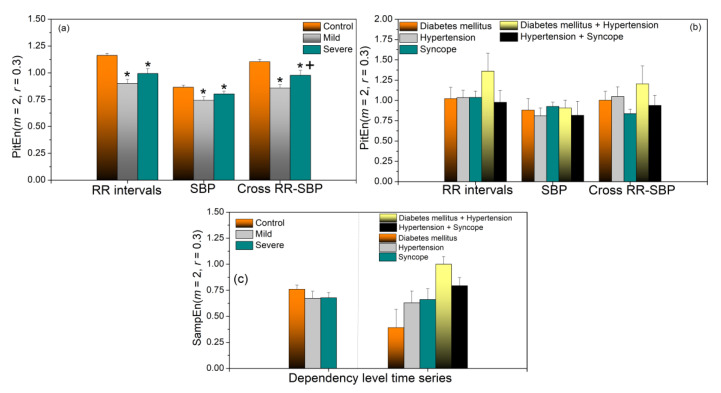
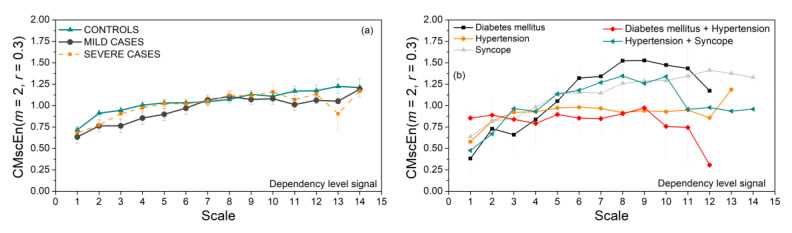
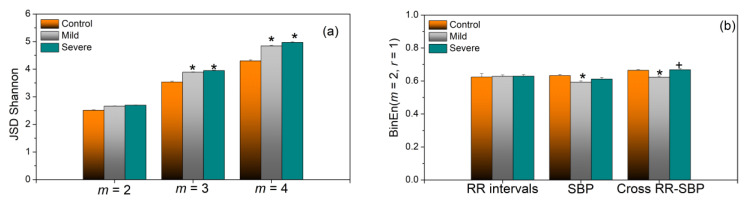
The world has faced a coronavirus outbreak, which, in addition to lung complications, has caused other serious problems, including cardiovascular. There is still no explanation for the mechanisms of coronavirus that trigger dysfunction of the cardiac autonomic nervous system (ANS). We believe that the complex mechanisms that change the status of ANS could only be solved by advanced multidimensional analysis of many variables, obtained both from the original cardiovascular signals and from laboratory analysis and detailed patient history. The aim of this paper is to analyze different measures of entropy as potential dimensions of the multidimensional space of cardiovascular data. The measures were applied to heart rate and systolic blood pressure signals collected from 116 patients with COVID-19 and 77 healthy controls. Methods that indicate a statistically significant difference between patients with different levels of infection and healthy controls will be used for further multivariate research. As a result, it was shown that a statistically significant difference between healthy controls and patients with COVID-19 was shown by sample entropy applied to integrated transformed probability signals, common symbolic dynamics entropy, and copula parameters. Statistical significance between serious and mild patients with COVID-19 can only be achieved by cross-entropies of heart rate signals and systolic pressure. This result contributes to the hypothesis that the severity of COVID-19 disease is associated with ANS disorder and encourages further research.
全球面临着冠状病毒疫情,除肺部并发症外,还引发了包括心血管问题在内的其他严重问题。目前仍无法解释冠状病毒引发心脏自主神经系统(ANS)功能障碍的机制。我们认为,改变ANS状态的复杂机制只能通过对从原始心血管信号、实验室分析以及详细的患者病史中获取的众多变量进行先进的多维度分析来解决。本文的目的是分析熵的不同度量,将其作为心血管数据多维空间的潜在维度。这些度量应用于从116例新冠肺炎患者和77名健康对照者收集的心率和收缩压信号。表明不同感染程度患者与健康对照者之间存在统计学显著差异的方法将用于进一步的多变量研究。结果表明,应用于积分变换概率信号的样本熵、通用符号动力学熵和Copula参数显示,健康对照者与新冠肺炎患者之间存在统计学显著差异。新冠肺炎重症和轻症患者之间的统计学显著性只能通过心率信号和收缩压的交叉熵来实现。这一结果支持了新冠肺炎病情严重程度与ANS紊乱相关的假说,并鼓励进一步研究。