Department of Epidemiology, Tulane School of Public Health and Tropical Medicine, 1440 Canal St. #8318, New Orleans, LA, 70112, USA.
School of Nursing, Louisiana State University Health Sciences Center, New Orleans, LA, 70112, USA.
BMC Infect Dis. 2021 Jan 13;21(1):64. doi: 10.1186/s12879-020-05753-6.
Congenital syphilis is completely preventable through screening and treatment, but rates have been rising in the United States. Certain areas are at particularly high risk. We aimed to assess attitudes, knowledge, and barriers around effective prevention of congenital syphilis among health care providers and community women potentially at risk.
Two parallel studies were conducted: in-depth interviews with health care providers and focus groups with community women in the area of Baton Rouge, Louisiana. Each group was questioned about their experience in providing or seeking prenatal care, knowledge and attitudes about congenital syphilis, sources of information on testing and treatment, perceptions of risk, standards of and barriers to treatment. Results were transcribed into QSR NVivo V10, codes developed, and common themes identified and organized.
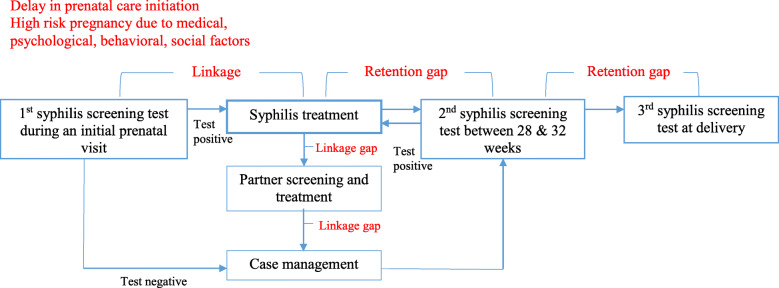
Providers identified delays in testing and care, lack of follow-through with partner testing, and need for community connection for prevention, as major contributors to higher rates of congenital syphilis. Women identified difficulties in accessing Medicaid contributing to delayed start of prenatal care, lack of transportation for prenatal care, and lack of knowledge about testing and prevention for congenital syphilis.
Providers and community members were in broad agreement about factors contributing to higher rates of congenital syphilis, although some aspects were emphasized more by one group or another. Evidence-based interventions, likely at multiple levels, need to be tested and implemented to eliminate congenital syphilis.
先天性梅毒通过筛查和治疗是完全可以预防的,但在美国,其发病率一直在上升。某些地区的风险特别高。我们旨在评估医疗保健提供者和潜在高危社区妇女对有效预防先天性梅毒的态度、知识和障碍。
在路易斯安那州巴吞鲁日地区同时进行了两项研究:对医疗保健提供者进行深入访谈和对社区妇女进行焦点小组讨论。两组都被问到他们在提供或寻求产前护理方面的经验、对先天性梅毒的知识和态度、检测和治疗信息来源、对风险的看法、治疗标准和障碍。结果被转录到 QSR NVivo V10 中,开发了代码,并确定和组织了共同的主题。
提供者确定了检测和护理的延迟、缺乏对伴侣检测的跟进,以及需要社区联系以进行预防,这些是导致先天性梅毒发病率上升的主要因素。妇女确定了获得医疗补助的困难导致产前护理开始延迟、缺乏产前护理的交通工具以及缺乏关于先天性梅毒检测和预防的知识。
提供者和社区成员对导致先天性梅毒发病率上升的因素基本达成一致,尽管有些方面被一个群体或另一个群体更强调。需要测试和实施基于证据的干预措施,可能在多个层面上,以消除先天性梅毒。