Department of Molecular Medicine, University of Padova, 35131, Padua, Italy.
Biostructures and Biosystems National Institute, 00136, Rome, Italy.
Sci Rep. 2021 Jan 12;11(1):481. doi: 10.1038/s41598-020-80048-z.
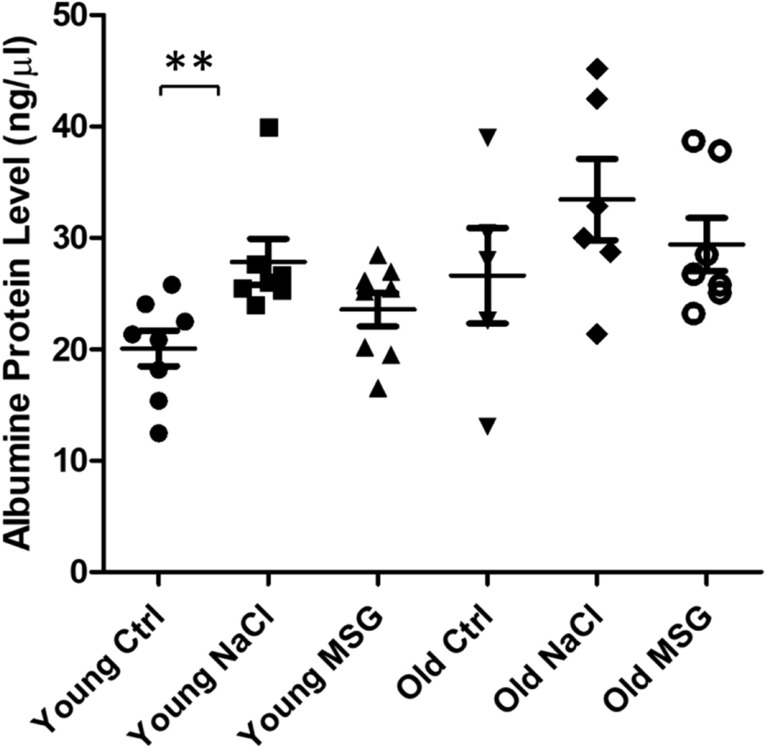
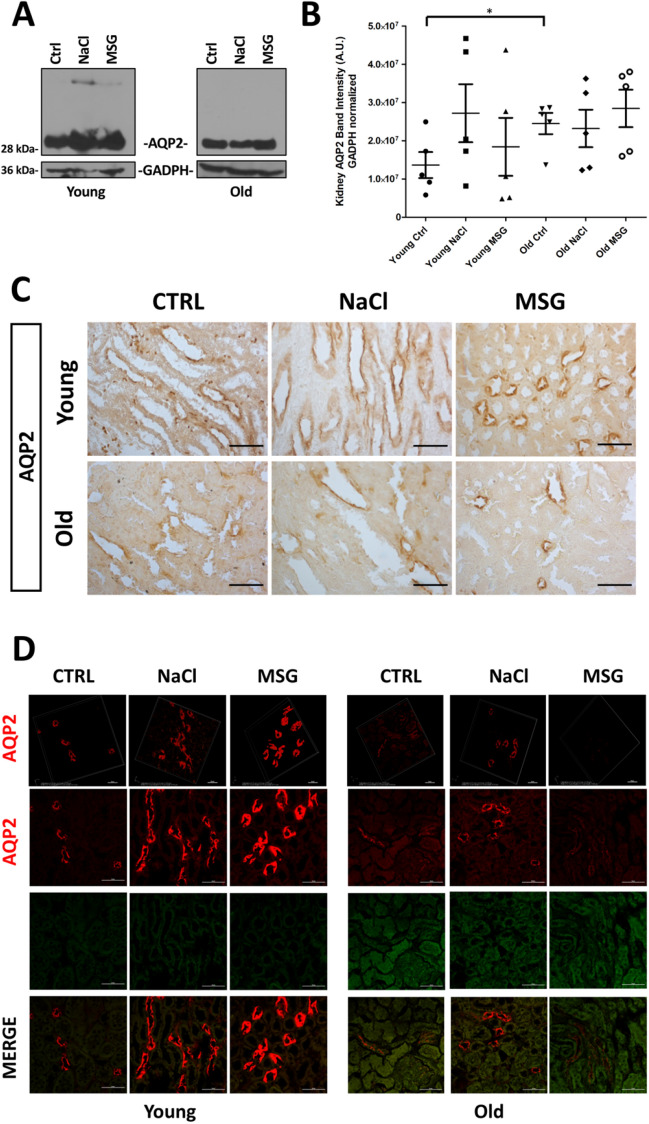
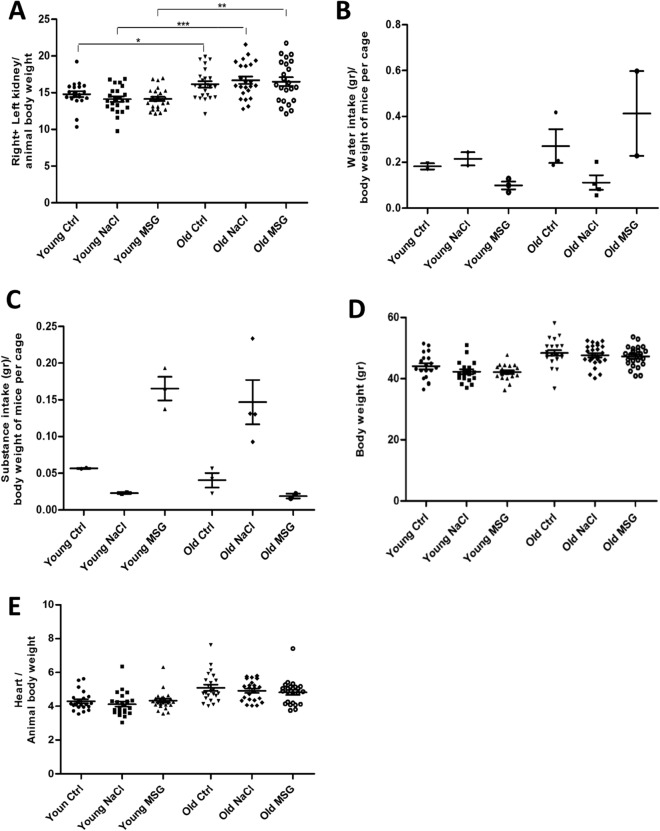
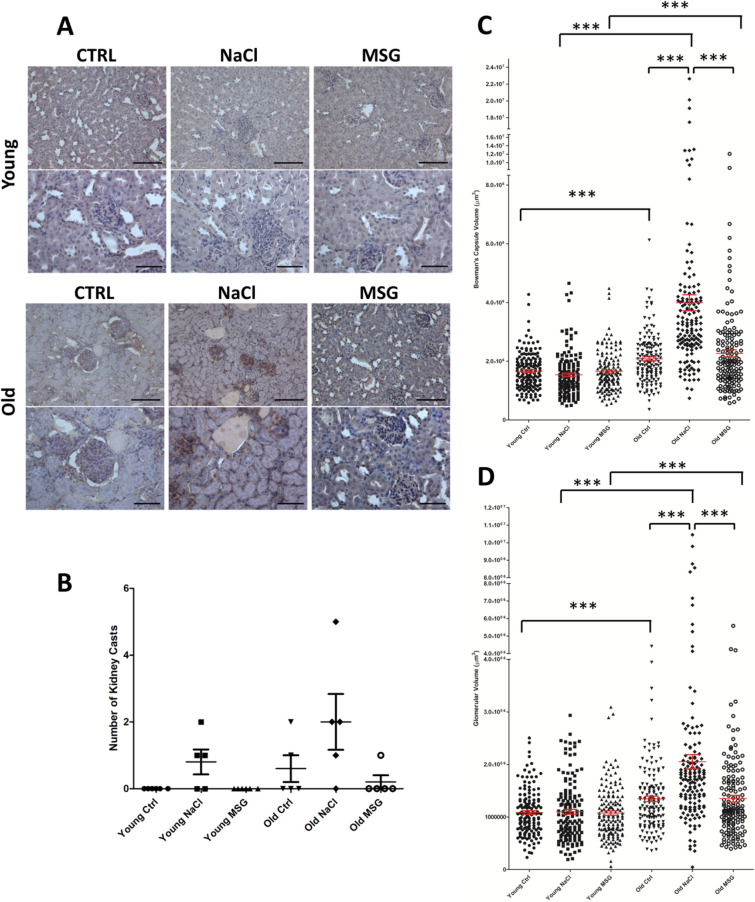
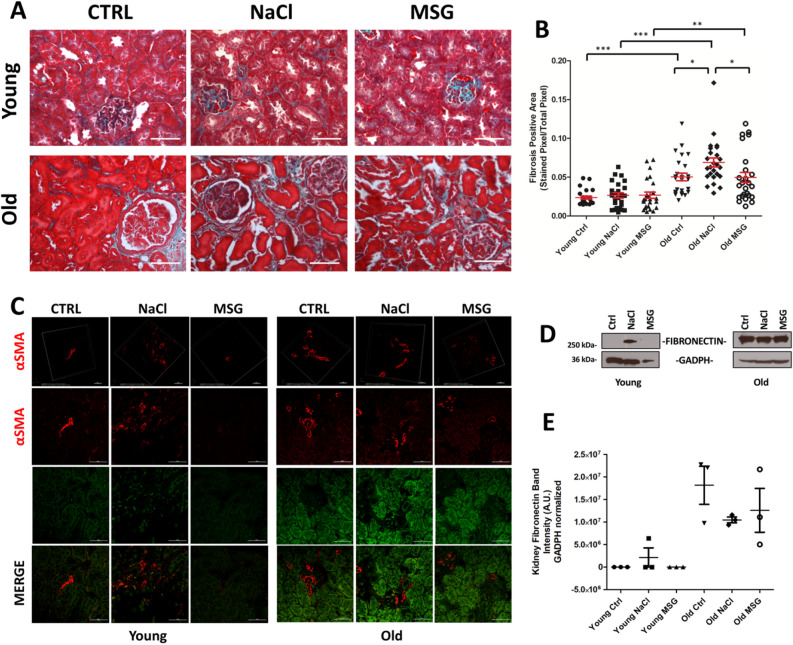
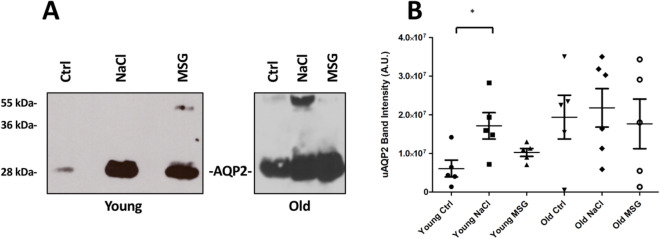
Monosodium Glutamate (MSG) is used as flavour enhancer, with potential beneficial effects due to its nutritional value. Given the decline in kidney functions during aging, we investigated the impact of MSG voluntary intake on the kidney of male mice, aged 6 or 18 months. For 2 months, they freely consumed water (control group), sodium chloride (0.3% NaCl) or MSG (1% MSG) in addition to standard diet. Young animals consuming sodium chloride presented signs of proteinuria, hyperfiltration, enhanced expression and excretion of Aquaporin 2 and initial degenerative reactions suggestive of fibrosis, while MSG-consuming mice were similar to controls. In old mice, aging-related effects including proteinuria and increased renal corpuscle volume were observed in all groups. At an advanced age, MSG caused no adverse effects on the kidney compared to controls, despite the presence of a sodium moiety, similar to sodium chloride. These data show that prolonged MSG intake in mice has less impact on kidney compared to sodium chloride, that already in young animals induced some effects on kidney, possibly related to hypertension.
谷氨酸单钠(MSG)被用作增味剂,由于其营养价值而具有潜在的有益作用。鉴于肾脏功能在衰老过程中下降,我们研究了雄性小鼠在 6 或 18 个月大时自愿摄入 MSG 对肾脏的影响。在 2 个月的时间里,它们除了标准饮食外,还自由饮用水(对照组)、氯化钠(0.3%NaCl)或 MSG(1%MSG)。摄入氯化钠的年轻动物出现蛋白尿、超滤、Aquaporin 2 表达和排泄增强以及纤维化的早期退行性反应迹象,而 MSG 摄入的小鼠与对照组相似。在老年小鼠中,所有组均观察到与年龄相关的蛋白尿和肾单位体积增加的影响。在高龄时,与对照组相比,MSG 对肾脏没有不良影响,尽管存在钠离子部分,与氯化钠相似。这些数据表明,与氯化钠相比,MSG 在小鼠体内的长期摄入对肾脏的影响较小,而在年轻动物中已经对肾脏产生了一些影响,可能与高血压有关。