Sahu Neha, Merényi Zsolt, Bálint Balázs, Kiss Brigitta, Sipos György, Owens Rebecca A, Nagy László G
Synthetic and Systems Biology Unit, Biological Research Center, 6726 Szeged, Hungary.
Doctoral School of Biology, Faculty of Science and Informatics, University of Szeged, 6726 Szeged, Hungary.
Microorganisms. 2021 Jan 11;9(1):149. doi: 10.3390/microorganisms9010149.
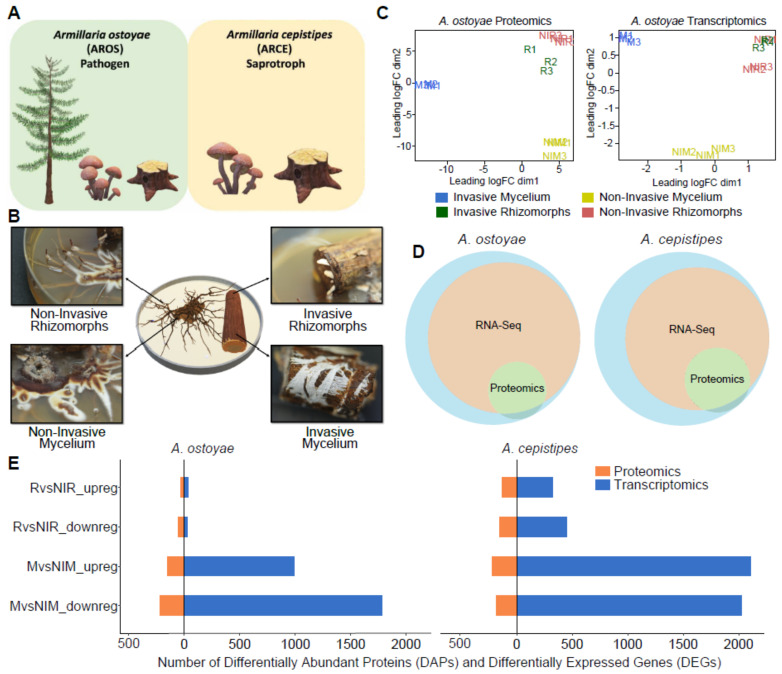
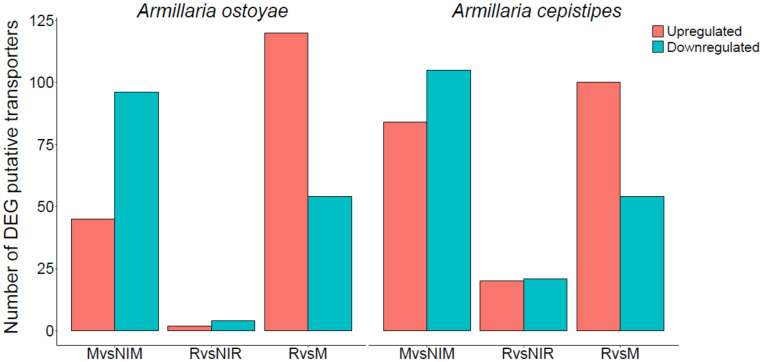
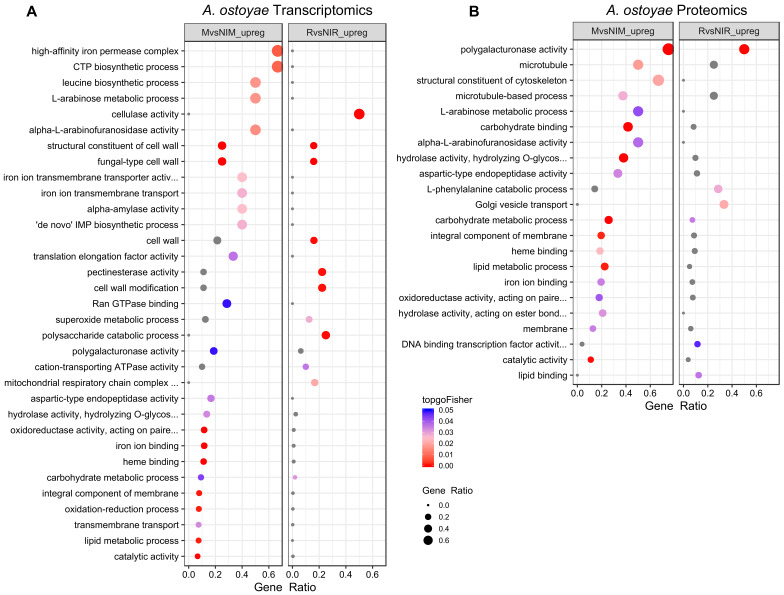
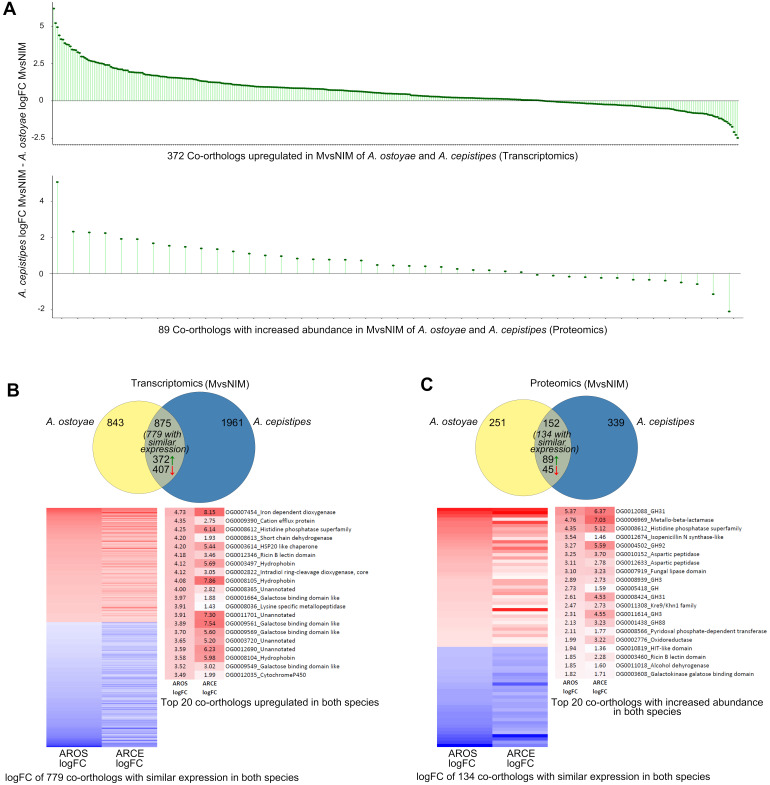
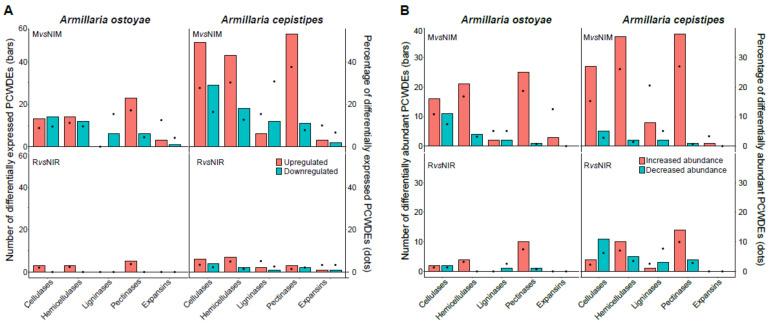
Wood-decaying Basidiomycetes are among the most efficient degraders of plant cell walls, making them key players in forest ecosystems, global carbon cycle, and in bio-based industries. Recent insights from -omics data revealed a high functional diversity of wood-decay strategies, especially among the traditional white-rot and brown-rot dichotomy. We examined the mechanistic bases of wood-decay in the conifer-specialists and using transcriptomic and proteomic approaches. spp. (Fungi, Basidiomycota) include devastating pathogens of temperate forests and saprotrophs that decay wood. They have been discussed as white-rot species, though their response to wood deviates from typical white-rotters. While we observed an upregulation of a diverse suite of plant cell wall degrading enzymes, unlike white-rotters, they possess and express an atypical wood-decay repertoire in which pectinases and expansins are enriched, whereas lignin-decaying enzymes (LDEs) are generally downregulated. This combination of wood decay genes resembles the soft-rot of Ascomycota and appears widespread among Basidiomycota that produce a superficial white rot-like decay. These observations are consistent with ancestral soft-rot decay machinery conserved across asco- and Basidiomycota, a gain of efficient lignin-degrading ability in white-rot fungi and repeated, complete, or partial losses of LDE encoding gene repertoires in brown- and secondarily soft-rot fungi.
木腐担子菌是植物细胞壁最有效的降解者之一,使其成为森林生态系统、全球碳循环和生物基产业中的关键角色。来自组学数据的最新见解揭示了木材腐朽策略的高度功能多样性,尤其是在传统的白腐和褐腐二分法中。我们使用转录组学和蛋白质组学方法研究了针叶树专性真菌木材腐朽的机制基础。 spp.(真菌,担子菌门)包括温带森林的毁灭性病原菌和腐朽木材的腐生菌。它们被认为是白腐菌,尽管它们对木材的反应与典型的白腐菌不同。虽然我们观察到一系列植物细胞壁降解酶的上调,但与白腐菌不同的是,它们拥有并表达一种非典型的木材腐朽基因库,其中果胶酶和扩张蛋白富集,而木质素降解酶(LDEs)通常下调。这种木材腐朽基因的组合类似于子囊菌门的软腐,并且在产生表面类似白腐腐朽的担子菌门中似乎很普遍。这些观察结果与跨子囊菌门和担子菌门保守的祖先软腐腐朽机制、白腐真菌中高效木质素降解能力的获得以及褐腐和次生软腐真菌中LDE编码基因库的重复、完全或部分丧失是一致的。