Oppezzo Alessia, Rosselli Filippo
CNRS UMR9019, Équipe labellisée La Ligue contre le Cancer, Gustave Roussy, 114 rue Edouard Vaillant, 94805, Villejuif, France.
Gustave Roussy Cancer Center, 94805, Villejuif, France.
Cell Biosci. 2021 Jan 13;11(1):18. doi: 10.1186/s13578-021-00529-0.
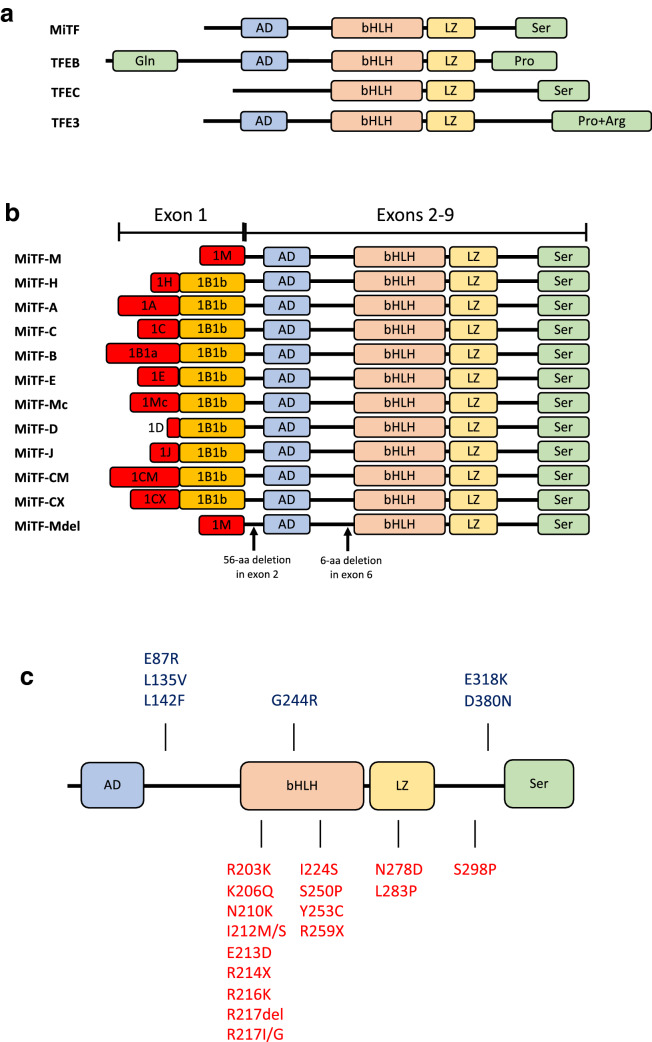
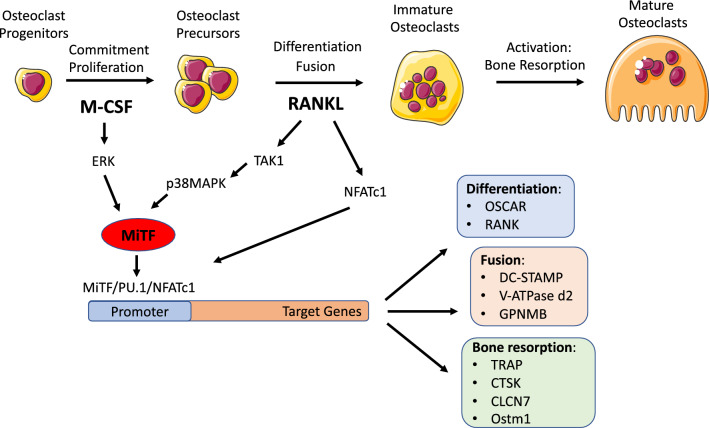
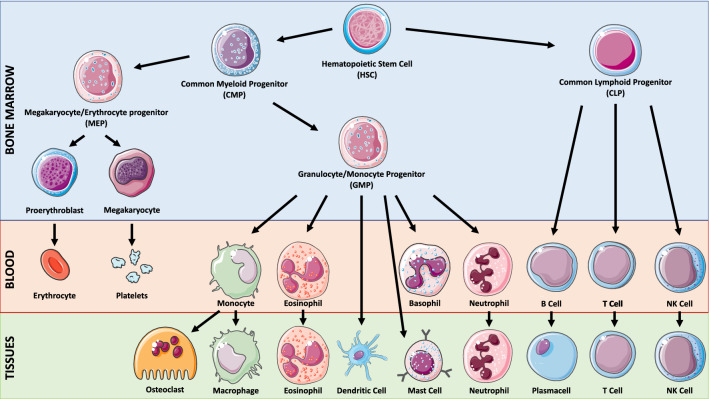
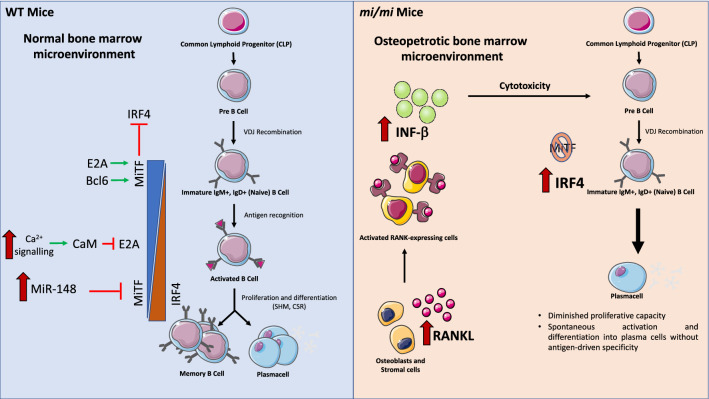
Haematopoiesis, the process by which a restrained population of stem cells terminally differentiates into specific types of blood cells, depends on the tightly regulated temporospatial activity of several transcription factors (TFs). The deregulation of their activity or expression is a main cause of pathological haematopoiesis, leading to bone marrow failure (BMF), anaemia and leukaemia. TFs can be induced and/or activated by different stimuli, to which they respond by regulating the expression of genes and gene networks. Most TFs are highly pleiotropic; i.e., they are capable of influencing two or more apparently unrelated phenotypic traits, and the action of a single TF in a specific setting often depends on its interaction with other TFs and signalling pathway components. The microphthalmia-associated TF (MiTF) is a prototype TF in multiple situations. MiTF has been described extensively as a key regulator of melanocyte and melanoma development because it acts mainly as an oncogene. Mitf-mutated mice show a plethora of pleiotropic phenotypes, such as microphthalmia, deafness, abnormal pigmentation, retinal degeneration, reduced mast cell numbers and osteopetrosis, revealing a greater requirement for MiTF activity in cells and tissue. A growing amount of evidence has led to the delineation of key roles for MiTF in haematopoiesis and/or in cells of haematopoietic origin, including haematopoietic stem cells, mast cells, NK cells, basophiles, B cells and osteoclasts. This review summarizes several roles of MiTF in cells of the haematopoietic system and how MiTFs can impact BM development.
造血作用是一个受限的干细胞群体最终分化为特定类型血细胞的过程,它依赖于几种转录因子(TFs)严格调控的时空活性。这些转录因子活性或表达的失调是病理性造血的主要原因,会导致骨髓衰竭(BMF)、贫血和白血病。转录因子可由不同刺激诱导和/或激活,它们通过调控基因和基因网络的表达来做出反应。大多数转录因子具有高度的多效性,即它们能够影响两个或更多明显不相关的表型特征,并且单个转录因子在特定环境中的作用通常取决于其与其他转录因子和信号通路成分的相互作用。小眼畸形相关转录因子(MiTF)在多种情况下都是典型的转录因子。MiTF作为一种癌基因,已被广泛描述为黑素细胞和黑色素瘤发育的关键调节因子。Mitf突变的小鼠表现出大量多效性表型,如小眼畸形、耳聋、色素沉着异常、视网膜变性、肥大细胞数量减少和骨质石化,这表明细胞和组织对MiTF活性有更大的需求。越来越多的证据表明MiTF在造血作用和/或造血起源细胞(包括造血干细胞、肥大细胞、自然杀伤细胞、嗜碱性粒细胞、B细胞和破骨细胞)中发挥关键作用。本综述总结了MiTF在造血系统细胞中的几种作用以及MiTF如何影响骨髓发育。