Department of Obstetrics and Gynecology, Samsung Medical Center, Sungkyunkwan University School of Medicine, 81 Irwon-ro, Gangnam-gu, Seoul, 06351, Republic of Korea.
Department of Obstetrics and Gynecology, Korea University Guro Hospital, Korea University College of Medicine, 148 Gurodong-ro, Guro-gu, Seoul, 08308, Republic of Korea.
Sci Rep. 2021 Jan 13;11(1):1146. doi: 10.1038/s41598-020-80904-y.
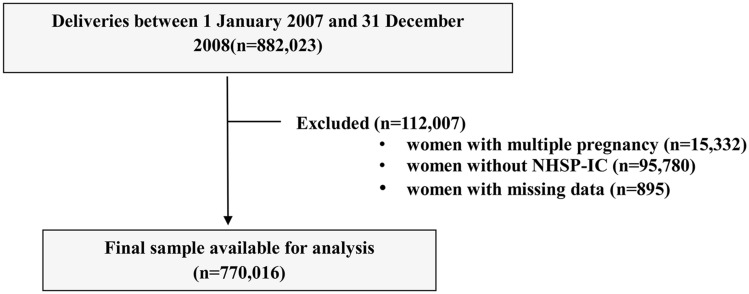
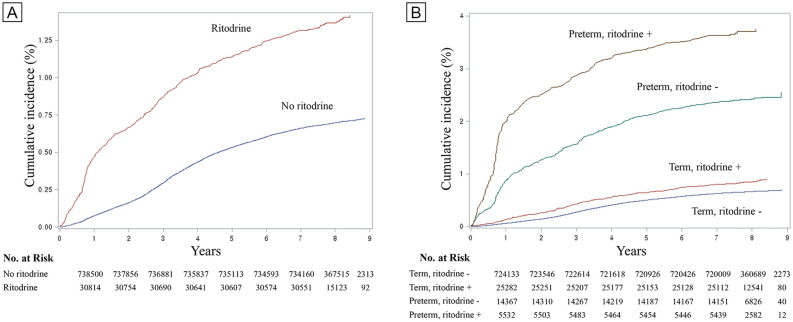
Beta-2 adrenergic receptor (B2AR) agonists, used as asthma treatments and tocolytics during pregnancy, have recently been reported to be associated with autism in their offspring. However, the particular link between autism and ritodrine, a common type of B2AR agonist used solely as tocolytics, has never been substantiated with any nationwide database. Thus, we aimed to examine the association between in utero exposure of ritodrine and the risk of autism in their offspring using a national database. This population-based cohort study was conducted by merging the Korea National Health Insurance claims database and National Health Screening Program for Infants and Children database. These databases included all women who had delivered singleton between January 2007 and December 2008 in Korea. Out of the total 770,016 mothers, 30,959 (4.02%) were exposed to ritodrine during pregnancy, and 5583 (0.73%) of their children were identified as having autism, defined until 8 years of age. According to our analysis, the overall cumulative incidence of autism up to 8 years was 1.37% in ritodrine exposure group and 0.70% in ritodrine non-exposure group (p < 0.05, log-rank test). By Cox proportional hazard analysis, use of ritodrine in preterm birth was associated with significantly higher hazard of autism [adjusted hazard ratio: 1.23, 95% CI 1.04-1.47], after adjusting for confounding variables including maternal age, parity, cesarean section, preterm labor, steroid use, birth weight, gender, and preeclampsia. Thus, in utero exposure to ritodrine was associated with an increased risk of autism in their offspring.
β2 肾上腺素能受体(B2AR)激动剂,被用作哮喘治疗药物和妊娠期间的保胎药,最近有报道称其与后代自闭症有关。然而,ritodrine(一种常用的 B2AR 激动剂,仅用于保胎)与自闭症之间的特殊联系从未通过任何全国性数据库得到证实。因此,我们旨在使用全国性数据库来研究 ritodrine 宫内暴露与后代自闭症风险之间的关联。这项基于人群的队列研究是通过合并韩国国家健康保险索赔数据库和全国婴幼儿健康筛查计划数据库进行的。这些数据库包含了 2007 年 1 月至 2008 年 12 月期间在韩国分娩的所有单胎女性。在总计 770016 名母亲中,有 30959 名(4.02%)在怀孕期间暴露于 ritodrine,其中 5583 名(0.73%)儿童被确诊为自闭症,直到 8 岁。根据我们的分析,ritodrine 暴露组的自闭症总累积发病率为 8 岁时的 1.37%,而 ritodrine 非暴露组为 0.70%(p<0.05,对数秩检验)。通过 Cox 比例风险分析,在早产时使用 ritodrine 与自闭症的发生风险显著增加相关[调整后的危险比:1.23,95%可信区间 1.04-1.47],校正了包括母亲年龄、产次、剖宫产、早产、类固醇使用、出生体重、性别和子痫前期在内的混杂因素。因此,胎儿暴露于 ritodrine 与后代自闭症风险增加有关。