Department of Laboratory Medicine, Seoul National University Hospital, Seoul National University College of Medicine, 101 Daehak-ro, Jongno-gu, Seoul, 03080, South Korea.
Department of Dermatology, Seoul National University Hospital, Seoul National University College of Medicine, 101 Daehak-ro, Jongno-gu, Seoul, 03080, South Korea.
Sci Rep. 2021 Jan 13;11(1):1163. doi: 10.1038/s41598-020-80867-0.
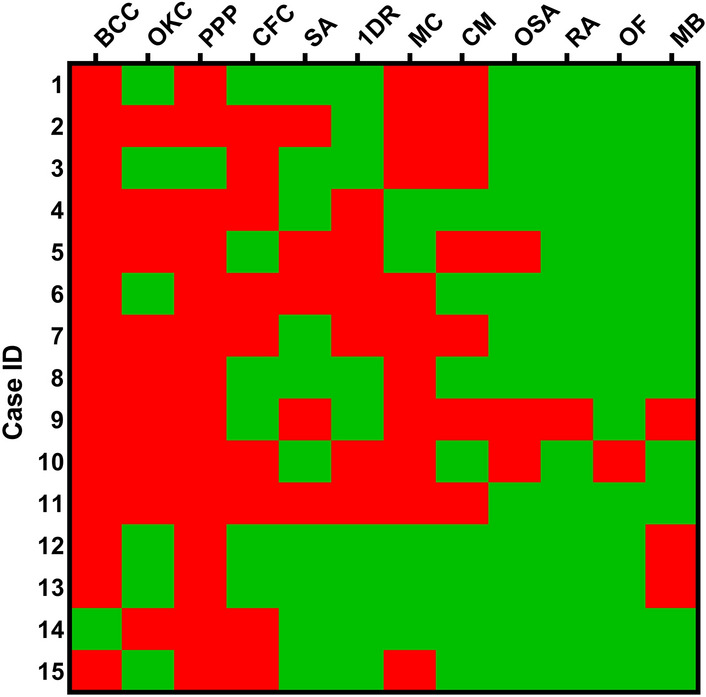
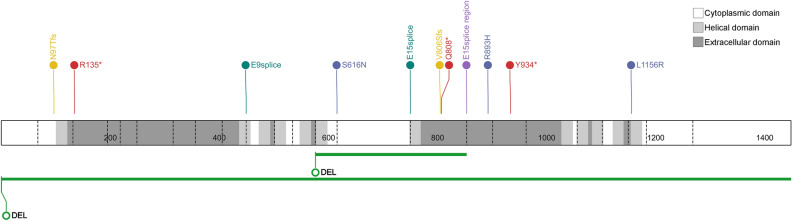
Nevoid basal cell carcinoma syndrome (NBCCS) is mainly characterised by multiple basal cell carcinomas (BCCs) caused by PTCH1, PTCH2, and SUFU. However, clinical and genetic data on Asian NBCCS patients are limited. We aimed to analyse the clinical phenotypes and genetic spectrum of Korean patients with NBCCS. Fifteen patients with NBCCS at Seoul National University Hospital were included, and their clinical data were analysed. Whole-exome sequencing and/or multiplex ligation-dependent probe amplification using peripheral blood were performed to identify genetic causes. Genetic analysis revealed that 73.3% (11/15) of the patients carried 9 pathogenic variants, only in the PTCH1 gene. Variants of uncertain significance (VUS) and likely benign were also detected in 2 (13.3%) and 2 (13.3%) patients, respectively. BCCs were found in the majority of the cases (93.3%) and the number of BCCs increased with age (ρ = 0.595, P = 0.019). This study revealed that PTCH1 pathogenic variants were the main cause of NBCCS in Korean patients. As BCCs are commonly detected, a periodic dermatologic examination is recommended. Finally, our results support the addition of genetic screening to the existing criteria for NBCCS diagnosis.
结节性硬化症相关的基底细胞癌综合征(NBCCS)主要表现为多发性基底细胞癌(BCC),由 PTCH1、PTCH2 和 SUFU 引起。然而,亚洲 NBCCS 患者的临床和遗传数据有限。本研究旨在分析韩国 NBCCS 患者的临床表型和遗传谱。我们纳入了首尔国立大学医院的 15 名 NBCCS 患者,并分析了他们的临床数据。通过外周血进行全外显子组测序和/或多重连接依赖性探针扩增,以确定遗传病因。基因分析显示,73.3%(11/15)的患者携带 9 种致病性变异,仅在 PTCH1 基因中。在 2 名(13.3%)和 2 名(13.3%)患者中分别检测到意义不明的变异(VUS)和可能良性的变异。大多数病例(93.3%)发现有 BCC,且随着年龄的增长 BCC 数量增加(ρ=0.595,P=0.019)。本研究表明,PTCH1 致病性变异是韩国患者 NBCCS 的主要原因。由于常见 BCC 的发生,建议定期进行皮肤科检查。最后,我们的结果支持在 NBCCS 的现有诊断标准中加入遗传筛查。