Xiu Zihan, Liu Jiao, Wu Xin, Li Xiangyong, Li Sanzhong, Wu Xiaofeng, Lv Xiaohua, Ye Hua, Tang Xudong
Collaborative innovation center for antitumor active substance research and development, Institute of Biochemistry and Molecular Biology, Guangdong Medical University, Zhanjiang 524023, P.R. China.
Guangdong Key Laboratory for Research and Development of Natural Drugs, Marine Medical Research Institute of Guangdong Zhanjiang, Department of Pharmacology, Guangdong Medical University, Zhanjiang 524023, P.R. China.
J Cancer. 2021 Jan 1;12(4):1169-1178. doi: 10.7150/jca.50512. eCollection 2021.
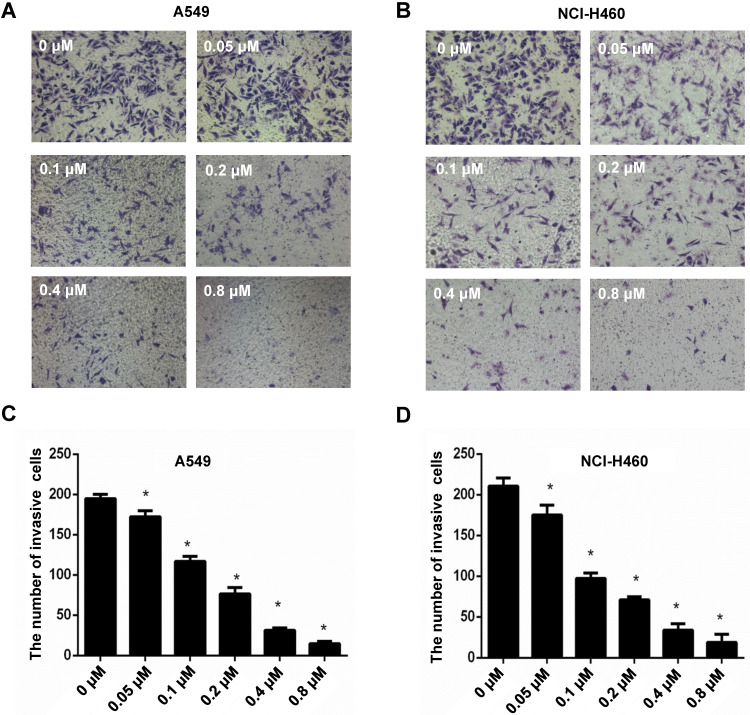
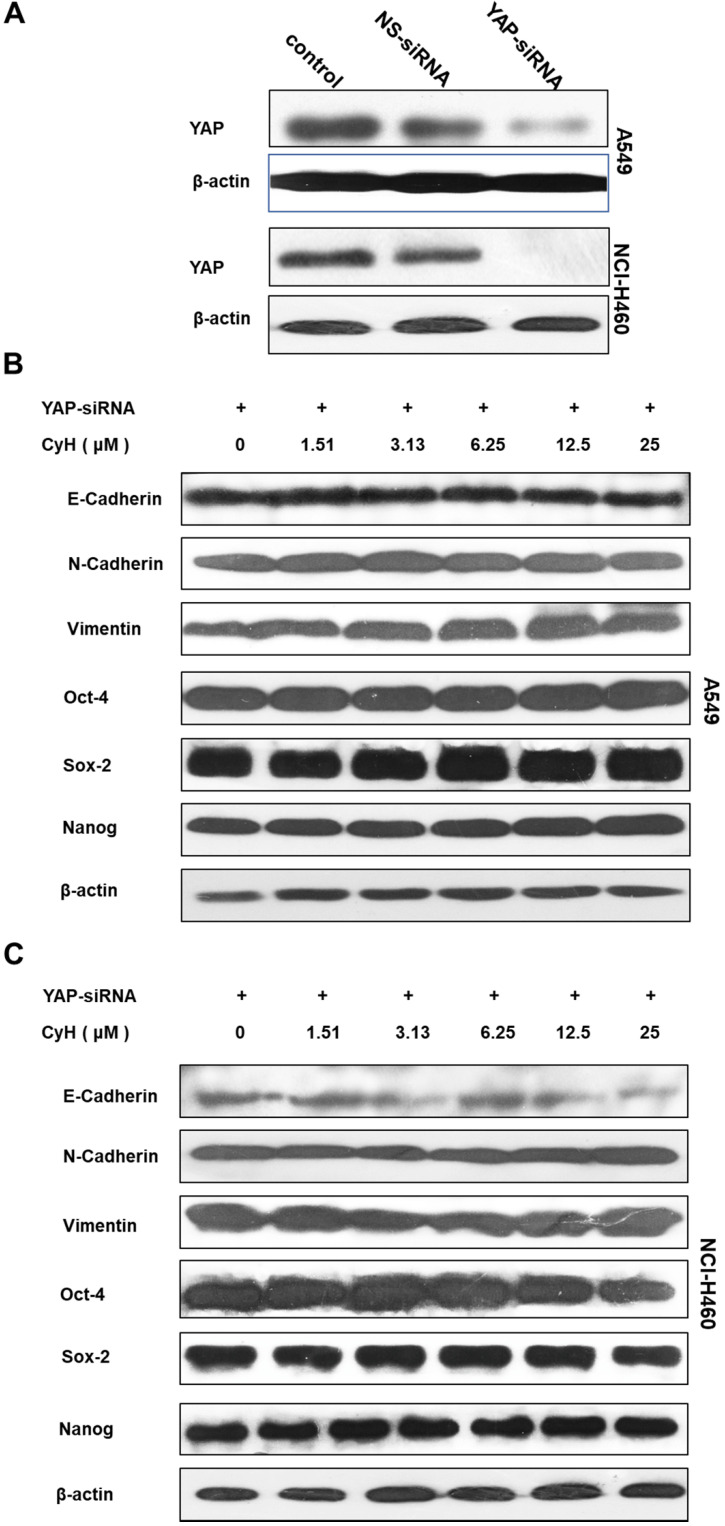
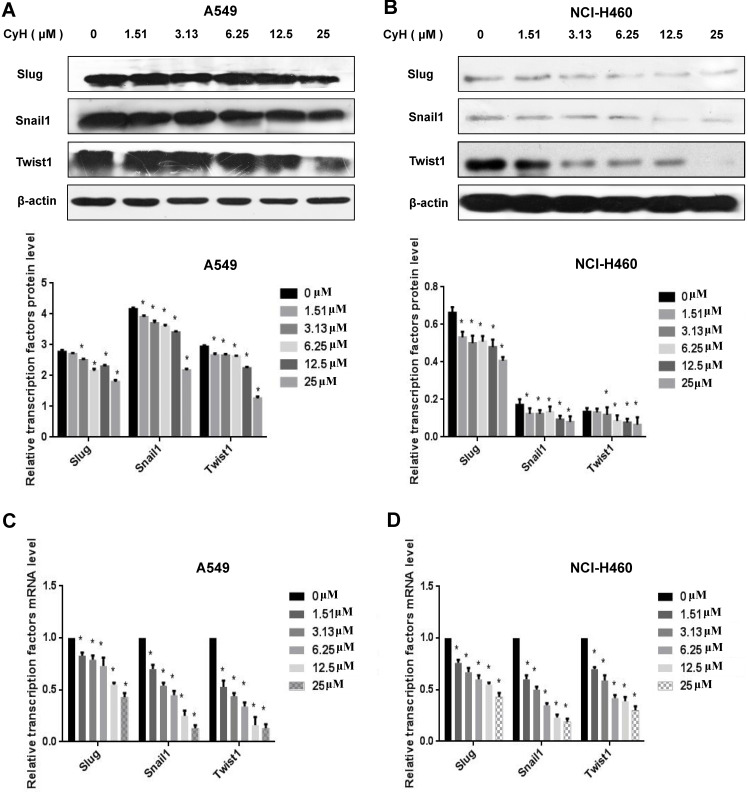
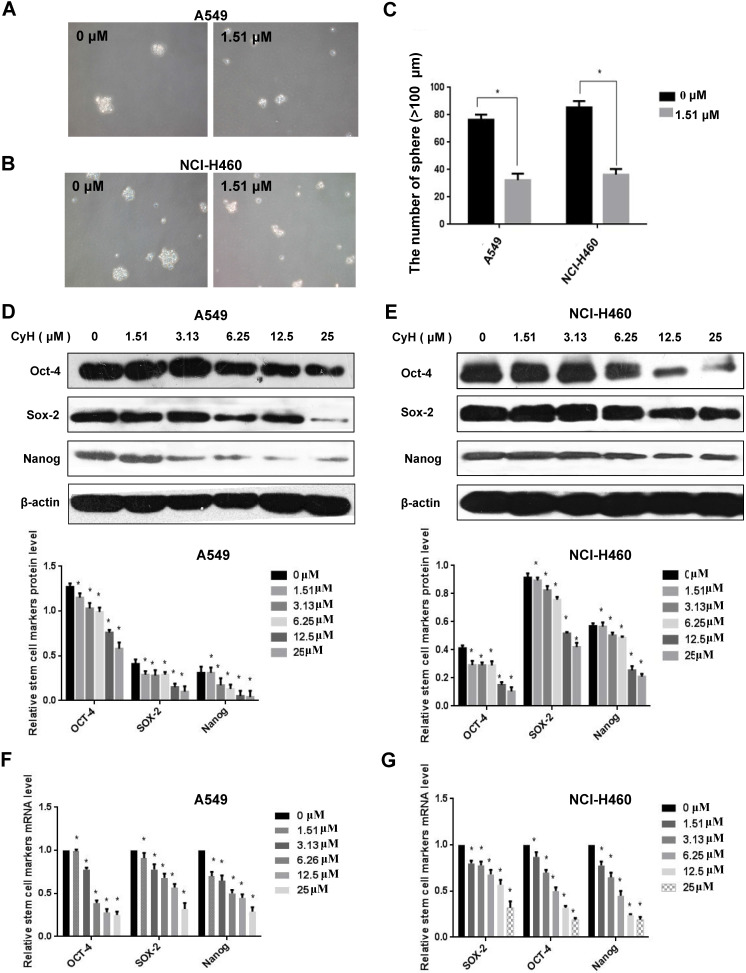
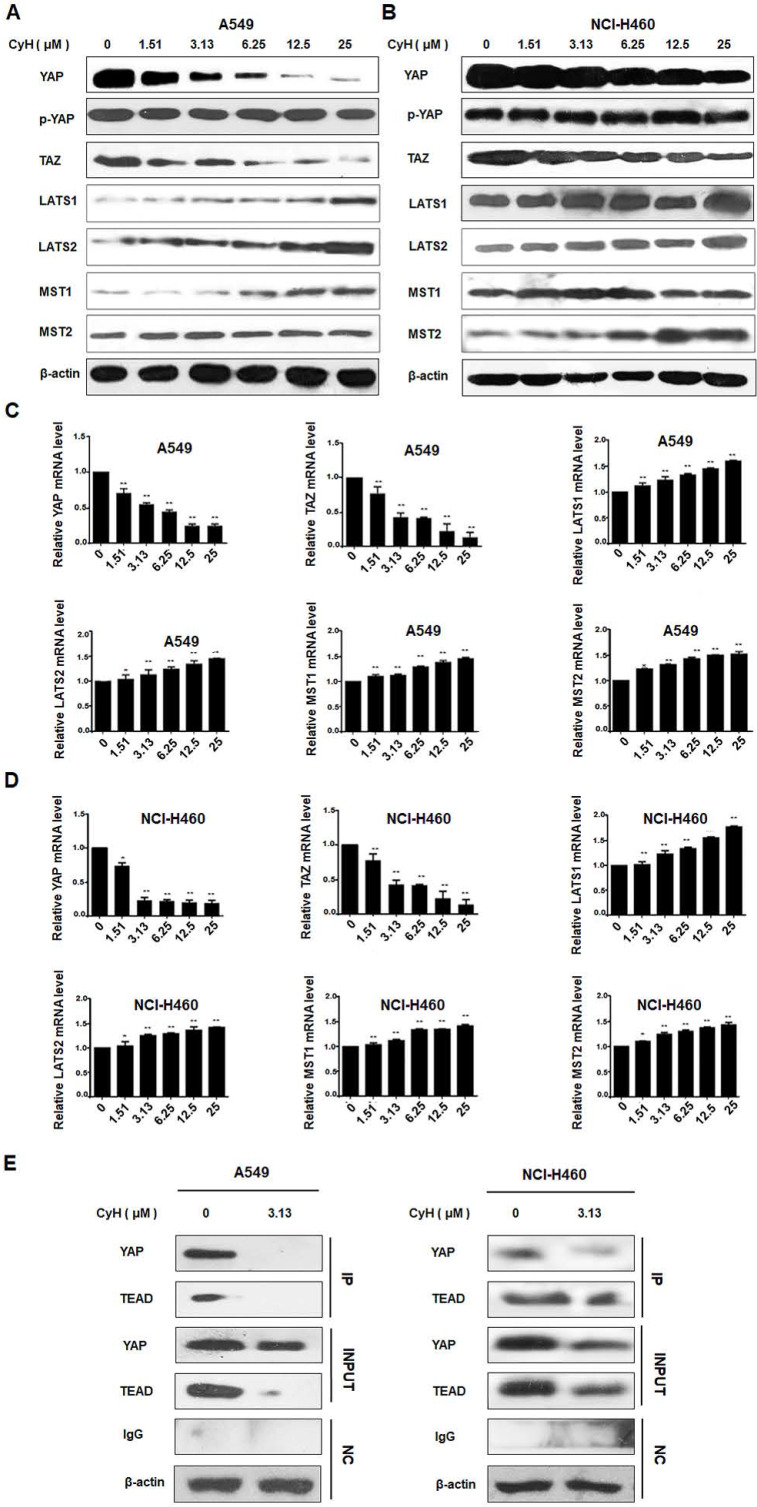
Our previous studies have isolated cytochalasin H (CyH) from endophytic fungus derived from mangrove and found that CyH induced apoptosis and inhibited migration and angiogenesis in non-small cell lung cancer (NSCLC) cells. In this study, we further investigated the effect of CyH on epithelial-mesenchymal transition (EMT) and cancer stemness of A549 and NCI-H460 NSCLC cells and the underlying mechanisms, especially the role of YAP/ TAZ signaling pathway in the process. Our results showed that CyH significantly inhibited invasive ability and the sphere formation of NSCLC cells. The expression of E-cadherin, an EMT epithelial marker, was obviously up-regulated, while the expression of Vimentin and N-cadherin, the EMT mesenchymal markers, was dramatically down-regulated by CyH treatment in NSCLC cells. Moreover, the expression of EMT-associated transcription factors including Slug, Twist1, and Snail1 and stemness markers including Nanog, Sox-2, and Oct-4 was significantly down-regulated by CyH treatment in NSCLC cells. Additionally, CyH significantly down-regulated YAP and TAZ expression and up-regulated LAST1/2 and MST1/2 expression, and CyH inhibited the interaction between YAP and TEAD. Furthermore, YAP knockdown abolished the effect of CyH on the expression of EMT- and stemness-related markers in NSCLC cells. Taken together, these results suggest that CyH inhibits EMT and cancer stemness of NSCLC cells the regulation of YAP/TAZ signaling pathway.
我们之前的研究从红树林内生真菌中分离出了细胞松弛素H(CyH),并发现CyH可诱导非小细胞肺癌(NSCLC)细胞凋亡,抑制其迁移和血管生成。在本研究中,我们进一步探究了CyH对A549和NCI-H460 NSCLC细胞上皮-间质转化(EMT)和癌症干性的影响及其潜在机制,尤其是YAP/TAZ信号通路在此过程中的作用。我们的结果表明,CyH显著抑制NSCLC细胞的侵袭能力和球体形成。EMT上皮标志物E-钙黏蛋白的表达明显上调,而EMT间质标志物波形蛋白和N-钙黏蛋白的表达在CyH处理的NSCLC细胞中显著下调。此外,CyH处理显著下调了NSCLC细胞中包括Slug、Twist1和Snail1在内的EMT相关转录因子以及包括Nanog、Sox-2和Oct-4在内的干性标志物的表达。另外,CyH显著下调YAP和TAZ的表达,上调LAST1/2和MST1/2的表达,并且CyH抑制YAP与TEAD之间的相互作用。此外,敲低YAP消除了CyH对NSCLC细胞中EMT和干性相关标志物表达的影响。综上所述,这些结果表明,CyH通过调节YAP/TAZ信号通路抑制NSCLC细胞的EMT和癌症干性。