Department of Biomedical Engineering, Yale University, New Haven, CT 06511.
Department of Molecular Biophysics and Biochemistry, Yale University, New Haven, CT 06511.
Proc Natl Acad Sci U S A. 2021 Jan 5;118(1). doi: 10.1073/pnas.2016605118. Epub 2020 Dec 21.
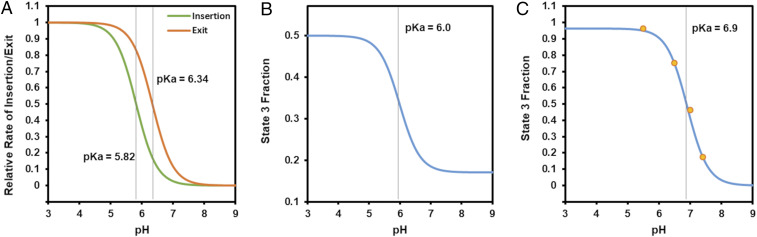
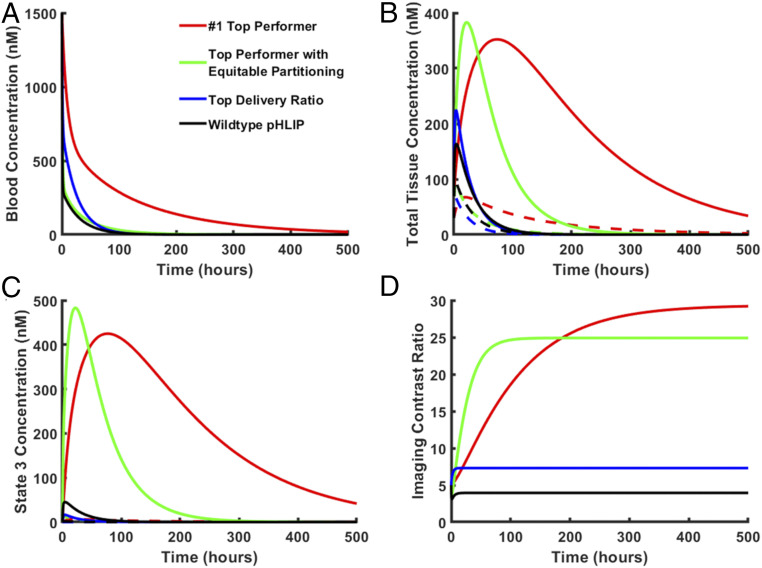
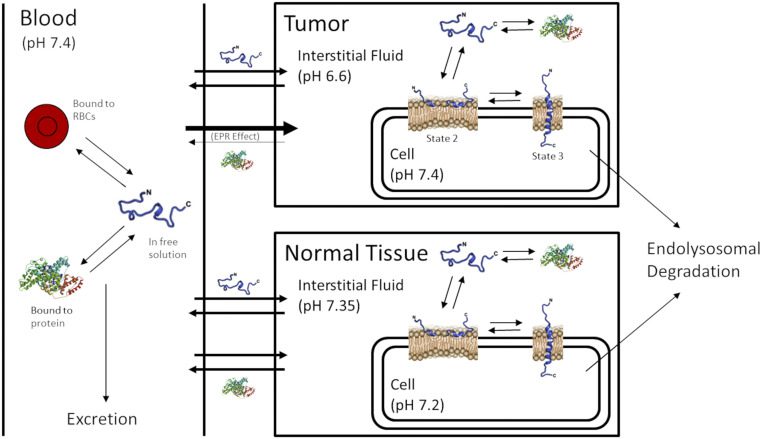
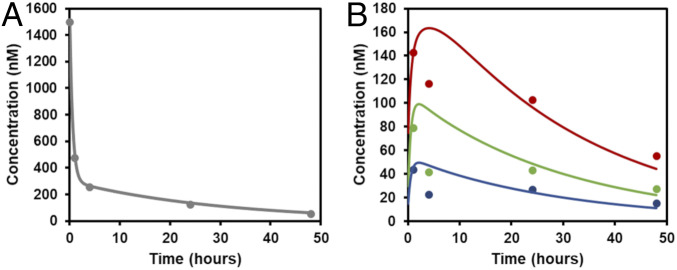
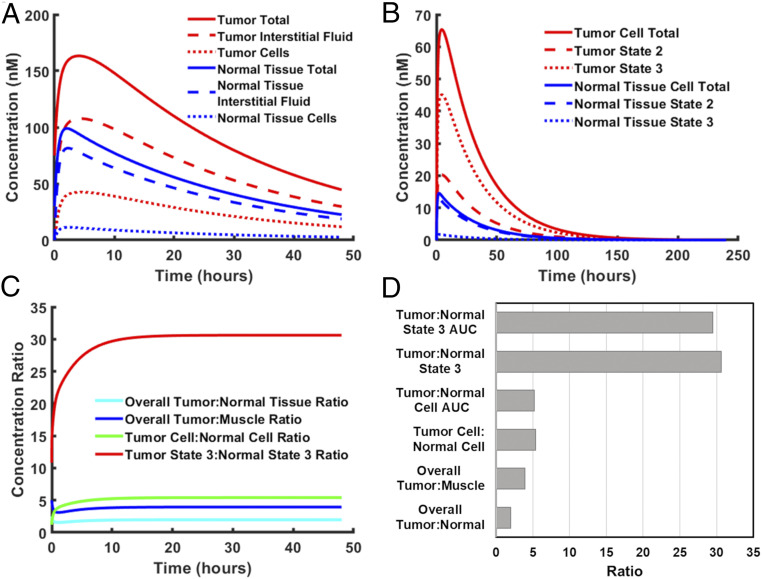
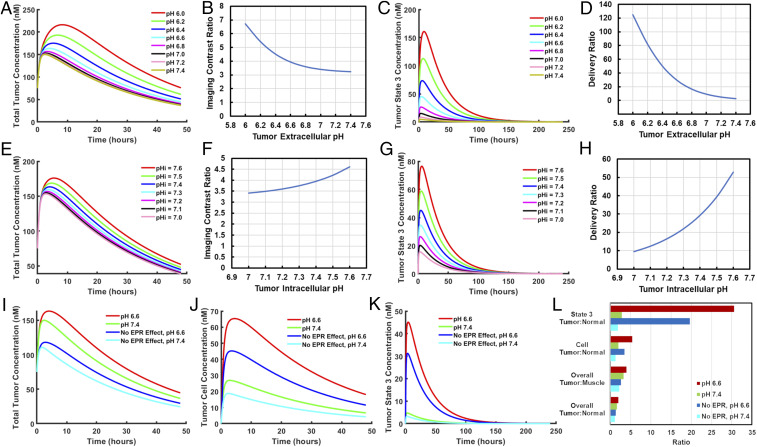
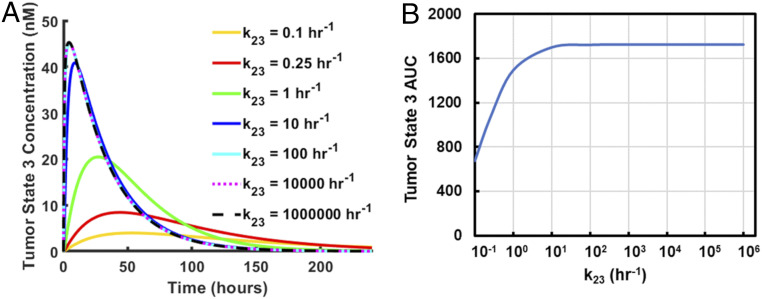
A pH-Low Insertion Peptide (pHLIP) is a pH-sensitive peptide that undergoes membrane insertion, resulting in transmembrane helix formation, on exposure to acidity at a tumor cell surface. As a result, pHLIPs preferentially accumulate within tumors and can be used for tumor-targeted imaging and drug delivery. Here we explore the determinants of pHLIP insertion, targeting, and delivery through a computational modeling approach. We generate a simple mathematical model to describe the transmembrane insertion process and then integrate it into a pharmacokinetic model, which predicts the tumor vs. normal tissue biodistribution of the most studied pHLIP, "wild-type pHLIP," over time after a single intravenous injection. From these models, we gain insight into the various mechanisms behind pHLIP tumor targeting and delivery, as well as the various biological parameters that influence it. Furthermore, we analyze how changing the properties of pHLIP can influence the efficacy of tumor targeting and delivery, and we predict the properties for optimal pHLIP phenotypes that have superior tumor targeting and delivery capabilities compared with wild-type pHLIP.
一种 pH 低插入肽(pHLIP)是一种 pH 敏感肽,在暴露于肿瘤细胞表面的酸性环境时,会发生膜插入,从而形成跨膜螺旋。因此,pHLIP 优先在肿瘤内积累,可用于肿瘤靶向成像和药物递送。在这里,我们通过计算建模方法探索了 pHLIP 插入、靶向和递释的决定因素。我们生成了一个简单的数学模型来描述跨膜插入过程,然后将其整合到药代动力学模型中,该模型预测了在单次静脉注射后,经过一段时间,最具研究意义的 pHLIP(“野生型 pHLIP”)在肿瘤与正常组织中的生物分布。通过这些模型,我们深入了解了 pHLIP 肿瘤靶向和递释的各种机制,以及影响这些机制的各种生物学参数。此外,我们分析了改变 pHLIP 的性质如何影响肿瘤靶向和递释的效果,并预测了具有比野生型 pHLIP 更优的肿瘤靶向和递释能力的最佳 pHLIP 表型的性质。