Miralpeix Cristina, Reguera Ana Cristina, Fosch Anna, Casas Maria, Lillo Jaume, Navarro Gemma, Franco Rafael, Casas Josefina, Alexander Stephen P H, Casals Núria, Rodríguez-Rodríguez Rosalía
Basic Sciences Department, Faculty of Medicine and Health Sciences, Universitat Internacional de Catalunya, Sant Cugat del Vallès, Spain.
INSERM, Neurocentre Magendie, University of Bordeaux, Bordeaux, France.
Br J Pharmacol. 2021 Apr;178(7):1507-1523. doi: 10.1111/bph.15377. Epub 2021 Feb 12.
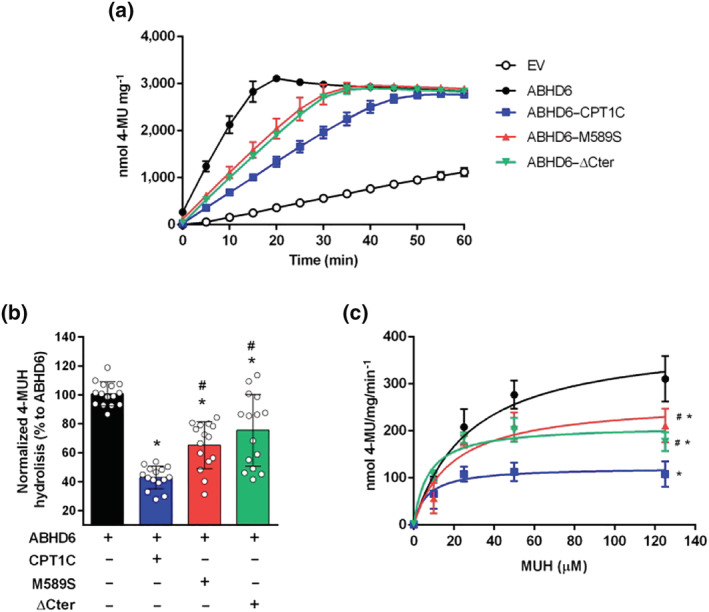
The enzyme α/β-hydrolase domain containing 6 (ABHD6), a new member of the endocannabinoid system, is a promising therapeutic target against neuronal-related diseases. However, how ABHD6 activity is regulated is not known. ABHD6 coexists in protein complexes with the brain-specific carnitine palmitoyltransferase 1C (CPT1C). CPT1C is involved in neuro-metabolic functions, depending on brain malonyl-CoA levels. Our aim was to study CPT1C-ABHD6 interaction and determine whether CPT1C is a key regulator of ABHD6 activity depending on nutritional status.
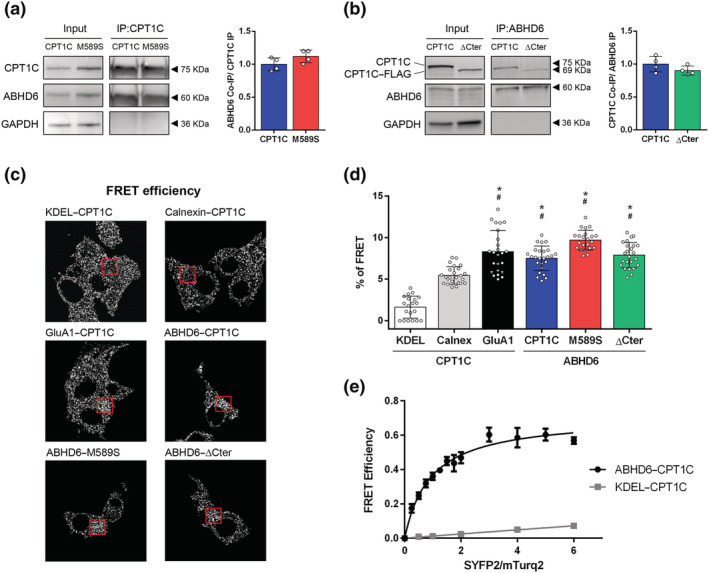
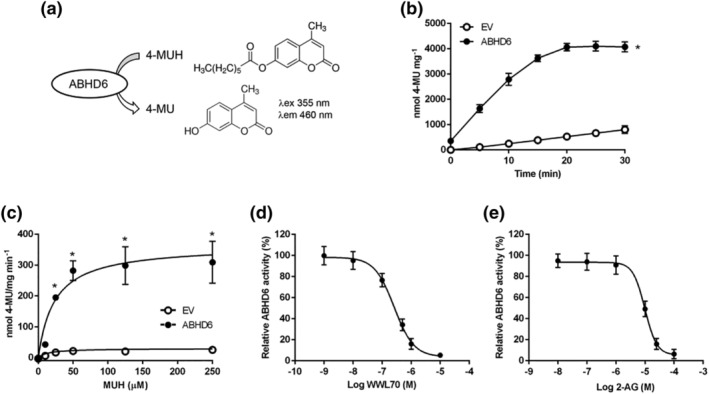
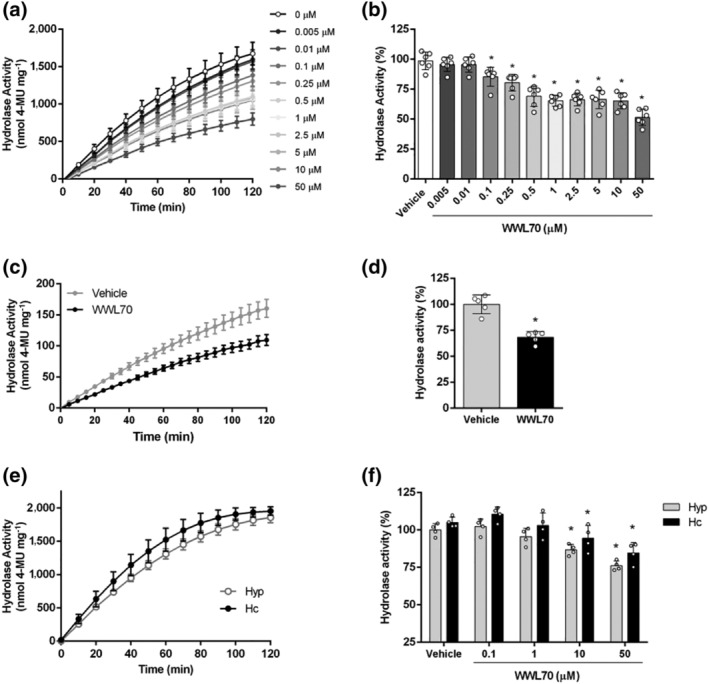
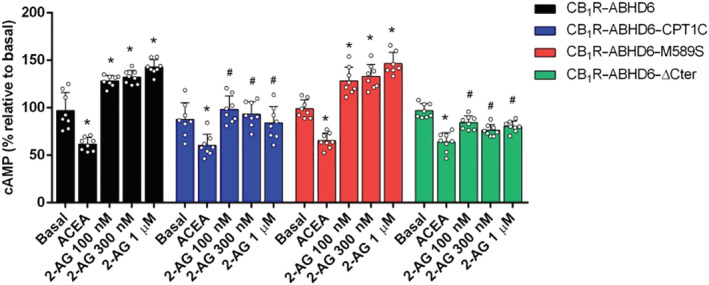
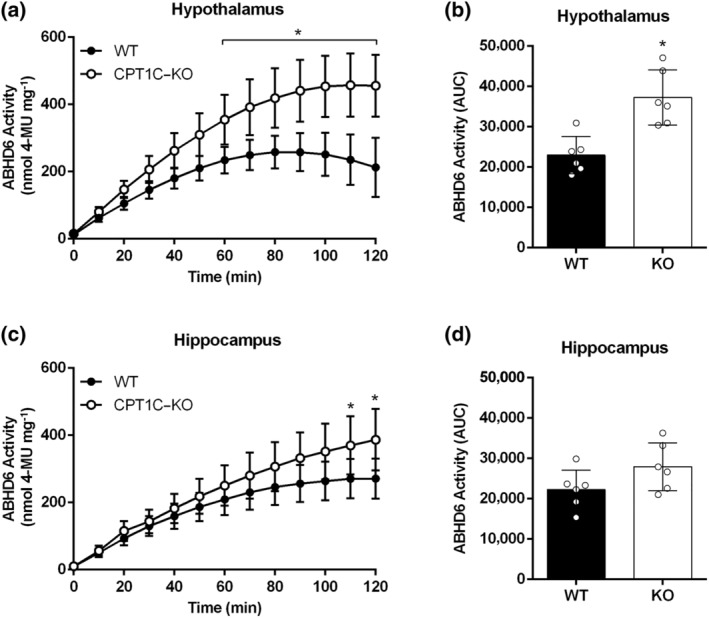
Co-immunoprecipitation and FRET assays were used to explore ABHD6 interaction with CPT1C or modified malonyl-CoA-insensitive or C-terminal truncated CPT1C forms. Cannabinoid CB receptor-mediated signalling was investigated by determining cAMP levels. A novel highly sensitive fluorescent method was optimized to measure ABHD6 activity in non-neuronal and neuronal cells and in brain tissues from wild-type (WT) and CPT1C-KO mice.
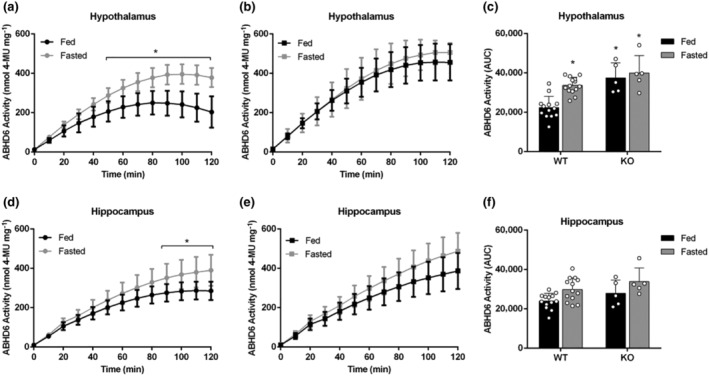
CPT1C interacted with ABHD6 and negatively regulated its hydrolase activity, thereby regulating 2-AG downstream signalling. Accordingly, brain tissues of CPT1C-KO mice showed increased ABHD6 activity. CPT1C malonyl-CoA sensing was key to the regulatory role on ABHD6 activity and CB receptor signalling. Fasting, which attenuates brain malonyl-CoA, significantly increased ABHD6 activity in hypothalamus from WT, but not CPT1C-KO, mice.
Our finding that negative regulation of ABHD6 activity, particularly in the hypothalamus, is sensitive to nutritional status throws new light on the characterization and the importance of the proteins involved as potential targets against diseases affecting the CNS.
含α/β水解酶结构域6(ABHD6)的酶是内源性大麻素系统的新成员,是治疗神经相关疾病的一个有前景的靶点。然而,ABHD6的活性是如何被调节的尚不清楚。ABHD6与脑特异性肉碱棕榈酰转移酶1C(CPT1C)共存于蛋白复合物中。CPT1C参与神经代谢功能,其依赖于脑丙二酰辅酶A水平。我们的目的是研究CPT1C与ABHD6的相互作用,并确定CPT1C是否是根据营养状况调节ABHD6活性的关键调节因子。
采用免疫共沉淀和荧光共振能量转移(FRET)分析来探究ABHD6与CPT1C或修饰的对丙二酰辅酶A不敏感或C端截短的CPT1C形式的相互作用。通过测定环磷酸腺苷(cAMP)水平来研究大麻素CB受体介导的信号传导。优化了一种新型高灵敏度荧光方法,以测量野生型(WT)和CPT1C基因敲除(KO)小鼠的非神经元和神经元细胞以及脑组织中的ABHD6活性。
CPT1C与ABHD6相互作用并负向调节其水解酶活性,从而调节2-花生四烯酸甘油(2-AG)下游信号传导。因此,CPT1C-KO小鼠的脑组织显示ABHD6活性增加。CPT1C对丙二酰辅酶A的感应是其对ABHD6活性和CB受体信号传导起调节作用的关键。禁食会降低脑丙二酰辅酶A水平,显著增加WT小鼠下丘脑的ABHD6活性,但对CPT1C-KO小鼠无效。
我们发现ABHD6活性的负向调节,特别是在下丘脑中,对营养状况敏感,这为作为影响中枢神经系统疾病潜在靶点的相关蛋白质的特性和重要性提供了新的线索。