Candiolo Cancer Institute, FPO-IRCCS, Strada Provinciale 142, 10060, Candiolo, TO, Italy.
Department of Oncology, University of Turin, Turin, Italy.
J Exp Clin Cancer Res. 2021 Jan 14;40(1):32. doi: 10.1186/s13046-020-01822-5.
The receptor encoded by the MET oncogene and its ligand Hepatocyte Growth Factor (HGF) are at the core of the invasive-metastatic behavior. In a number of instances genetic alterations result in ligand-independent onset of malignancy (MET addiction). More frequently, ligand stimulation of wild-type MET contributes to progression toward metastasis (MET expedience). Thus, while MET inhibitors alone are effective in the first case, combination therapy with ligand inhibitors is required in the second condition.
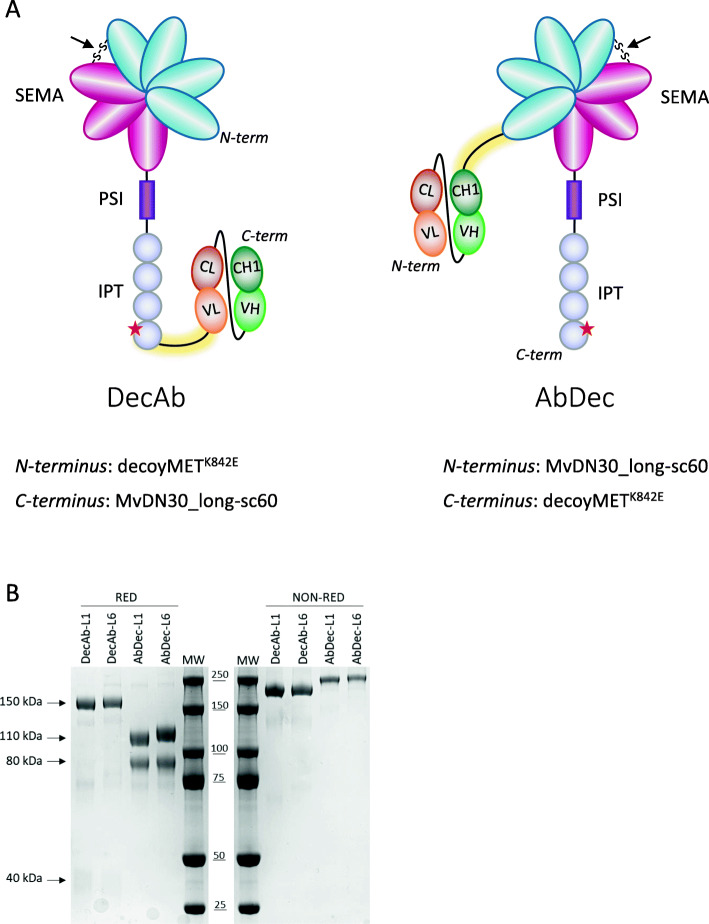
In this paper, we generated hybrid molecules gathering HGF and MET inhibitory properties. This has been achieved by 'head-to-tail' or 'tail-to-head' fusion of a single chain Fab derived from the DN30 MET antibody with a recombinant 'ad-hoc' engineered MET extracellular domain (decoyMET), encompassing the HGF binding site but lacking the DN30 epitope.
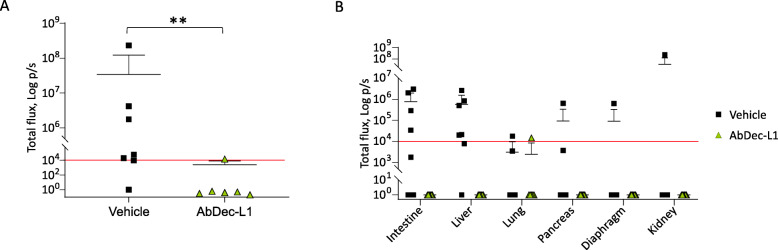
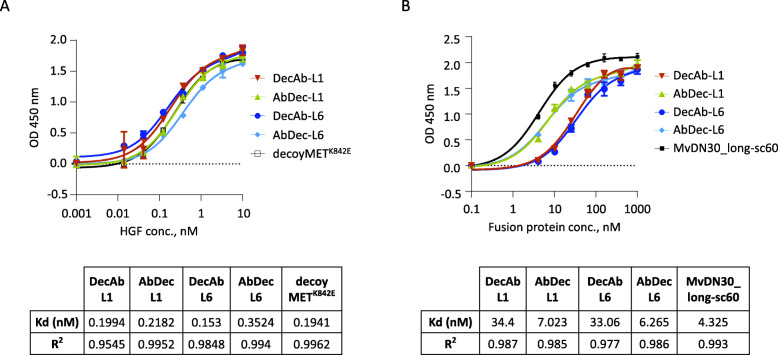
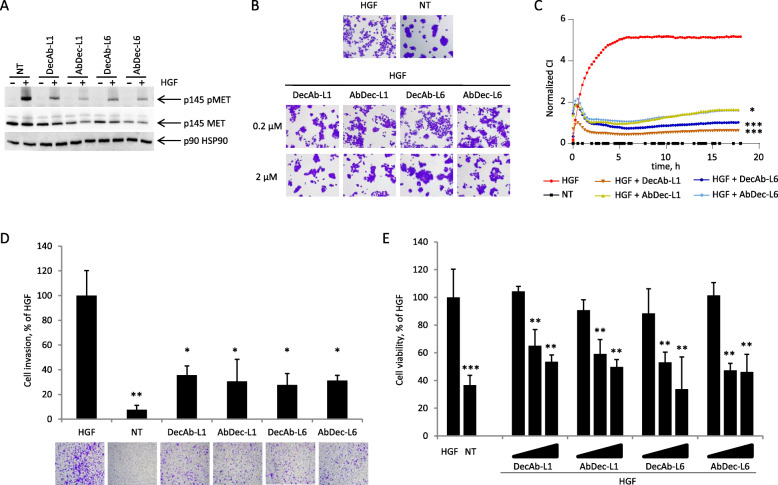
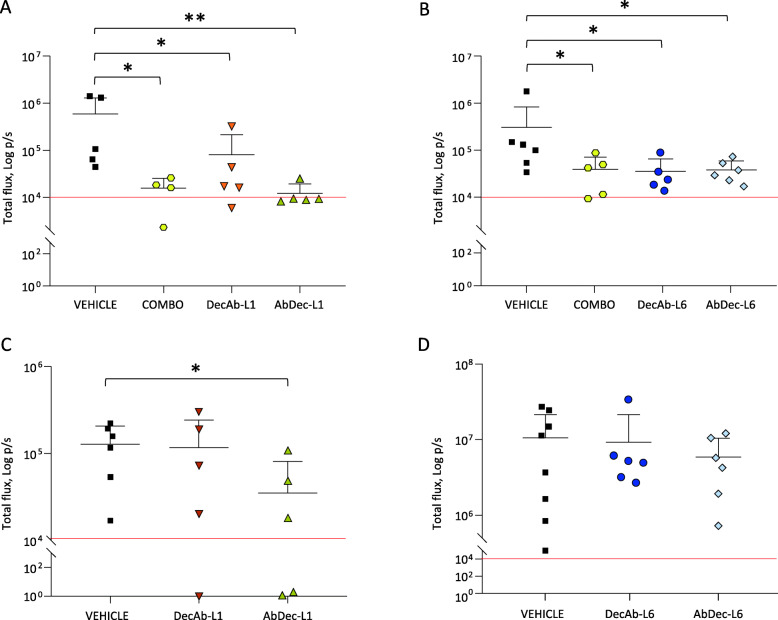
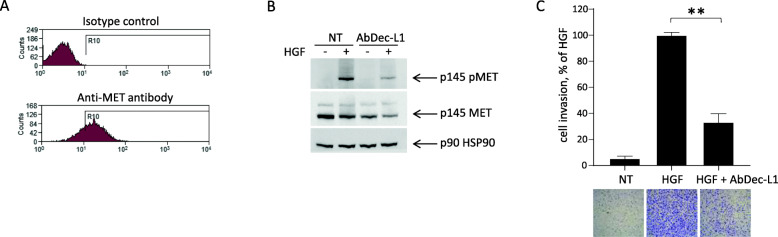
The hybrid molecules correctly bind MET and HGF, inhibit HGF-induced MET downstream signaling, and quench HGF-driven biological responses, such as growth, motility and invasion, in cancer cells of different origin. Two metastatic models were generated in mice knocked-in by the human HGF gene: (i) orthotopic transplantation of pancreatic cancer cells; (ii) subcutaneous injection of primary cells derived from a cancer of unknown primary. Treatment with hybrid molecules strongly affects time of onset, number, and size of metastatic lesions.
These results provide a strategy to treat metastatic dissemination driven by the HGF/MET axis.
MET 癌基因编码的受体及其配体肝细胞生长因子(HGF)是侵袭转移行为的核心。在许多情况下,遗传改变导致配体非依赖性恶性肿瘤发生(MET 成瘾)。更常见的是,野生型 MET 的配体刺激有助于向转移进展(MET 便利)。因此,虽然单独使用 MET 抑制剂在第一种情况下有效,但在第二种情况下需要与配体抑制剂联合治疗。
在本文中,我们生成了聚集 HGF 和 MET 抑制特性的杂交分子。这是通过将源自 DN30 MET 抗体的单链 Fab 与重组“专门”工程化的 MET 细胞外结构域(诱饵 MET)进行“头对头”或“尾对尾”融合来实现的,该结构域包含 HGF 结合位点,但缺乏 DN30 表位。
杂交分子正确结合 MET 和 HGF,抑制 HGF 诱导的 MET 下游信号传导,并抑制源自不同来源的癌细胞中的 HGF 驱动的生物学反应,如生长、迁移和侵袭。在由人 HGF 基因敲入的小鼠中生成了两种转移性模型:(i)胰腺癌细胞的原位移植;(ii)源自未知原发性癌症的原代细胞的皮下注射。用杂交分子治疗强烈影响转移性病变的发生时间、数量和大小。
这些结果为治疗由 HGF/MET 轴驱动的转移性扩散提供了一种策略。