Schmidt Kristen M, Haddad Eliot N, Sugino Kameron Y, Vevang Karin R, Peterson Lisa A, Koratkar Revati, Gross Myron D, Kerver Jean M, Comstock Sarah S
Department of Food Science and Human Nutrition, Michigan State University, East Lansing, MI, 48824, U.S.A.
The Masonic Cancer Center, University of Minnesota, Minneapolis, MN, 55455, U.S.A.
J Food Sci. 2021 Feb;86(2):602-613. doi: 10.1111/1750-3841.15586. Epub 2021 Jan 15.
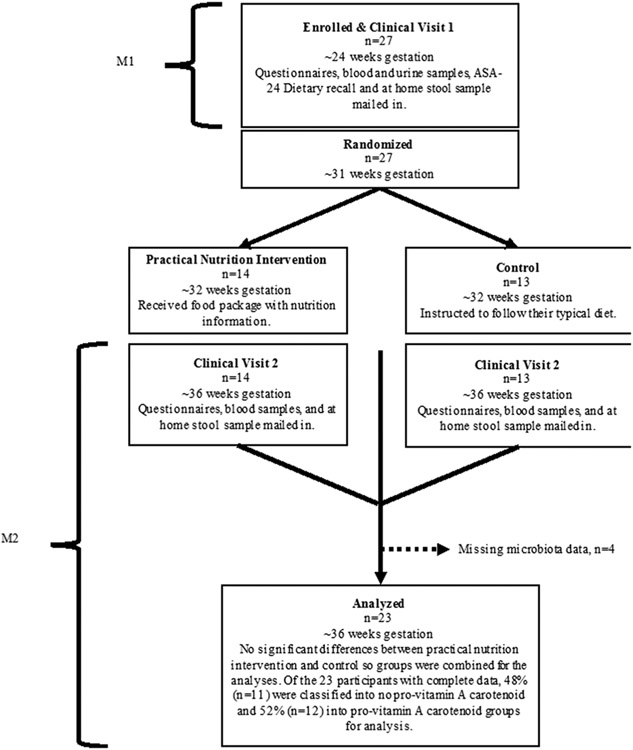
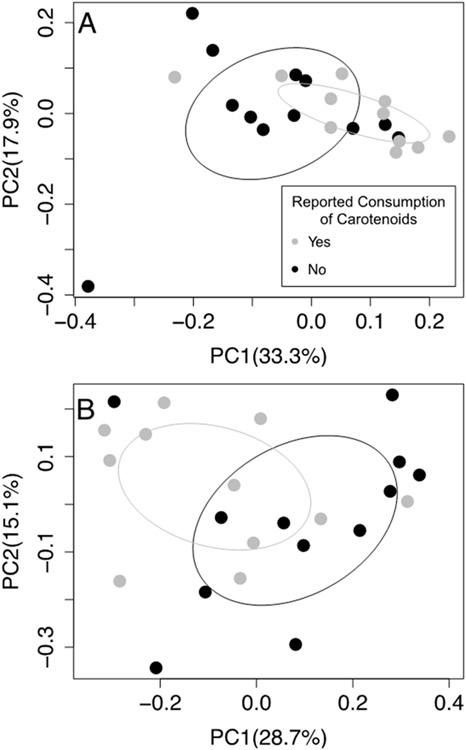
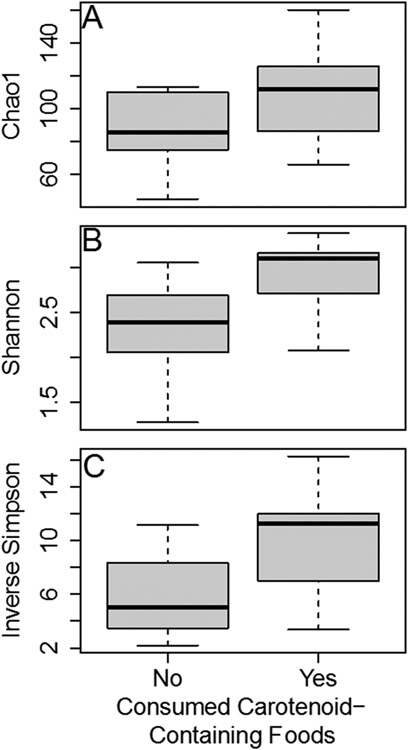
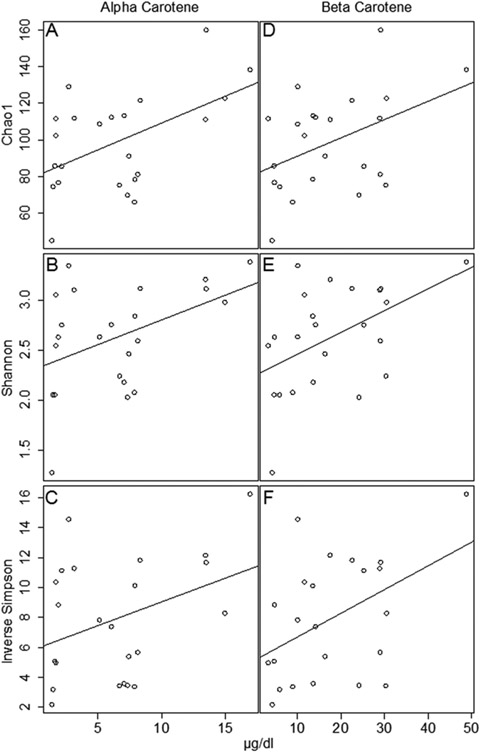
Because microbes use carotenoids as an antioxidant for protection, dietary carotenoids could be associated with gut microbiota composition. We aimed to determine associations among reported carotenoid intake, plasma carotenoid concentrations, and fecal bacterial communities in pregnant women. Pregnant women (n = 27) were enrolled in a two-arm study designed to assess feasibility of biospecimen collection and delivery of a practical nutrition intervention. Plasma and fecal samples were collected and women were surveyed with a 24-hr dietary checklist and recalls. Plasma carotenoids were analyzed by HPLC using photodiode array detection. Fecal bacteria were analyzed by 16S rRNA DNA sequencing. Results presented are cross-sectional from the 36-week gestational study visit combined across both study arms due to lack of significant differences between intervention and usual care groups (n = 23 women with complete data). Recent intake of carotenoid-containing foods included carrots, sweet potatoes, mangos, apricots, and/or bell peppers for 48% of women; oranges/orange juice (17%); egg (39%); tomato/tomato-based sauces (52%); fruits (83%); and vegetables (65%). Average plasma carotenoid concentrations were 6.4 µg/dL α-carotene (AC), 17.7 µg/dL β-carotene (BC), 11.4 µg/dL cryptoxanthin, 39.0 µg/dL trans-lycopene, and 29.8 µg/dL zeaxanthin and lutein. AC and BC concentrations were higher in women who recently consumed foods high in carotenoids. CR concentrations were higher in women who consumed oranges/orange juice. Microbiota α-diversity positively correlated with AC and BC. Microbiota β-diversity differed significantly across reported intake of carotenoid containing foods and plasma concentrations of AC. This may reflect an effect of high fiber or improved overall dietary quality, rather than a specific effect of carotenoids. PRACTICAL APPLICATION: Little is known about the association between the gut microbiome and specific dietary microconstituents, such as carotenoids, especially during pregnancy. This research demonstrates that a carotenoid-rich diet during pregnancy supports a diverse microbiota, which could be one mechanism by which carotenoids promote health.
由于微生物将类胡萝卜素用作抗氧化剂来保护自身,膳食类胡萝卜素可能与肠道微生物群组成有关。我们旨在确定孕妇报告的类胡萝卜素摄入量、血浆类胡萝卜素浓度和粪便细菌群落之间的关联。27名孕妇参与了一项双臂研究,该研究旨在评估生物样本采集的可行性以及实施一项实用营养干预措施的可行性。采集了血浆和粪便样本,并通过24小时饮食清单和回忆法对这些女性进行了调查。使用光电二极管阵列检测的高效液相色谱法分析血浆类胡萝卜素。通过16S rRNA DNA测序分析粪便细菌。由于干预组和常规护理组之间缺乏显著差异(n = 23名有完整数据的女性),因此呈现的结果是来自两个研究组在妊娠36周研究访视时的横断面数据。48%的女性近期摄入的含类胡萝卜素食物包括胡萝卜、红薯、芒果、杏子和/或甜椒;橙子/橙汁(17%);鸡蛋(39%);番茄/番茄酱(52%);水果(83%);以及蔬菜(65%)。血浆类胡萝卜素的平均浓度为:α-胡萝卜素(AC)6.4微克/分升、β-胡萝卜素(BC)17.7微克/分升、隐黄质11.4微克/分升、反式番茄红素39.0微克/分升、玉米黄质和叶黄素29.8微克/分升。近期食用类胡萝卜素含量高的食物的女性,其AC和BC浓度较高。食用橙子/橙汁的女性,其隐黄质浓度较高。微生物群的α多样性与AC和BC呈正相关。微生物群的β多样性在报告的含类胡萝卜素食物摄入量和AC血浆浓度之间存在显著差异。这可能反映了高纤维或整体饮食质量改善的影响,而不是类胡萝卜素的特定作用。实际应用:关于肠道微生物群与特定膳食微量成分(如类胡萝卜素)之间的关联,人们了解甚少,尤其是在孕期。这项研究表明,孕期富含类胡萝卜素的饮食有助于维持多样化的微生物群,这可能是类胡萝卜素促进健康的一种机制。