Lu Shengsheng, Pan Xiaoyan, Chen Daiwei, Xie Xi, Wu Yan, Shang Weijuan, Jiang Xiaming, Sun Yuan, Fan Sheng, He Jian
Group of Peptides and Natural Products Research, School of Pharmaceutical Sciences, Southern Medical University, 1838 Guangzhou Avenue North, Guangzhou 510515, China.
State Key Laboratory of Virology, Wuhan Institute of Virology, Center for Biosafety Mega-Science, Chinese Academy of Sciences, Wuhan 430071, China.
Bioorg Chem. 2021 Feb;107:104619. doi: 10.1016/j.bioorg.2020.104619. Epub 2021 Jan 5.
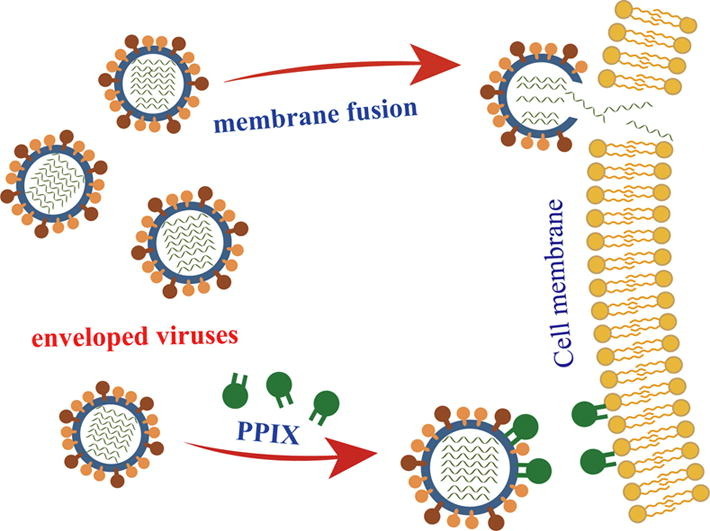
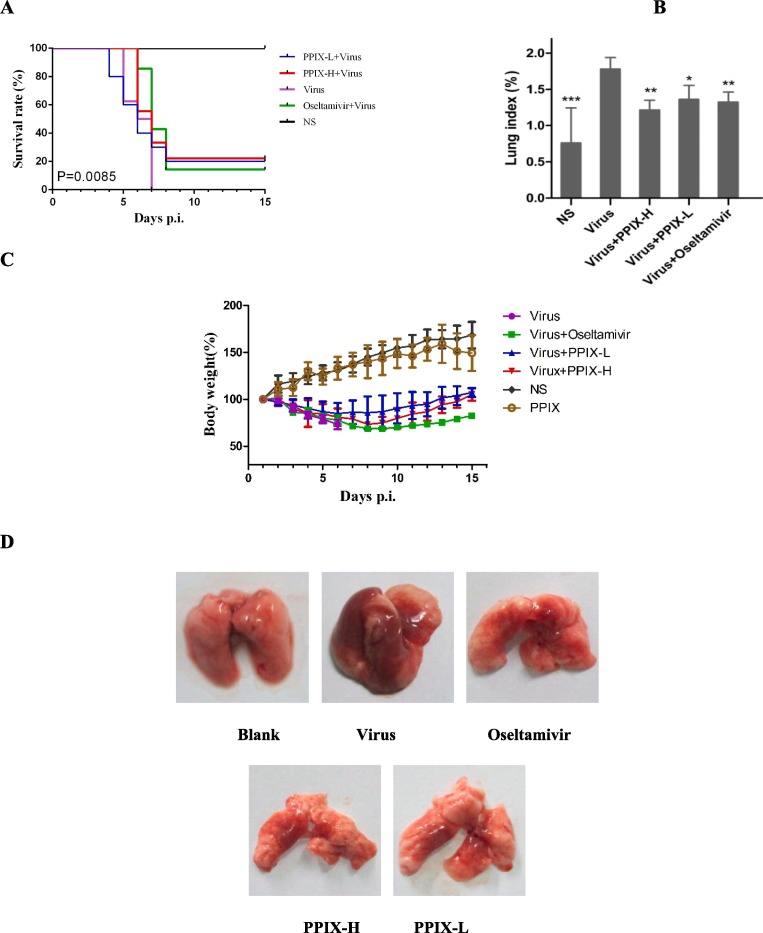
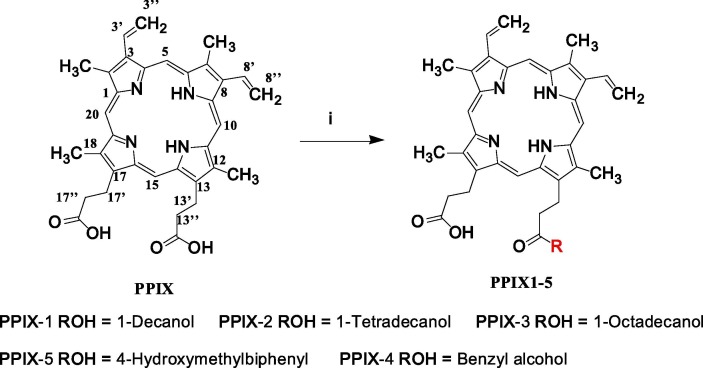
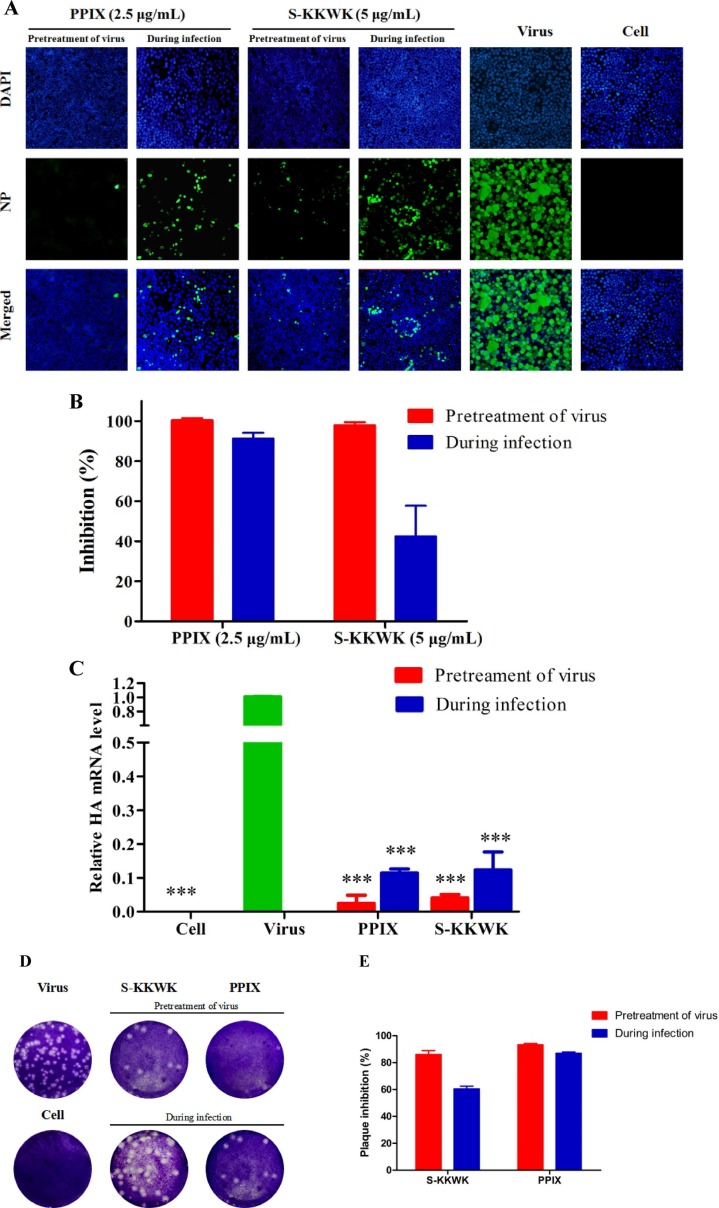
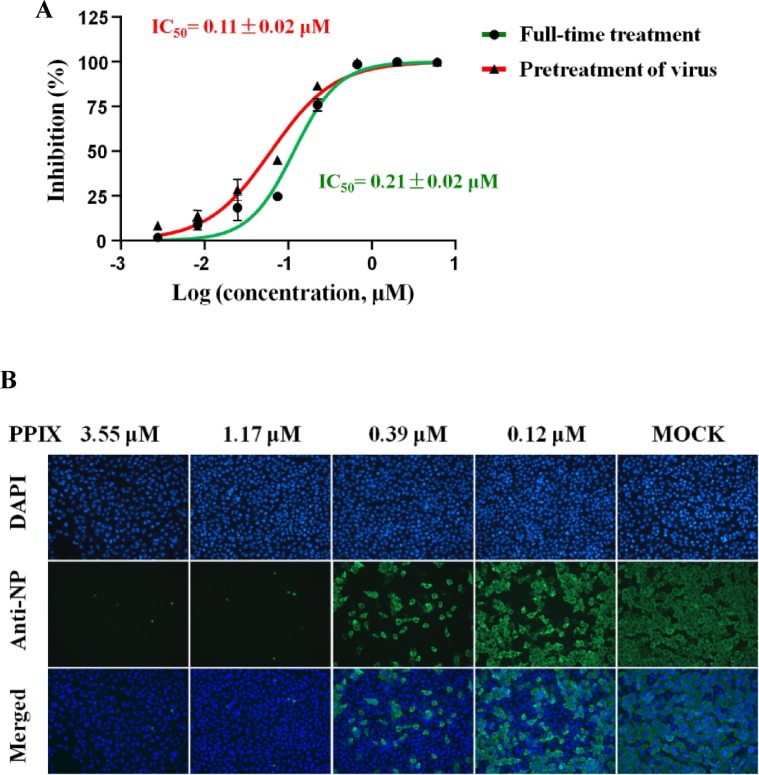
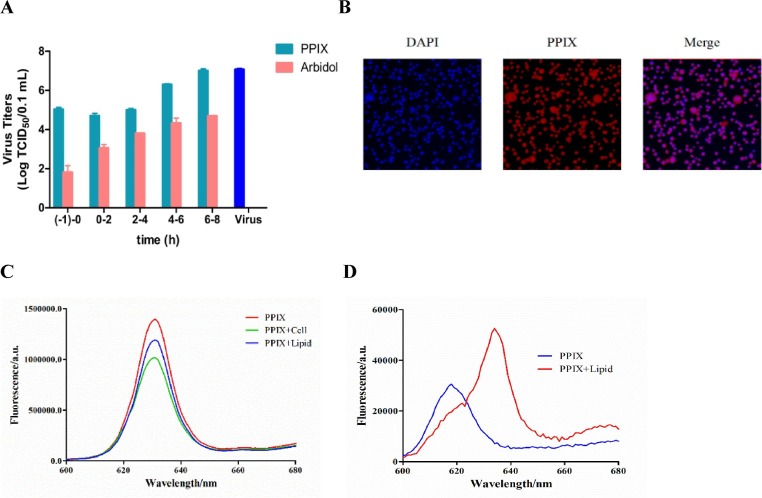
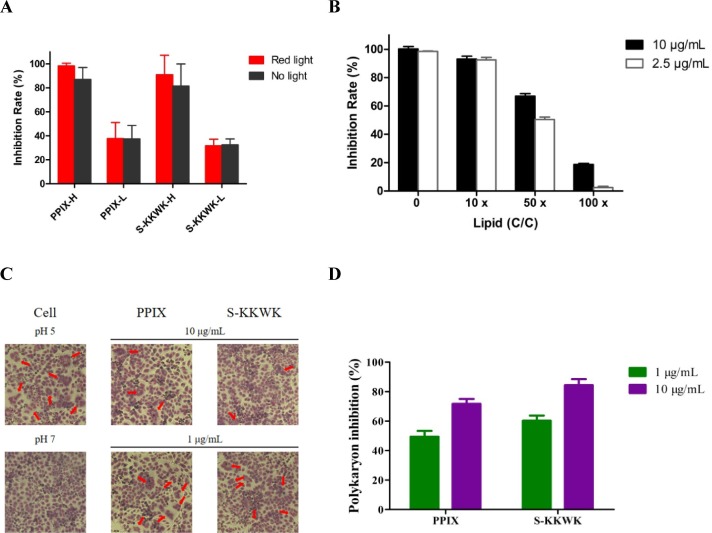
Severe emerging and re-emerging viral infections such as Lassa fever, Avian influenza (AI), and COVID-19 caused by SARS-CoV-2 urgently call for new strategies for the development of broad-spectrum antivirals targeting conserved components in the virus life cycle. Viral lipids are essential components, and viral-cell membrane fusion is the required entry step for most unrelated enveloped viruses. In this paper, we identified a porphyrin derivative of protoporphyrin IX (PPIX) that showed broad antiviral activities in vitro against a panel of enveloped pathogenic viruses including Lassa virus (LASV), Machupo virus (MACV), and SARS-CoV-2 as well as various subtypes of influenza A viral strains with IC values ranging from 0.91 ± 0.25 μM to 1.88 ± 0.34 μM. A mechanistic study using influenza A/Puerto Rico/8/34 (H1N1) as a testing strain showed that PPIX inhibits the infection in the early stage of virus entry through biophysically interacting with the hydrophobic lipids of enveloped virions, thereby inhibiting the entry of enveloped viruses into host cells. In addition, the preliminary antiviral activities of PPIX were further assessed by testing mice infected with the influenza A/Puerto Rico/8/34 (H1N1) virus. The results showed that compared with the control group without drug treatment, the survival rate and mean survival time of the mice treated with PPIX were apparently prolonged. These data encourage us to conduct further investigations using PPIX as a lead compound for the rational design of lipid-targeting antivirals for the treatment of infection with enveloped viruses.
诸如拉沙热、禽流感(AI)以及由严重急性呼吸综合征冠状病毒2(SARS-CoV-2)引起的2019冠状病毒病(COVID-19)等严重的新出现和再次出现的病毒感染迫切需要开发针对病毒生命周期中保守成分的广谱抗病毒药物的新策略。病毒脂质是必需成分,病毒与细胞膜的融合是大多数不相关包膜病毒进入细胞所必需的步骤。在本文中,我们鉴定了一种原卟啉IX(PPIX)的卟啉衍生物,其在体外对一组包膜致病性病毒具有广泛的抗病毒活性,包括拉沙病毒(LASV)、马丘波病毒(MACV)和SARS-CoV-2,以及甲型流感病毒的各种亚型,半数抑制浓度(IC)值范围为0.91±0.25μM至1.88±0.34μM。以甲型流感病毒/波多黎各/8/34(H1N1)为测试毒株进行的机制研究表明,PPIX通过与包膜病毒粒子的疏水脂质进行生物物理相互作用,在病毒进入的早期阶段抑制感染,从而抑制包膜病毒进入宿主细胞。此外,通过对感染甲型流感病毒/波多黎各/8/34(H1N1)病毒的小鼠进行测试,进一步评估了PPIX的初步抗病毒活性。结果表明,与未进行药物治疗的对照组相比,用PPIX治疗的小鼠的存活率和平均存活时间明显延长。这些数据鼓励我们进一步研究将PPIX作为先导化合物,用于合理设计靶向脂质的抗病毒药物,以治疗包膜病毒感染。