Department of Surgery, Hebei Medical University, Shijiazhuang, China.
Department of Oncology, Tianjin Academy of Traditional Chinese Medicine Affiliated Hospital, China.
FEBS Open Bio. 2021 Mar;11(3):911-920. doi: 10.1002/2211-5463.13088. Epub 2021 Jan 31.
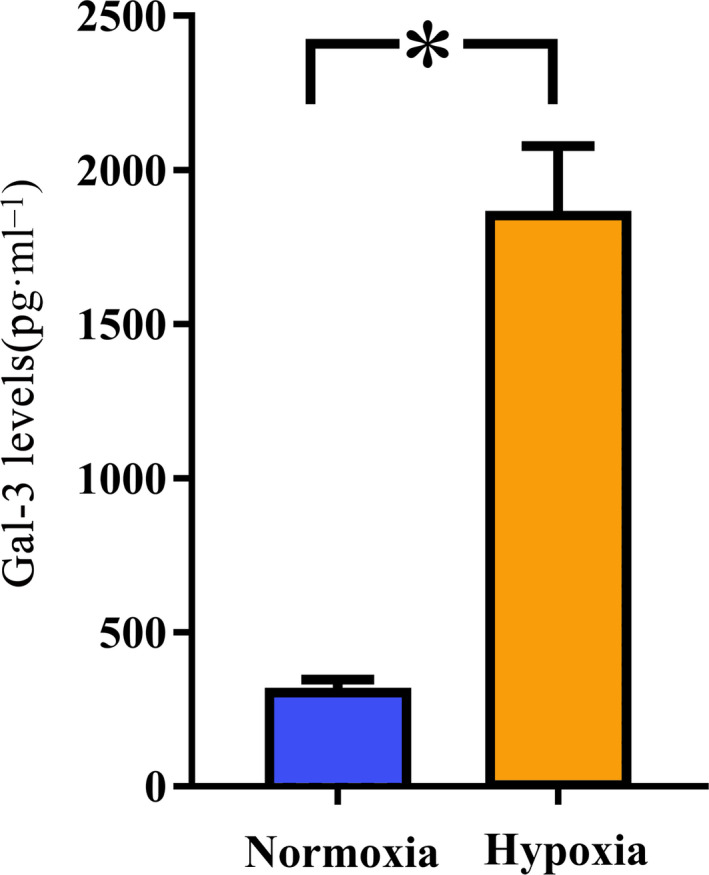
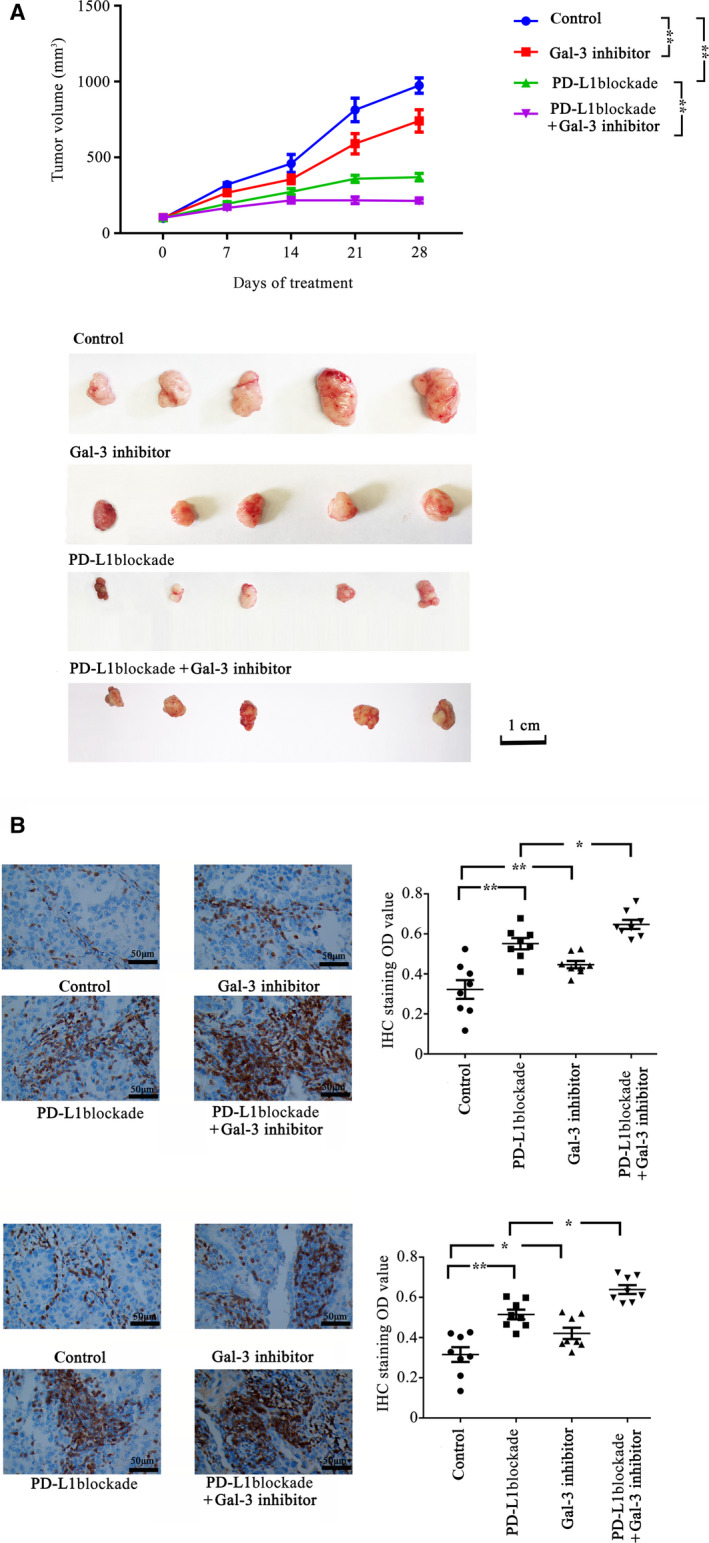
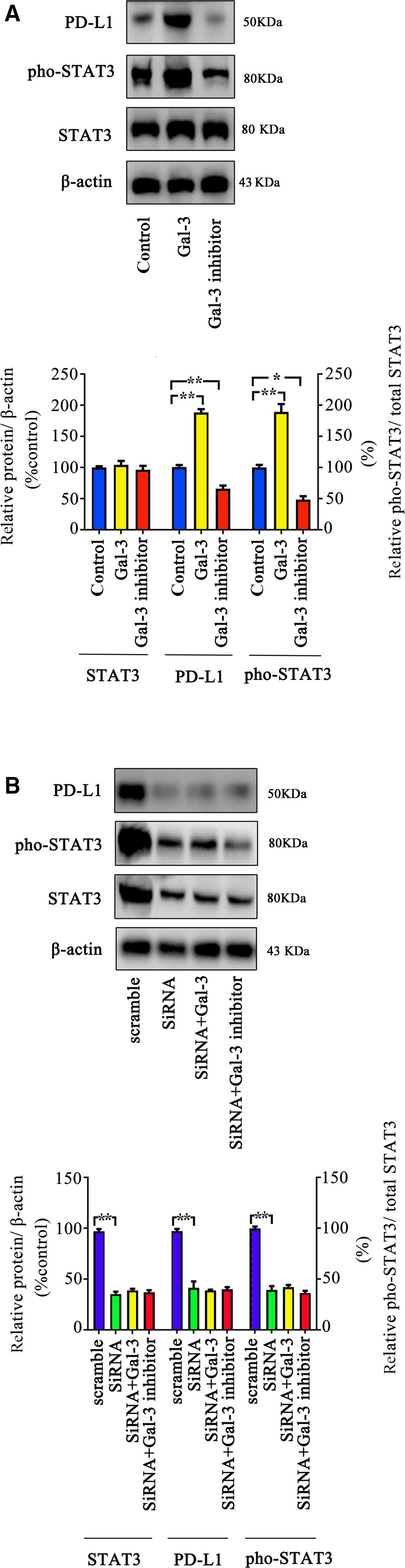
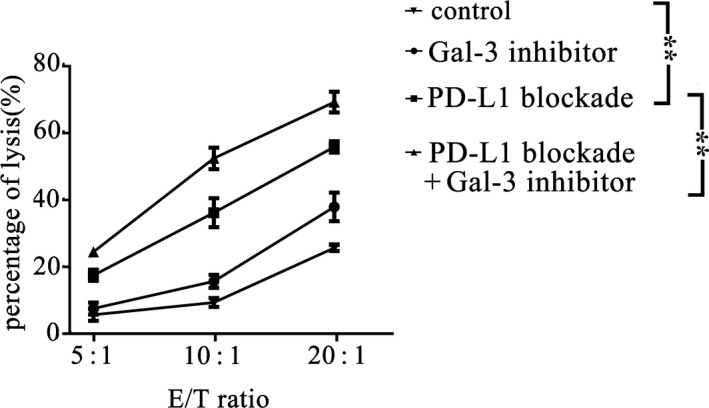
Multiple clinical trials have shown that monoclonal antibodies (mAbs) against programmed death-ligand 1 (PD-1/PD-L1) can benefit patients with lung cancer by increasing their progression-free survival and overall survival. However, a significant proportion of patients do not respond to anti-PD-1/PD-L1 mAbs. In the present study, we investigated whether galectin (Gal)-3 inhibitors can enhance the antitumor effect of PD-L1 blockade. Using the NSCLC-derived cell line A549, we examined the expression of Gal-3 in lung cancer cells under hypoxic conditions and investigated the regulatory effect of Gal-3 on PD-L1 expression, which is mediated by the STAT3 pathway. We also explored whether Gal-3 inhibition can facilitate the cytotoxic effect of T cells induced by PD-L1 blockade. The effects of combined use of a Gal-3 inhibitor and PD-L1 blockade on tumor growth and T-cell function were also investigated, and we found that hypoxia increased the expression and secretion of Gal-3 by lung cancer cells. Gal-3 increased PD-L1 expression via the upregulation of STAT3 phosphorylation, and administration of a Gal-3 inhibitor enhanced the effect of PD-L1 blockade on the cytotoxic activity of T cells against cancer cells in vitro. In a mouse xenograft model, the combination of a Gal-3 inhibitor and PD-L1 blockade synergistically suppressed tumor growth. Furthermore, the administration of a Gal-3 inhibitor enhanced T-cell infiltration and granzyme B release in tumors. Collectively, our results show that Gal-3 increases PD-L1 expression in lung cancer cells and that the administration of a Gal-3 inhibitor as an adjuvant enhanced the antitumor activity of PD-L1 blockade.
多项临床试验表明,针对程序性死亡配体 1(PD-1/PD-L1)的单克隆抗体(mAbs)可通过增加无进展生存期和总生存期使肺癌患者受益。然而,相当一部分患者对抗 PD-1/PD-L1 mAbs 没有反应。在本研究中,我们研究了半乳糖凝集素(Gal)-3 抑制剂是否可以增强 PD-L1 阻断的抗肿瘤作用。使用 NSCLC 衍生细胞系 A549,我们检查了低氧条件下肺癌细胞中 Gal-3 的表达,并研究了 Gal-3 通过 STAT3 通路对 PD-L1 表达的调节作用。我们还探讨了 Gal-3 抑制是否可以促进 PD-L1 阻断诱导的 T 细胞的细胞毒性作用。还研究了 Gal-3 抑制剂与 PD-L1 阻断联合使用对肿瘤生长和 T 细胞功能的影响,我们发现低氧增加了肺癌细胞中 Gal-3 的表达和分泌。Gal-3 通过上调 STAT3 磷酸化增加 PD-L1 的表达,给予 Gal-3 抑制剂增强了 PD-L1 阻断对 T 细胞对癌细胞的体外细胞毒性作用。在小鼠异种移植模型中,Gal-3 抑制剂与 PD-L1 阻断联合使用可协同抑制肿瘤生长。此外,Gal-3 抑制剂的给药增强了肿瘤中 T 细胞的浸润和颗粒酶 B 的释放。总之,我们的结果表明 Gal-3 增加了肺癌细胞中 PD-L1 的表达,并且作为佐剂给予 Gal-3 抑制剂增强了 PD-L1 阻断的抗肿瘤活性。