Eaton-Williams Peter, Barrett Jack, Mortimer Craig, Williams Julia
South East Coast Ambulance Service NHS Foundation Trust: ORCID iD: https://orcid.org/0000-0001-5664-3329.
South East Coast Ambulance Service NHS Foundation Trust: ORCID iD: https://orcid.org/0000-0002-0040-537X.
Br Paramed J. 2020 Dec 1;5(3):8-14. doi: 10.29045/14784726.2020.12.5.3.8.
Developing the proactive identification of patients with end of life care (EoLC) needs within ambulance paramedic clinical practice may improve access to care for patients not benefitting from EoLC services at present. To inform development of this role, this study aims to assess whether ambulance paramedics currently identify EoLC patients, are aware of identification guidance and believe this role is appropriate for their practice.
Between 4 November 2019 and 5 January 2020, registered paramedics from nine English NHS ambulance service trusts were invited to complete an online questionnaire. The questionnaire initially explored current practice and awareness, employing multiple-choice questions. The Gold Standards Framework Proactive Identification Guidance (GSF PIG) was then presented as an example of EoLC assessment guidance, and further questions, permitting free-text responses, explored attitudes towards performing this role.
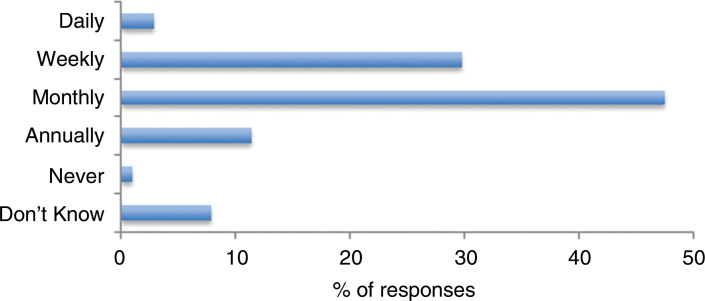
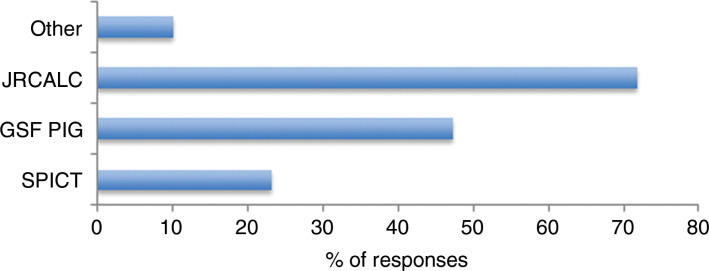
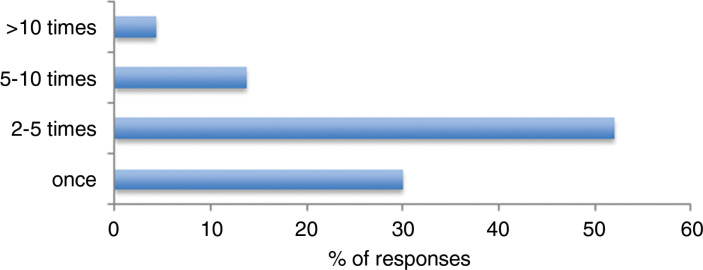
1643 questionnaires were analysed. Most participants (79.9%; n = 1313) perceived that they attended a patient who was unrecognised as within the last year of life on at least a monthly basis. Despite 72.0% (n = 1183) of paramedics indicating that they had previously made an EoLC referral to a General Practitioner, only 30.5% (n = 501) were familiar with the GSF PIG and of those only 25.9% (n = 130) had received training in its use. Participants overwhelmingly believed that they could (94.4%; n = 1551) and should (97.0%; n = 1594) perform this role, yet current barriers were identified as the inaccessibility of a patient's medical records, inadequate EoLC education and communication difficulties. Consequently, facilitators to performing this role were identified as the provision of training in EoLC assessment guidance and establishing accessible, responsive EoLC referral pathways.
Provision of EoLC assessment training and dedicated EoLC referral pathways should facilitate ambulance paramedics' roles in the timely recognition of EoLC patients, potentially addressing current inequalities in access to EoLC.
在救护车护理人员的临床实践中积极识别有临终关怀(EoLC)需求的患者,可能会改善目前无法从EoLC服务中受益的患者获得护理的机会。为了为这一角色的发展提供信息,本研究旨在评估救护车护理人员目前是否能识别EoLC患者,是否了解识别指南,并认为这一角色适合他们的实践。
在2019年11月4日至2020年1月5日期间,邀请了来自英国国民保健服务(NHS)九个救护车服务信托机构的注册护理人员完成一份在线问卷。问卷最初通过多项选择题探索了当前的实践和认知情况。然后,作为EoLC评估指南的一个例子,展示了金标准框架主动识别指南(GSF PIG),并通过允许自由文本回答的进一步问题,探索了对履行这一角色的态度。
分析了1643份问卷。大多数参与者(79.9%;n = 1313)认为他们每月至少会接诊一名未被识别为处于生命最后一年的患者。尽管72.0%(n = 1183)的护理人员表示他们之前曾将EoLC患者转诊给全科医生,但只有30.5%(n = 501)熟悉GSF PIG,其中只有25.9%(n = 130)接受过使用该指南的培训。参与者绝大多数认为他们能够(94.4%;n = 1551)且应该(97.0%;n = 1594)履行这一角色,但目前的障碍被确定为患者病历难以获取、EoLC教育不足以及沟通困难。因此,可以促进履行这一角色的因素被确定为提供EoLC评估指南培训以及建立可及、响应迅速的EoLC转诊途径。
提供EoLC评估培训和专门的EoLC转诊途径应有助于救护车护理人员及时识别EoLC患者的角色,有可能解决目前在获得EoLC方面的不平等问题。