Center for Spatial and Functional Genomics, Children's Hospital of Philadelphia, Philadelphia, United States.
Division of Human Genetics, The Children's Hospital of Philadelphia, Philadelphia, United States.
Elife. 2021 Jan 18;10:e62206. doi: 10.7554/eLife.62206.
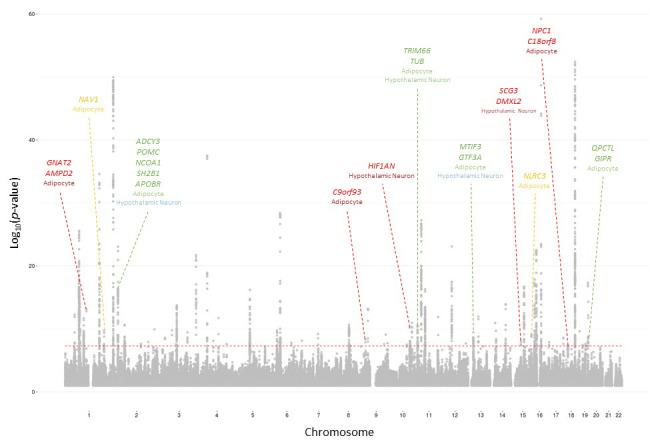
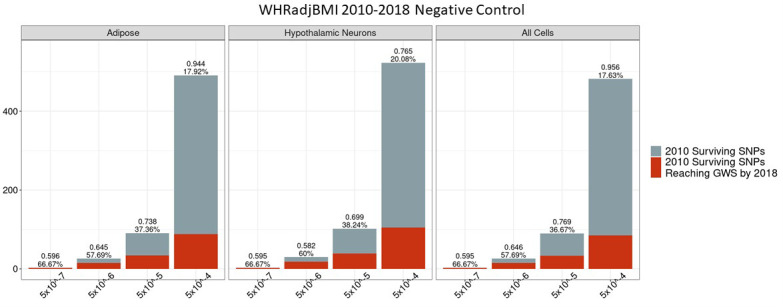
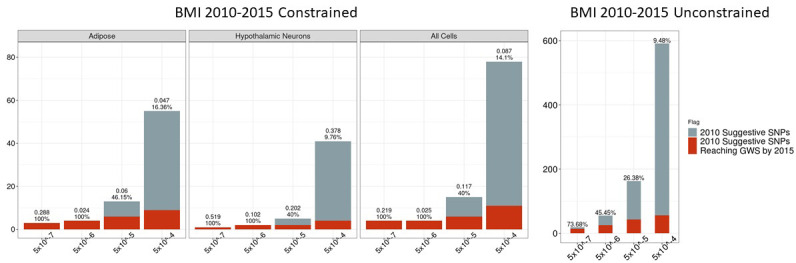
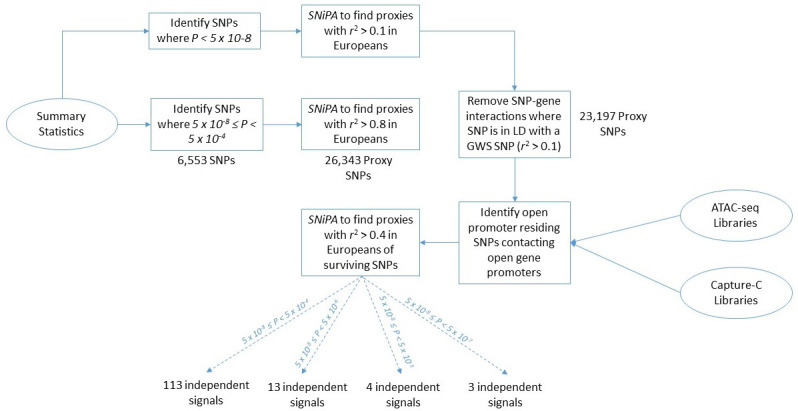
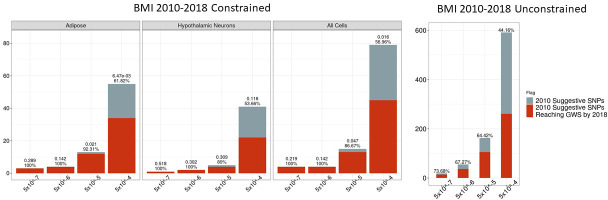
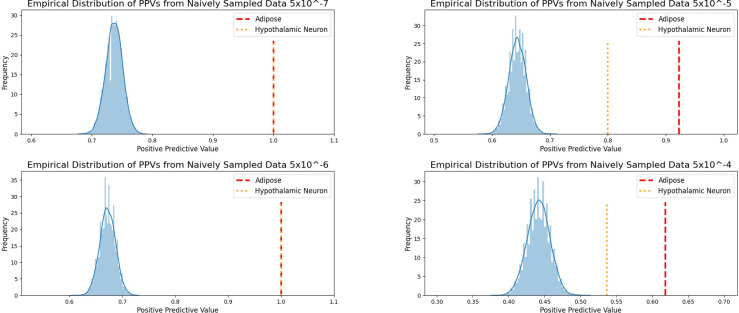
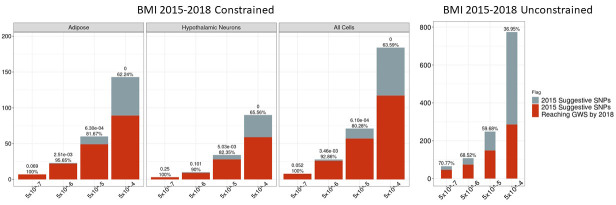
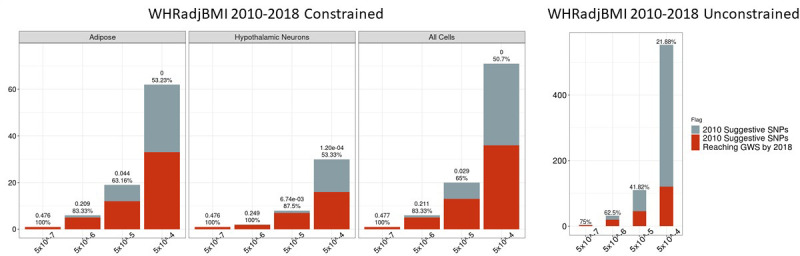
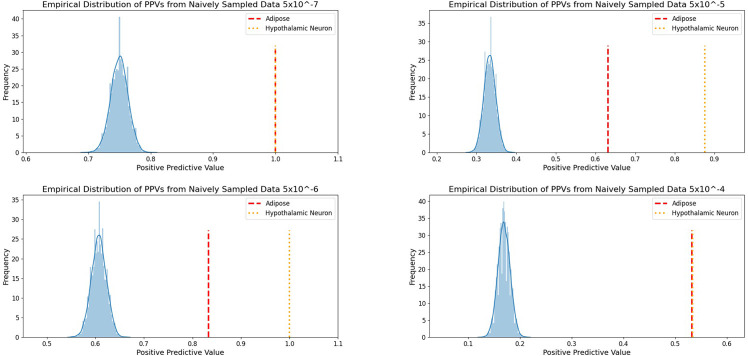
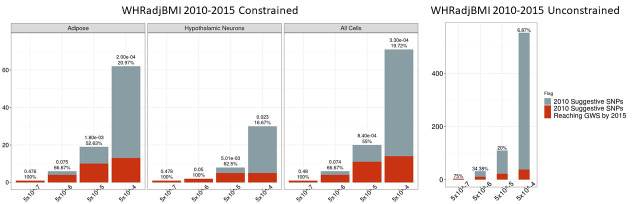
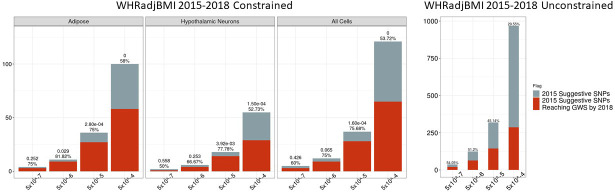
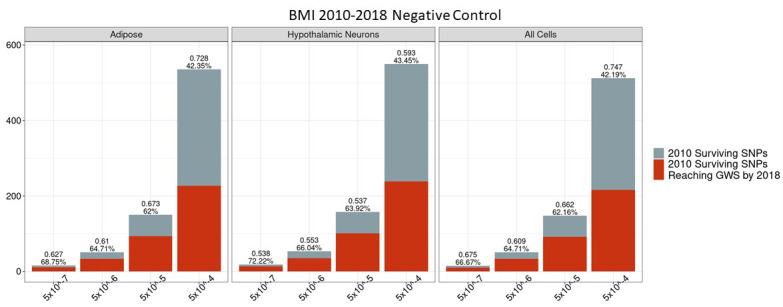
To uncover novel significant association signals (p<5×10), genome-wide association studies (GWAS) requires increasingly larger sample sizes to overcome statistical correction for multiple testing. As an alternative, we aimed to identify associations among suggestive signals (5 × 10≤p<5×10) in increasingly powered GWAS efforts using chromatin accessibility and direct contact with gene promoters as biological constraints. We conducted retrospective analyses of three GIANT BMI GWAS efforts using ATAC-seq and promoter-focused Capture C data from human adipocytes and embryonic stem cell (ESC)-derived hypothalamic-like neurons. This approach, with its extremely low false-positive rate, identified 15 loci at p<5×10 in the 2010 GWAS, of which 13 achieved genome-wide significance by 2018, including at , , and . Eighty percent of constrained 2015 loci achieved genome-wide significance in 2018. We observed similar results in waist-to-hip ratio analyses. In conclusion, biological constraints on sub-significant GWAS signals can reveal potentially true-positive loci for further investigation in existing data sets without increasing sample size.
为了发现新的有意义的关联信号(p<5×10),全基因组关联研究(GWAS)需要越来越大的样本量,以克服多重检验的统计校正。作为替代方法,我们旨在利用染色质可及性和与基因启动子的直接接触作为生物学限制,在越来越强大的 GWAS 研究中识别提示信号(5×10≤p<5×10)之间的关联。我们使用人类脂肪细胞和胚胎干细胞(ESC)衍生的下丘脑样神经元的 ATAC-seq 和启动子聚焦捕获 C 数据,对三项 GIANT BMI GWAS 研究进行了回顾性分析。这种方法具有极低的假阳性率,在 2010 年的 GWAS 中确定了 15 个 p<5×10 的位点,其中 13 个在 2018 年达到了全基因组显著水平,包括在、和。80%的受约束的 2015 个位点在 2018 年达到了全基因组显著水平。我们在腰围-臀围比分析中观察到了类似的结果。总之,对亚显著 GWAS 信号的生物学限制可以揭示潜在的真正阳性位点,以便在不增加样本量的情况下,在现有数据集进一步研究。