Key Laboratory of Preventive Veterinary Medicine, Department of Veterinary Medicine, Animal Science College, Hebei North University, Zhangjiakou, 075131, Hebei, People's Republic of China.
Department of Veterinary Medicine, Inner Mongolia Agricultural University, Hohhot, 010018, Inner Mongolia, People's Republic of China.
Virol J. 2021 Jan 18;18(1):22. doi: 10.1186/s12985-020-01484-x.
Oxidative stress is an important pathogenic factor in influenza A virus infection. It has been found that reactive oxygen species induced by the H9N2 influenza virus is associated with viral replication. However, the mechanisms involved remain to be elucidated.
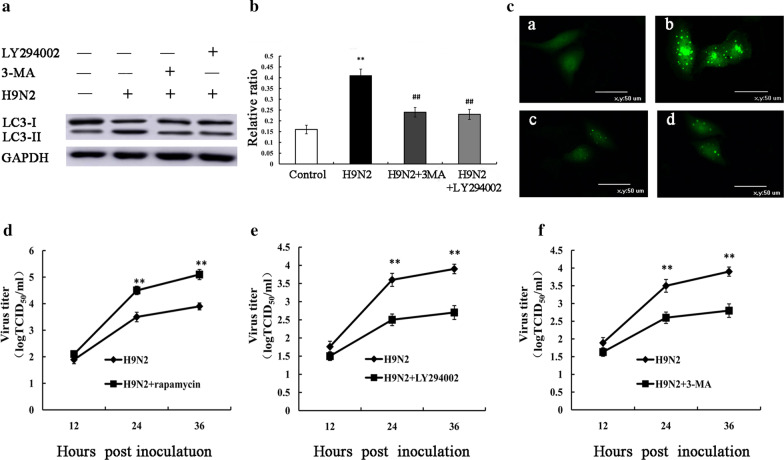
In this study, the role of autophagy was investigated in H9N2 influenza virus-induced oxidative stress and viral replication in A549 cells. Autophagy induced by H9N2 was inhibited by an autophagy inhibitor or RNA interference, the autophagy level, viral replication and the presence of oxidative stress were detected by western blot, TCID50 assay, and Real-time PCR. Then autophagy and oxidative stress were regulated, and viral replication was determined. At last, the Akt/TSC2/mTOR signaling pathways was detected by western blot.
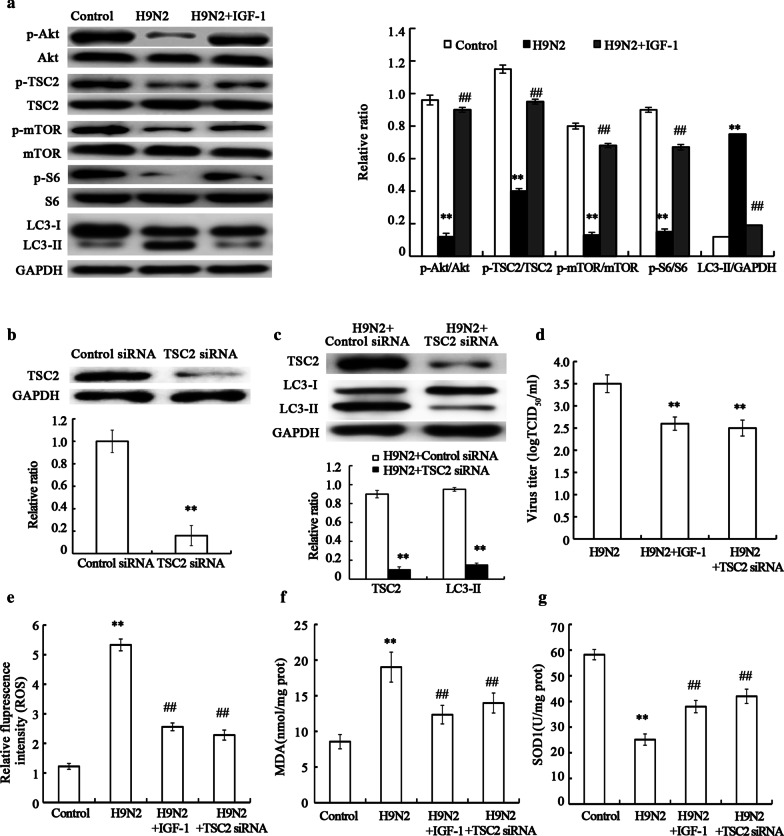
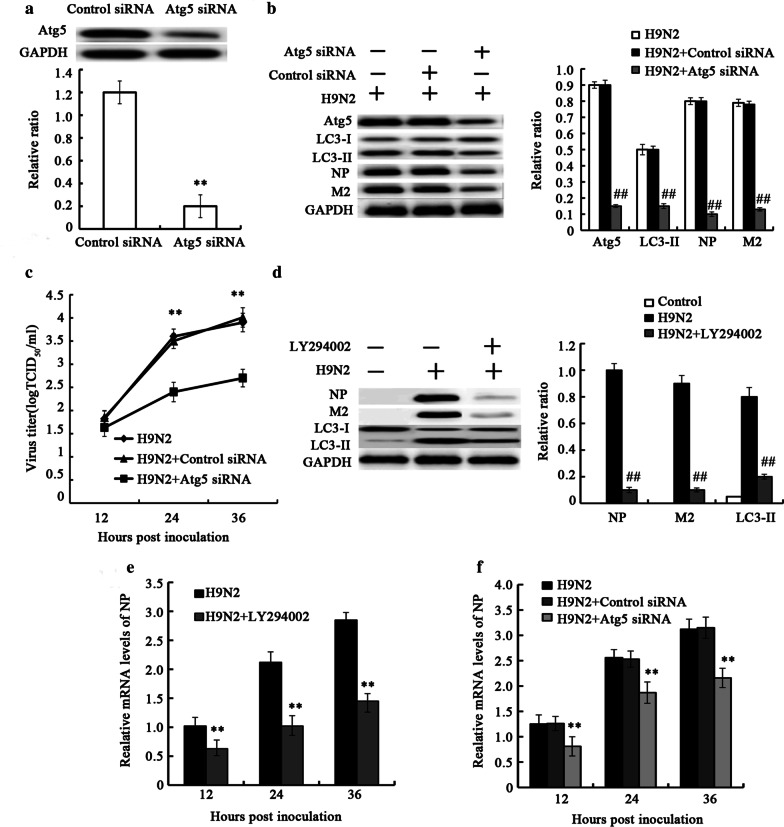
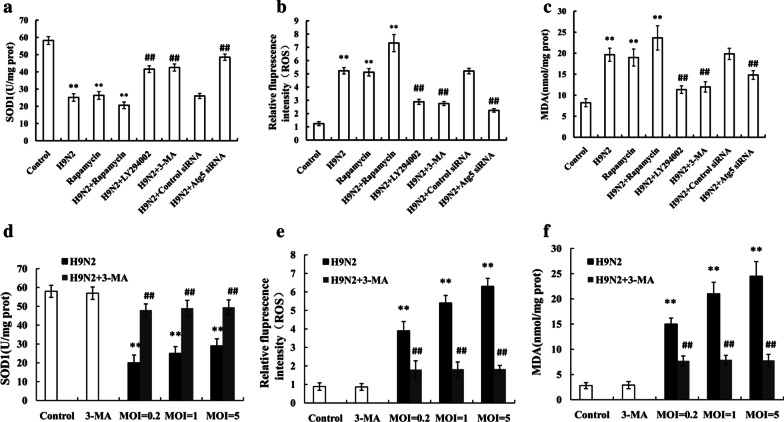
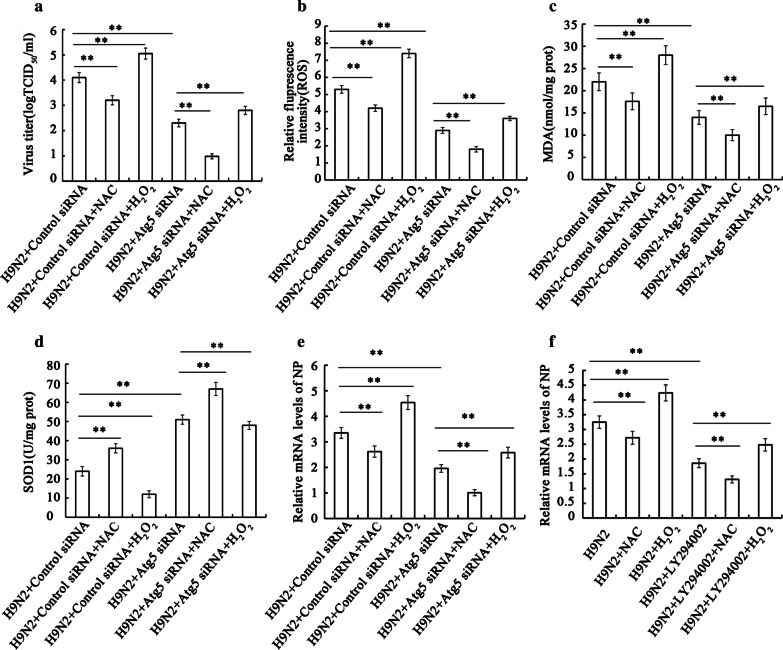
Autophagy was induced by the H9N2 influenza virus and the inhibition of autophagy reduced the viral titer and the expression of nucleoprotein and matrix protein. The blockage of autophagy suppressed the H9N2 virus-induced increase in the presence of oxidative stress, as evidenced by decreased reactive oxygen species production and malonaldehyde generation, and increased superoxide dismutase 1 levels. The changes in the viral titer and NP mRNA level caused by the antioxidant, N-acetyl-cysteine (NAC), and the oxidizing agent, HO, confirmed the involvement of oxidative stress in the control of viral replication. NAC plus transfection with Atg5 siRNA significantly reduced the viral titer and oxidative stress compared with NAC treatment alone, which confirmed that autophagy was involved in the replication of H9N2 influenza virus by regulating oxidative stress. Our data also revealed that autophagy was induced by the H9N2 influenza virus through the Akt/TSC2/mTOR pathway. The activation of Akt or the inhibition of TSC2 suppressed the H9N2 virus-induced increase in the level of LC3-II, restored the decrease in the expression of phospho-pAkt, phospho-mTOR and phospho-pS6 caused by H9N2 infection, suppressed the H9N2-induced increase in the presence of oxidative stress, and resulted in a decrease in the viral titer.
Autophagy is involved in H9N2 virus replication by regulating oxidative stress via the Akt/TSC2/mTOR signaling pathway. Thus, autophagy maybe a target which may be used to improve antiviral therapeutics.
氧化应激是甲型流感病毒感染的一个重要致病因素。已经发现,H9N2 流感病毒诱导的活性氧与病毒复制有关。然而,其中涉及的机制仍有待阐明。
在这项研究中,我们研究了自噬在 H9N2 流感病毒诱导的 A549 细胞氧化应激和病毒复制中的作用。用自噬抑制剂或 RNA 干扰抑制 H9N2 诱导的自噬,用 Western blot、TCID50 测定和实时 PCR 检测自噬水平、病毒复制和氧化应激的存在。然后调节自噬和氧化应激,测定病毒复制。最后,用 Western blot检测 Akt/TSC2/mTOR 信号通路。
H9N2 流感病毒诱导自噬,抑制自噬可降低病毒滴度和核蛋白及基质蛋白的表达。自噬阻断可抑制 H9N2 病毒诱导的氧化应激增加,表现为活性氧产生和丙二醛生成减少,超氧化物歧化酶 1 水平升高。抗氧化剂 N-乙酰半胱氨酸(NAC)和氧化剂 HO 引起的病毒滴度和 NP mRNA 水平的变化证实了氧化应激在控制病毒复制中的作用。与 NAC 处理相比,NAC 加 Atg5 siRNA 转染显著降低了病毒滴度和氧化应激,证实自噬通过调节氧化应激参与 H9N2 流感病毒的复制。我们的数据还表明,H9N2 流感病毒通过 Akt/TSC2/mTOR 途径诱导自噬。Akt 的激活或 TSC2 的抑制抑制了 H9N2 病毒诱导的 LC3-II 水平升高,恢复了 H9N2 感染引起的磷酸化 Akt、磷酸化 mTOR 和磷酸化 pS6 表达减少,抑制了 H9N2 诱导的氧化应激增加,并导致病毒滴度降低。
自噬通过 Akt/TSC2/mTOR 信号通路调节氧化应激参与 H9N2 病毒复制。因此,自噬可能是改善抗病毒治疗的一个靶点。