Chen Ting-Yu, Huang Bu-Miin, Tang Tang K, Chao Yu-Ying, Xiao Xiao-Yi, Lee Pei-Rong, Yang Li-Yun, Wang Chia-Yih
Department of Cell Biology and Anatomy, College of Medicine, National Cheng Kung University, Tainan, Taiwan, ROC.
Institute of Basic Medical Sciences, College of Medicine, National Cheng Kung University, Tainan, Taiwan, ROC.
Cell Death Differ. 2021 Jun;28(6):1865-1879. doi: 10.1038/s41418-020-00713-8. Epub 2021 Jan 18.
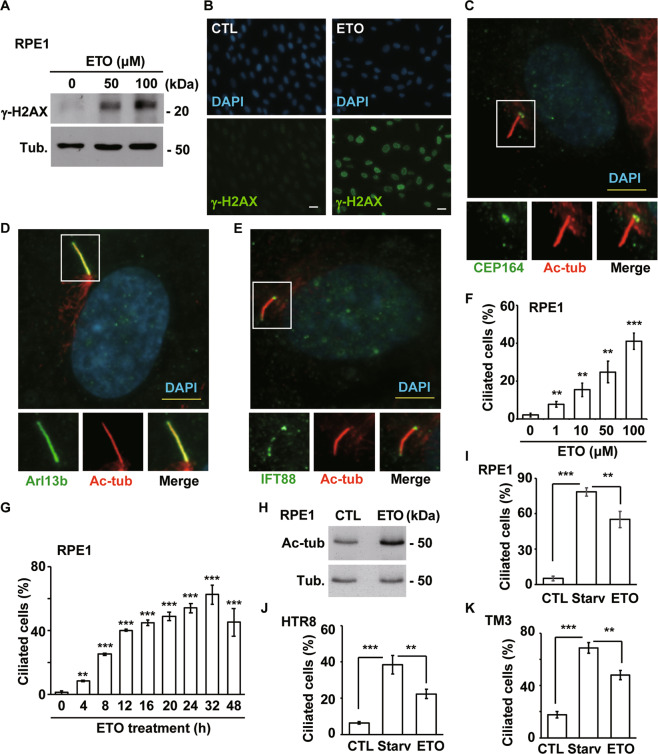
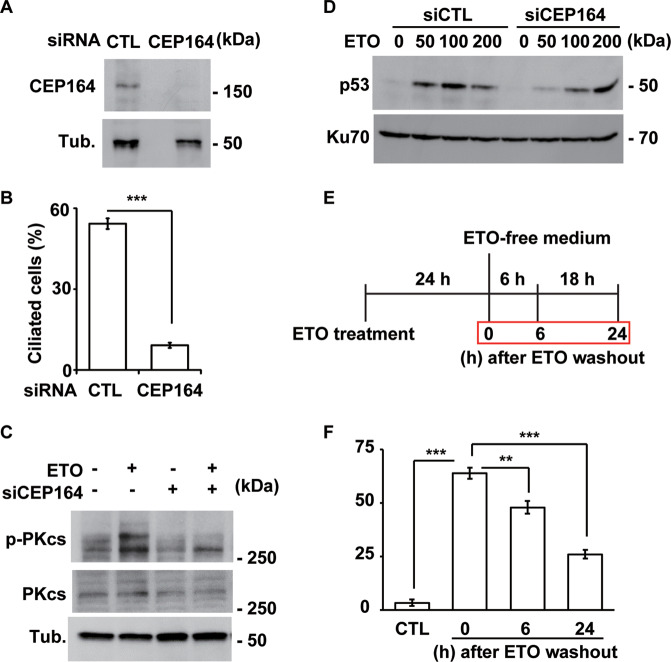
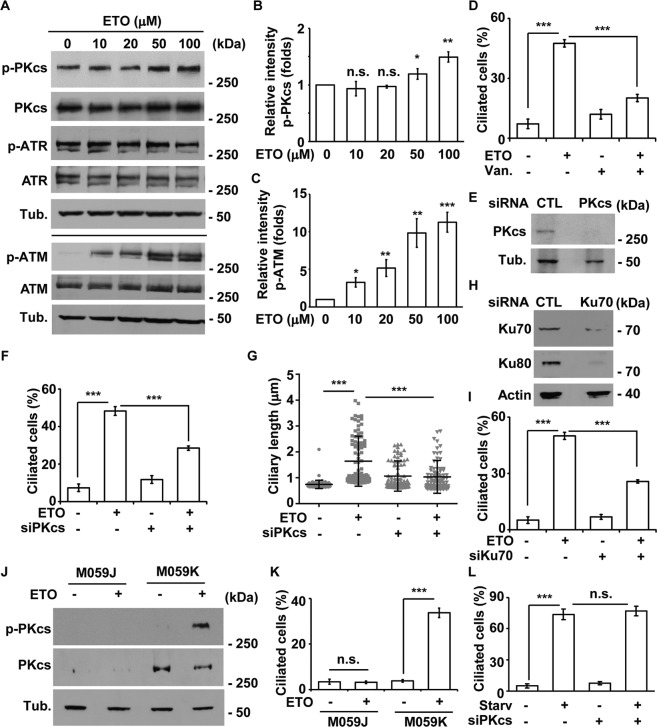
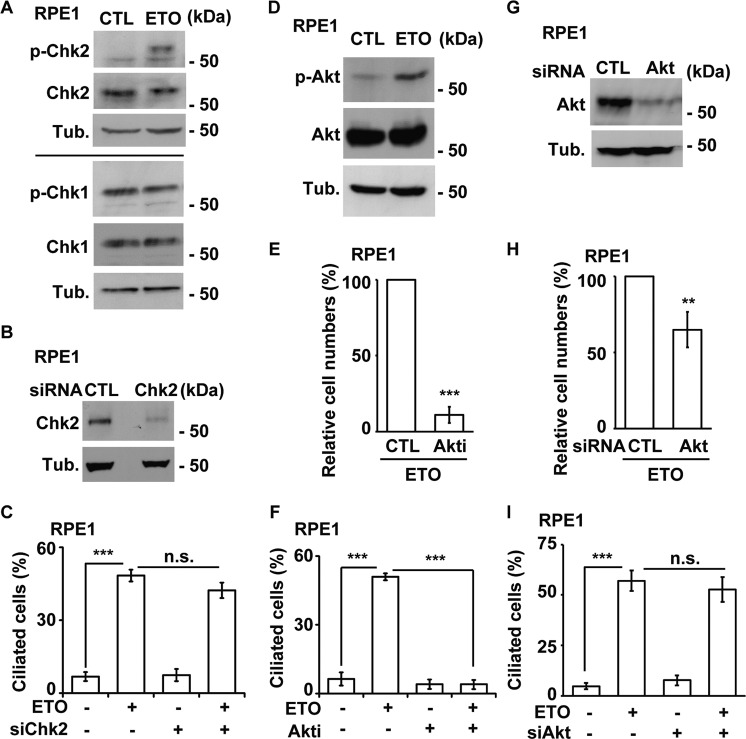
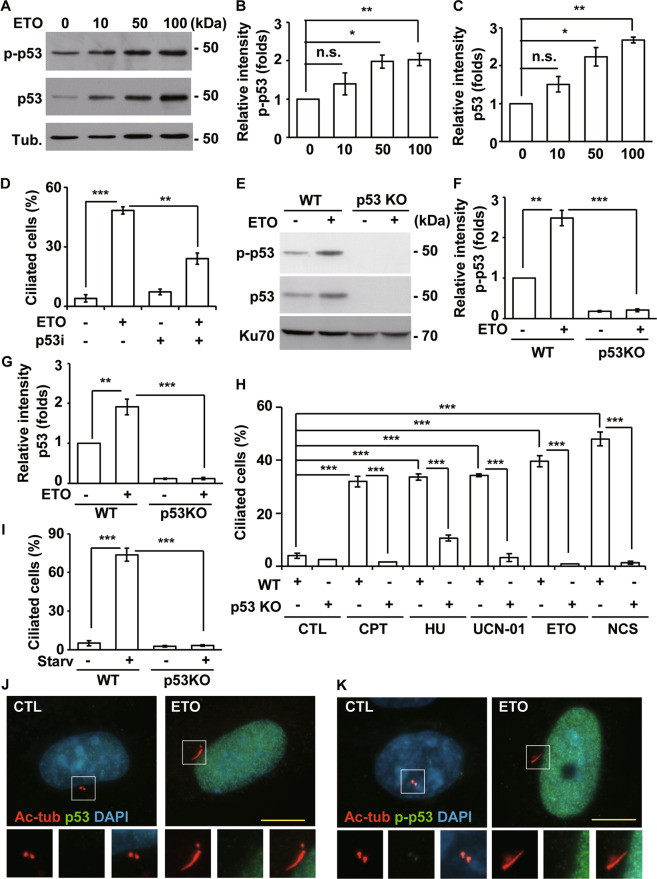
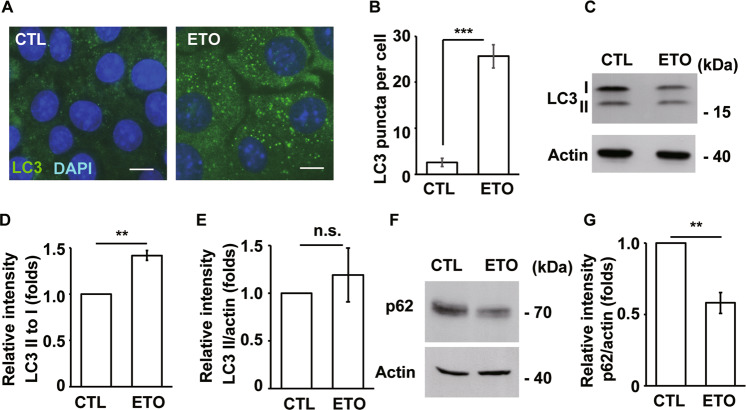
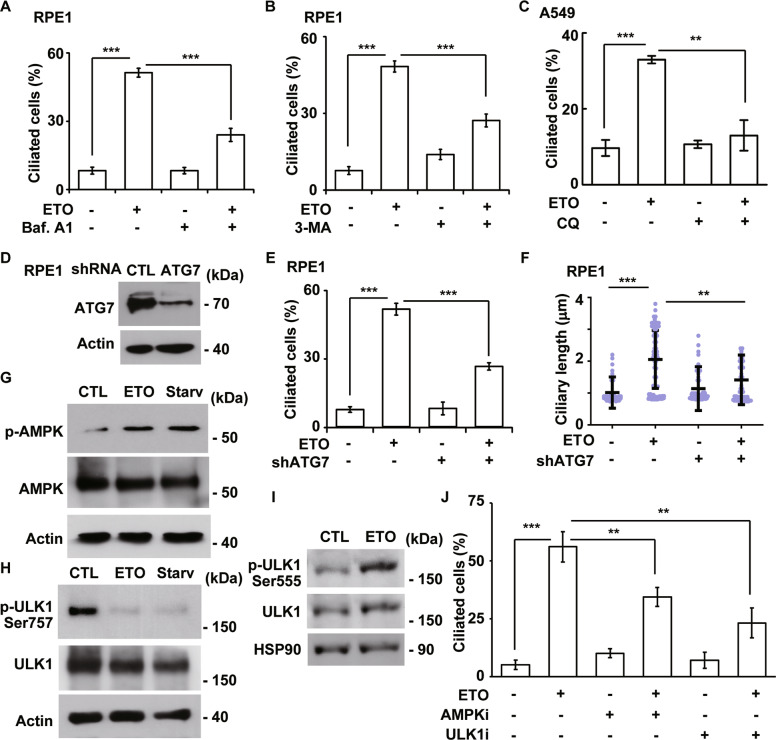
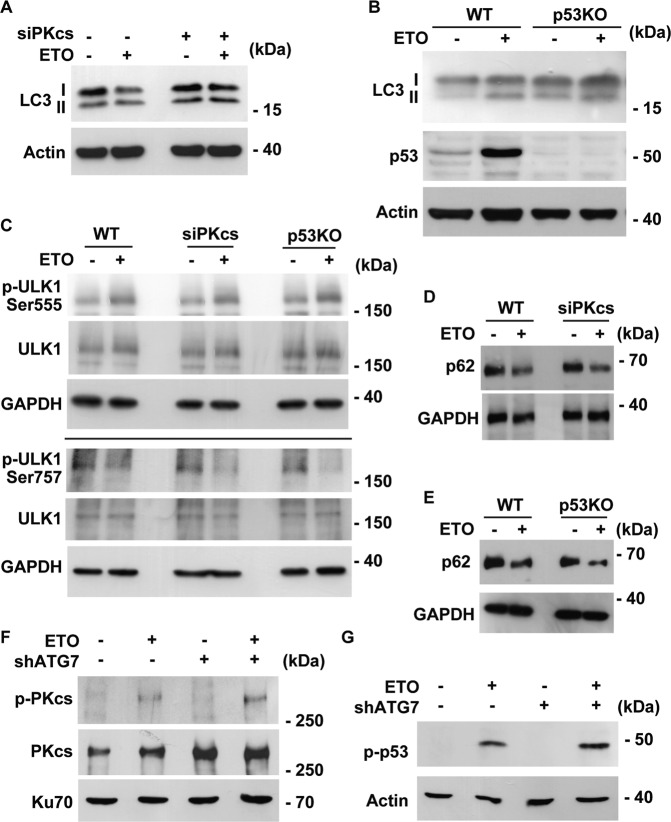
The DNA-PK maintains cell survival when DNA damage occurs. In addition, aberrant activation of the DNA-PK induces centrosome amplification, suggesting additional roles for this kinase. Here, we showed that the DNA-PK-p53 cascade induced primary cilia formation (ciliogenesis), thus maintaining the DNA damage response under genotoxic stress. Treatment with genotoxic drugs (etoposide, neocarzinostatin, hydroxyurea, or cisplatin) led to ciliogenesis in human retina (RPE1), trophoblast (HTR8), lung (A459), and mouse Leydig progenitor (TM3) cell lines. Upon genotoxic stress, several DNA damage signaling were activated, but only the DNA-PK-p53 cascade contributed to ciliogenesis, as pharmacological inhibition or genetic depletion of this pathway decreased genotoxic stress-induced ciliogenesis. Interestingly, in addition to localizing to the nucleus, activated DNA-PK localized to the base of the primary cilium (mother centriole) and daughter centriole. Genotoxic stress also induced autophagy. Inhibition of autophagy initiation or lysosomal degradation or depletion of ATG7 decreased genotoxic stress-induced ciliogenesis. Besides, inhibition of ciliogenesis by depletion of IFT88 or CEP164 attenuated the genotoxic stress-induced DNA damage response. Thus, our study uncovered the interplay among genotoxic stress, the primary cilium, and the DNA damage response.
当DNA损伤发生时,DNA依赖蛋白激酶(DNA-PK)维持细胞存活。此外,DNA-PK的异常激活会诱导中心体扩增,提示该激酶还有其他作用。在此,我们发现DNA-PK-p53级联反应诱导初级纤毛形成(纤毛发生),从而在遗传毒性应激下维持DNA损伤反应。用遗传毒性药物(依托泊苷、新制癌菌素、羟基脲或顺铂)处理会导致人视网膜(RPE1)、滋养层(HTR8)、肺(A459)和小鼠睾丸间质祖细胞(TM3)细胞系发生纤毛发生。在遗传毒性应激下,几种DNA损伤信号被激活,但只有DNA-PK-p53级联反应促进纤毛发生,因为该信号通路的药理学抑制或基因敲除会降低遗传毒性应激诱导的纤毛发生。有趣的是,除了定位于细胞核外,活化的DNA-PK还定位于初级纤毛(母中心粒)和子中心粒的基部。遗传毒性应激还诱导自噬。自噬起始或溶酶体降解的抑制或ATG7的敲除会降低遗传毒性应激诱导的纤毛发生。此外,通过敲除IFT88或CEP164抑制纤毛发生会减弱遗传毒性应激诱导的DNA损伤反应。因此,我们的研究揭示了遗传毒性应激、初级纤毛和DNA损伤反应之间的相互作用。