Department of Medicine-Cardiology (C.S., G.C., M.B., A.V.A., E.W., W.K.C.), University of Colorado Anschutz Medical Campus, Aurora.
University of Colorado-Denver (H.E.).
Circ Heart Fail. 2021 Jan;14(1):e007448. doi: 10.1161/CIRCHEARTFAILURE.120.007448. Epub 2021 Jan 19.
Continuous-flow (CF) left ventricular assist devices (LVADs) improve outcomes for patients with advanced heart failure (HF). However, the lack of a physiological pulse predisposes to side-effects including uncontrolled blood pressure (BP), and there are little data regarding the impact of CF-LVADs on BP regulation.
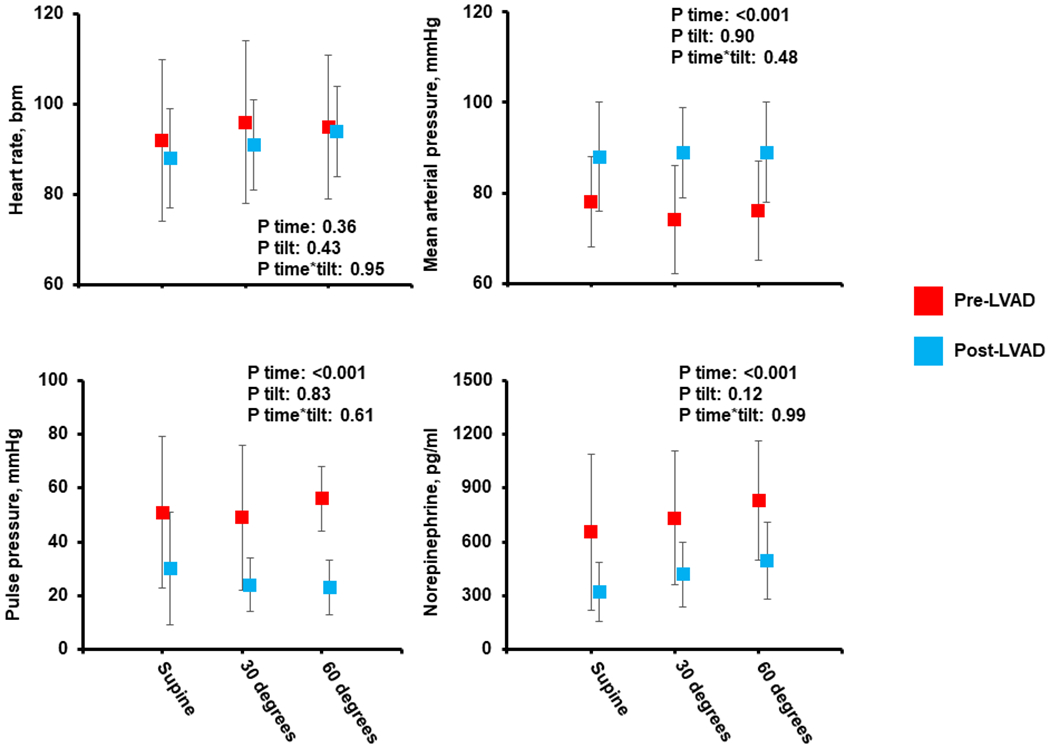
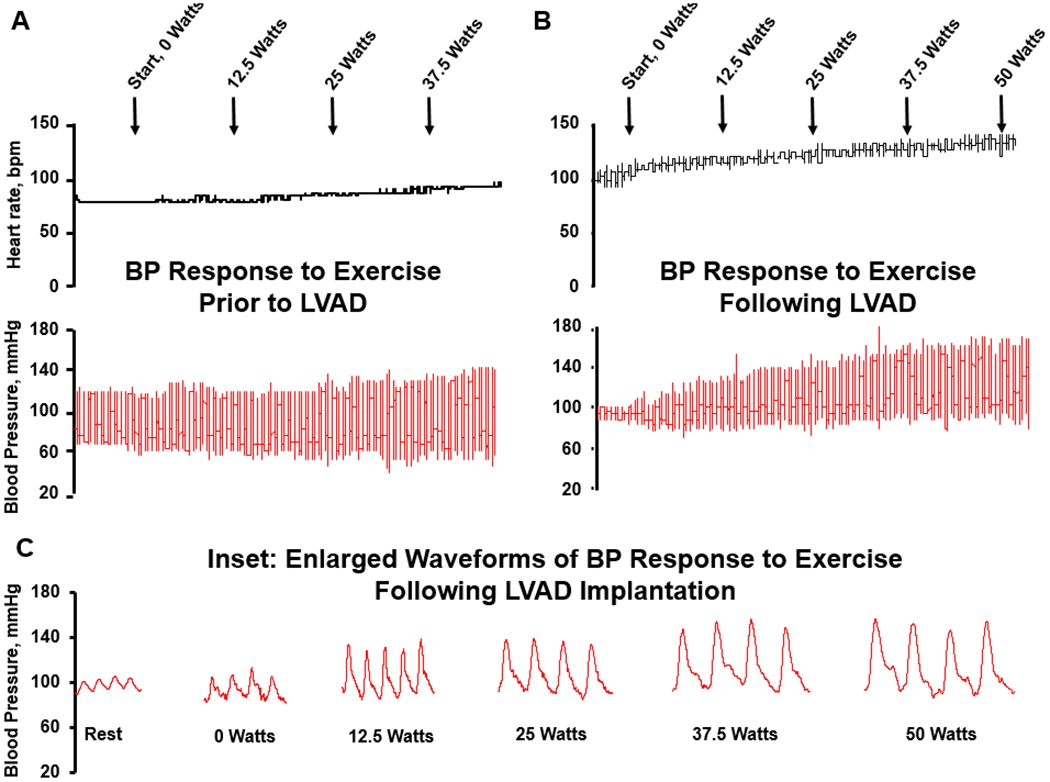
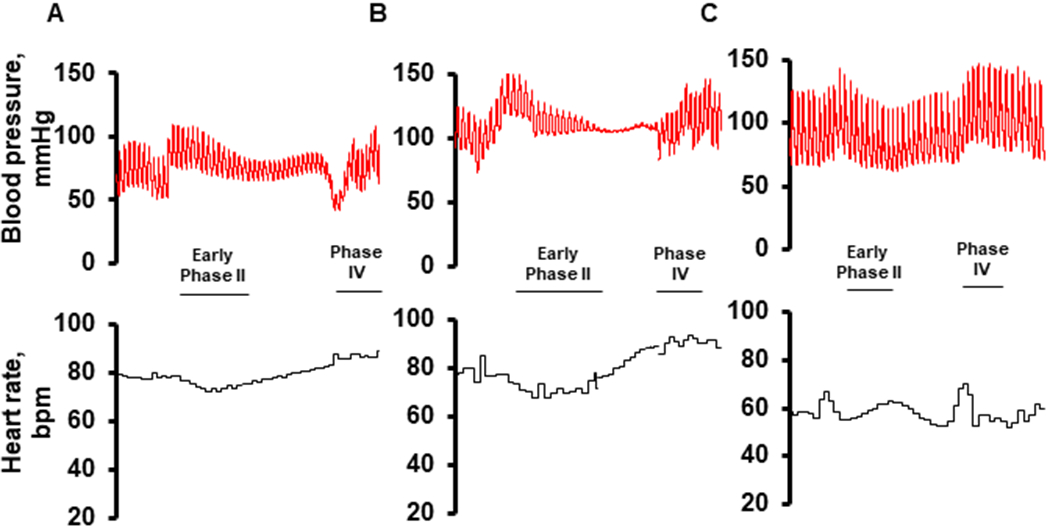
Twelve patients (10 males, 60±11 years) with advanced heart failure completed hemodynamic assessment 2.7±4.1 months before, and 4.3±1.3 months following CF-LVAD implantation. Heart rate and systolic BP via arterial catheterization were monitored during Valsalva maneuver, spontaneous breathing, and a 0.05 Hz repetitive squat-stand maneuver to characterize cardiac baroreceptor sensitivity. Plasma norepinephrine levels were assessed during head-up tilt at supine, 30 and 60. Heart rate and BP were monitored during cardiopulmonary exercise testing.
Cardiac baroreceptor sensitivity, determined by Valsalva as well as Fourier transformation and transfer function gain of Heart rate and systolic BP during spontaneous breathing and squat-stand maneuver, was impaired before and following LVAD implantation. Norepinephrine levels were markedly elevated pre-LVAD and improved-but remained elevated post-LVAD (supine norepinephrine pre-LVAD versus post-LVAD: 654±437 versus 323±164 pg/mL). BP increased during cardiopulmonary exercise testing post-LVAD, but the magnitude of change was modest and comparable to the changes observed during the pre-LVAD cardiopulmonary exercise testing.
Among patients with advanced heart failure with reduced ejection fraction, CF-LVAD implantation is associated with modest improvements in autonomic tone, but persistent reductions in cardiac baroreceptor sensitivity. Exercise-induced increases in BP are blunted. These findings shed new light on mechanisms for adverse events such as stroke, and persistent reductions in functional capacity, among patients supported by CF-LVADs. Registration: URL: https://www.clinicaltrials.gov; Unique identifier: NCT03078972.
连续流(CF)左心室辅助装置(LVAD)改善了晚期心力衰竭(HF)患者的预后。然而,缺乏生理脉冲会导致副作用,包括不受控制的血压(BP),并且关于 CF-LVAD 对血压调节的影响的数据很少。
12 名患有晚期心力衰竭的患者(男性 10 名,60±11 岁)在 CF-LVAD 植入前 2.7±4.1 个月和植入后 4.3±1.3 个月完成了血流动力学评估。通过动脉导管监测瓦尔萨尔瓦动作、自主呼吸期间以及 0.05 Hz 重复蹲站动作期间的心率和收缩压,以评估心脏压力感受器敏感性。在仰卧位、30 和 60 时进行头高位倾斜时评估血浆去甲肾上腺素水平。在心肺运动测试期间监测心率和血压。
在 LVAD 植入前后,通过瓦尔萨尔瓦动作以及傅里叶变换和心率及收缩压在自主呼吸和蹲站动作期间的传递函数增益确定的心脏压力感受器敏感性受损。去甲肾上腺素水平在 LVAD 前显著升高,并且在 LVAD 后改善,但仍升高(LVAD 前仰卧位去甲肾上腺素:654±437 与 LVAD 后 323±164 pg/mL)。LVAD 后心肺运动测试期间 BP 升高,但变化幅度较小,与 LVAD 前心肺运动测试期间的变化相当。
在射血分数降低的晚期心力衰竭患者中,CF-LVAD 植入与自主神经张力适度改善相关,但心脏压力感受器敏感性持续降低。运动引起的 BP 升高减弱。这些发现为 CF-LVAD 支持的患者中发生不良事件(如中风)和持续降低的功能能力提供了新的机制。注册:网址:https://www.clinicaltrials.gov;唯一标识符:NCT03078972。