Kiss Béla, Laszlovszky István, Krámos Balázs, Visegrády András, Bobok Amrita, Lévay György, Lendvai Balázs, Román Viktor
Pharmacological and Drug Safety Research, Gedeon Richter Plc., 1103 Budapest, Hungary.
Medical Division, Gedeon Richter Plc., 1103 Budapest, Hungary.
Biomolecules. 2021 Jan 14;11(1):104. doi: 10.3390/biom11010104.
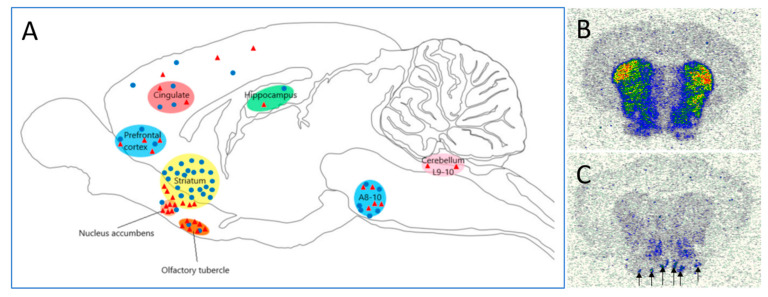
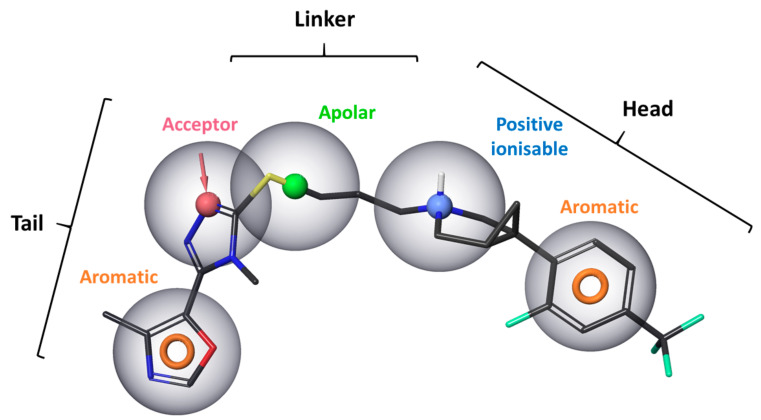
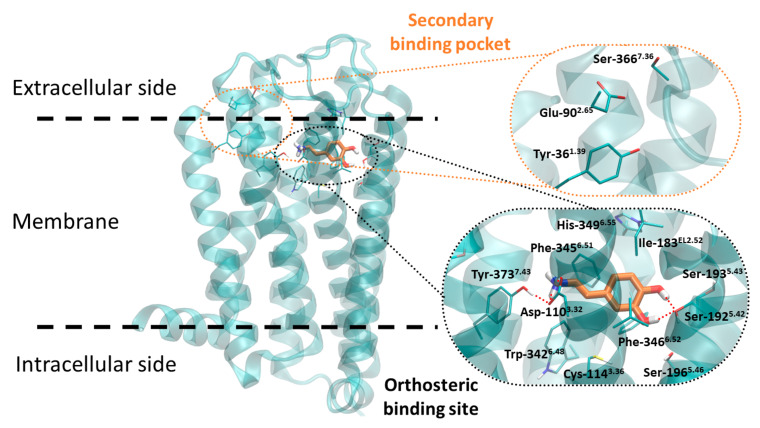
Dopamine (DA), as one of the major neurotransmitters in the central nervous system (CNS) and periphery, exerts its actions through five types of receptors which belong to two major subfamilies such as D1-like (i.e., D1 and D5 receptors) and D2-like (i.e., D2, D3 and D4) receptors. Dopamine D3 receptor (D3R) was cloned 30 years ago, and its distribution in the CNS and in the periphery, molecular structure, cellular signaling mechanisms have been largely explored. Involvement of D3Rs has been recognized in several CNS functions such as movement control, cognition, learning, reward, emotional regulation and social behavior. D3Rs have become a promising target of drug research and great efforts have been made to obtain high affinity ligands (selective agonists, partial agonists and antagonists) in order to elucidate D3R functions. There has been a strong drive behind the efforts to find drug-like compounds with high affinity and selectivity and various functionality for D3Rs in the hope that they would have potential treatment options in CNS diseases such as schizophrenia, drug abuse, Parkinson's disease, depression, and restless leg syndrome. In this review, we provide an overview and update of the major aspects of research related to D3Rs: distribution in the CNS and periphery, signaling and molecular properties, the status of ligands available for D3R research (agonists, antagonists and partial agonists), behavioral functions of D3Rs, the role in neural networks, and we provide a summary on how the D3R-related drug research has been translated to human therapy.
多巴胺(DA)作为中枢神经系统(CNS)和外周的主要神经递质之一,通过属于两个主要亚家族的五种类型受体发挥作用,即D1样受体(即D1和D5受体)和D2样受体(即D2、D3和D4受体)。多巴胺D3受体(D3R)于30年前被克隆,其在中枢神经系统和外周的分布、分子结构、细胞信号传导机制已得到广泛研究。D3R参与了多种中枢神经系统功能,如运动控制、认知、学习、奖赏、情绪调节和社会行为。D3R已成为药物研究的一个有前景的靶点,人们为获得高亲和力配体(选择性激动剂、部分激动剂和拮抗剂)付出了巨大努力,以阐明D3R的功能。人们一直在大力推动寻找对D3R具有高亲和力、选择性和各种功能的类药物化合物,希望它们能为精神分裂症、药物滥用、帕金森病、抑郁症和不宁腿综合征等中枢神经系统疾病提供潜在的治疗选择。在这篇综述中,我们概述并更新了与D3R相关的主要研究方面:在中枢神经系统和外周的分布、信号传导和分子特性、可用于D3R研究的配体(激动剂、拮抗剂和部分激动剂)的现状、D3R的行为功能、在神经网络中的作用,并且我们总结了与D3R相关的药物研究如何转化为人类治疗。