Giacomucci Giulia, Mazzeo Salvatore, Bagnoli Silvia, Casini Matteo, Padiglioni Sonia, Polito Cristina, Berti Valentina, Balestrini Juri, Ferrari Camilla, Lombardi Gemma, Ingannato Assunta, Sorbi Sandro, Nacmias Benedetta, Bessi Valentina
Department of Neuroscience, Psychology, Drug Research and Child Health, University of Florence (NEUROFARBA), Azienda Ospedaliera-Universitaria Careggi, Largo Brambilla 3, 50134 Florence, Italy.
IRCCS Fondazione Don Carlo Gnocchi, Via Scandicci 269, 50143 Florence, Italy.
J Pers Med. 2021 Jan 14;11(1):47. doi: 10.3390/jpm11010047.
The aims of this study were to compare the diagnostic accuracy, sensitivity, specificity, and positive and negative predictive values (PPV, NPV) of different cerebrospinal fluid (CSF) amyloid biomarkers and amyloid-Positron Emission Tomography (PET) in patients with a clinical diagnosis of Alzheimer's disease (AD) and Frontotemporal Dementia (FTD); to compare concordance between biomarkers; and to provide an indication of their use and interpretation.
We included 148 patients (95 AD and 53 FTD), who underwent clinical evaluation, neuropsychological assessment, and at least one amyloid biomarker (CSF analysis or amyloid-PET). Thirty-six patients underwent both analyses. One-hundred-thirteen patients underwent Apolipoprotein E (ApoE) genotyping.
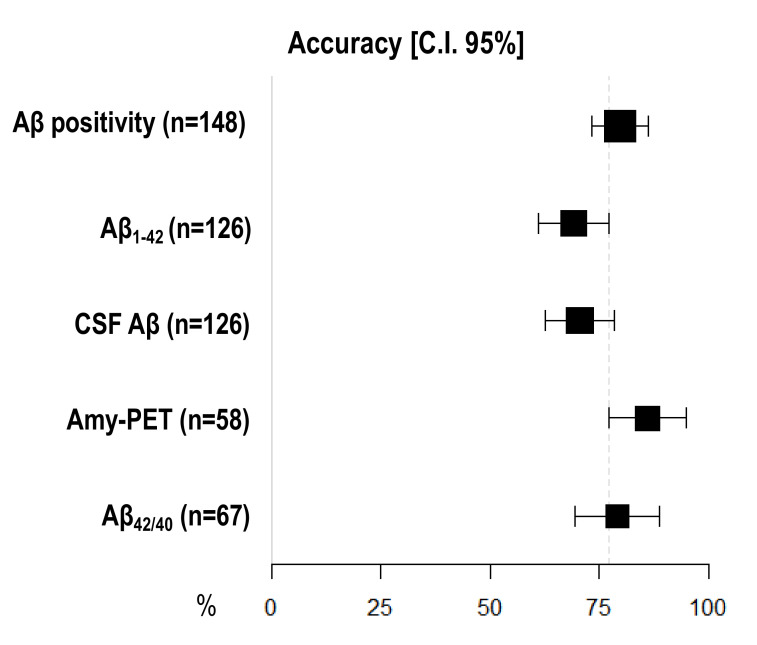
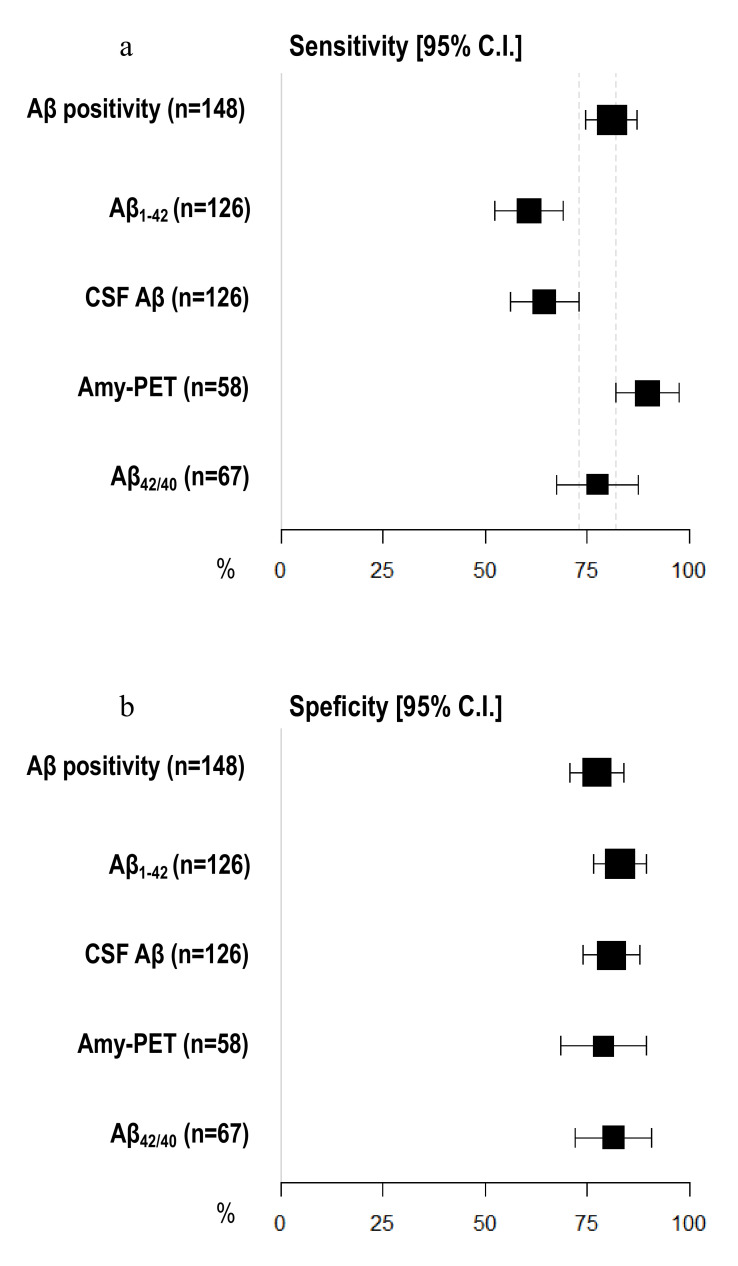
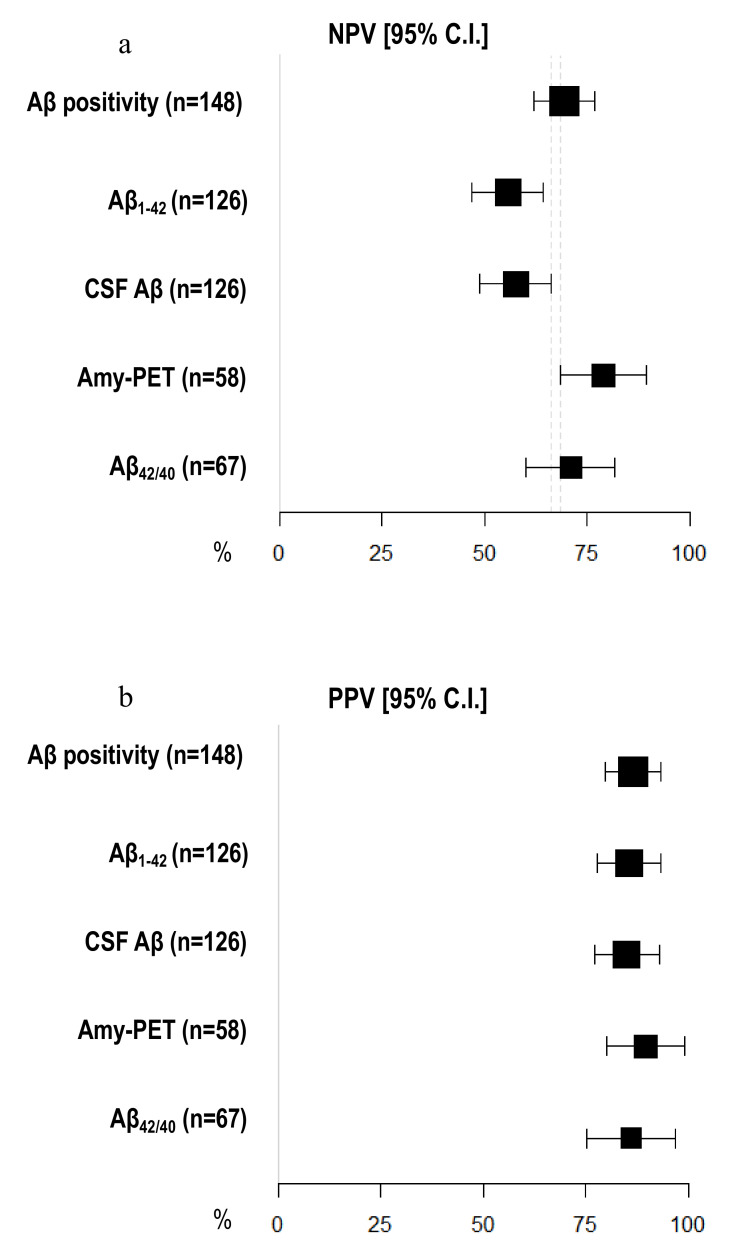
Amyloid-PET presented higher diagnostic accuracy, sensitivity, and NPV than CSF Aβ but not Aβ ratio. Concordance between CSF biomarkers and amyloid-PET was higher in FTD patients compared to AD cases. None of the AD patients presented both negative Aβ biomarkers.
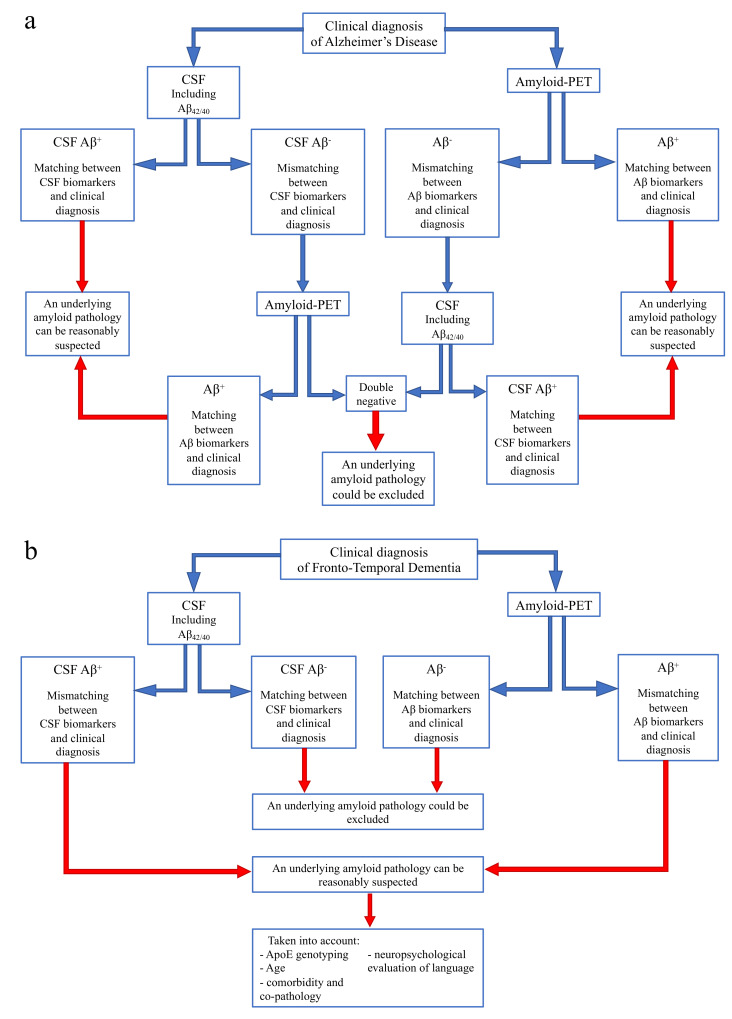
CSF Aβ ratio significantly increased the diagnostic accuracy of CSF biomarkers. On the basis of our current and previous data, we suggest a flowchart to guide the use of biomarkers according to clinical suspicion: due to the high PPV of both amyloid-PET and CSF analysis including Aβ, in cases of concordance between at least one biomarker and clinical diagnosis, performance of the other analysis could be avoided. A combination of both biomarkers should be performed to better characterize unclear cases. If the two amyloid biomarkers are both negative, an underlying AD pathology can most probably be excluded.
本研究的目的是比较不同脑脊液(CSF)淀粉样蛋白生物标志物和淀粉样蛋白正电子发射断层扫描(PET)在临床诊断为阿尔茨海默病(AD)和额颞叶痴呆(FTD)患者中的诊断准确性、敏感性、特异性以及阳性和阴性预测值(PPV、NPV);比较生物标志物之间的一致性;并说明它们的使用和解读方法。
我们纳入了148例患者(95例AD和53例FTD),这些患者接受了临床评估、神经心理学评估以及至少一种淀粉样蛋白生物标志物检测(CSF分析或淀粉样蛋白PET)。36例患者接受了两种检测。113例患者进行了载脂蛋白E(ApoE)基因分型。
淀粉样蛋白PET比CSF Aβ具有更高的诊断准确性、敏感性和NPV,但Aβ比值不高。与AD病例相比,FTD患者中CSF生物标志物与淀粉样蛋白PET之间的一致性更高。没有AD患者同时出现两种Aβ生物标志物均为阴性的情况。
CSF Aβ比值显著提高了CSF生物标志物的诊断准确性。根据我们目前和既往的数据,我们建议绘制一个流程图,根据临床怀疑来指导生物标志物的使用:由于淀粉样蛋白PET和包括Aβ在内的CSF分析的PPV都很高,在至少一种生物标志物与临床诊断一致的情况下,可以避免进行另一种检测。对于情况不明的病例,应同时使用两种生物标志物以更好地进行特征描述。如果两种淀粉样蛋白生物标志物均为阴性,则很可能可以排除潜在的AD病理。