Department of Oral Biology and Diagnostic Sciences, Dental College of Georgia, Augusta University, Augusta, GA 30912, USA.
Georgia Cancer Center, Department of Biochemistry and Molecular Biology, Medical College of Georgia, Augusta University, Augusta, GA 30912, USA.
Int J Mol Sci. 2021 Jan 15;22(2):836. doi: 10.3390/ijms22020836.
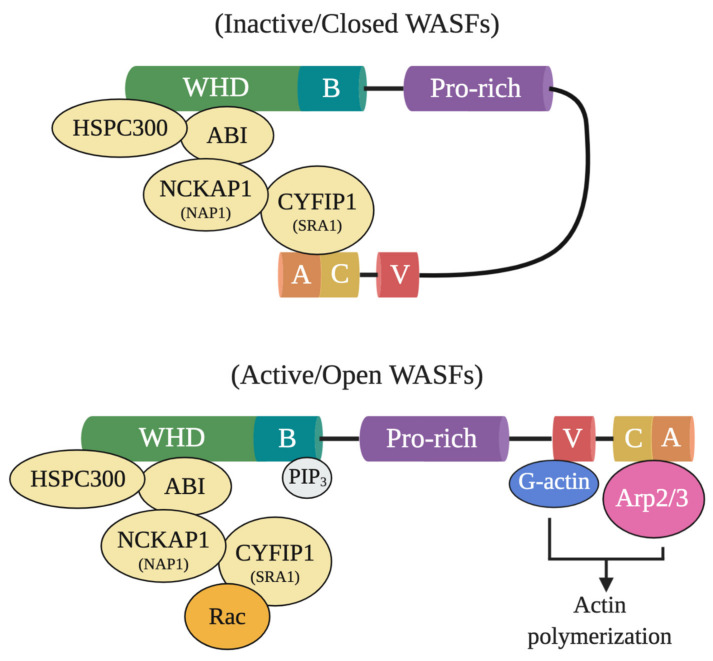
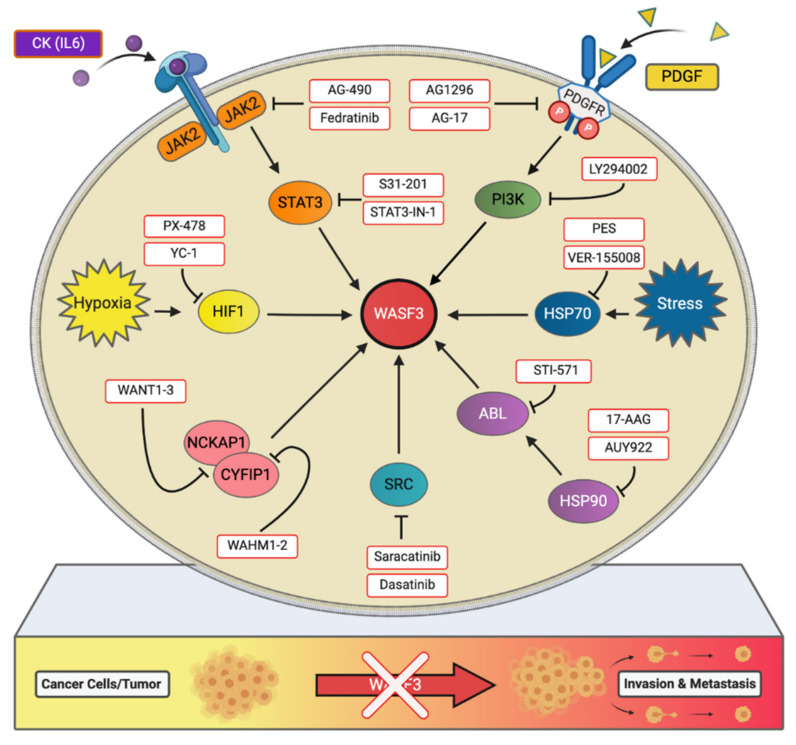
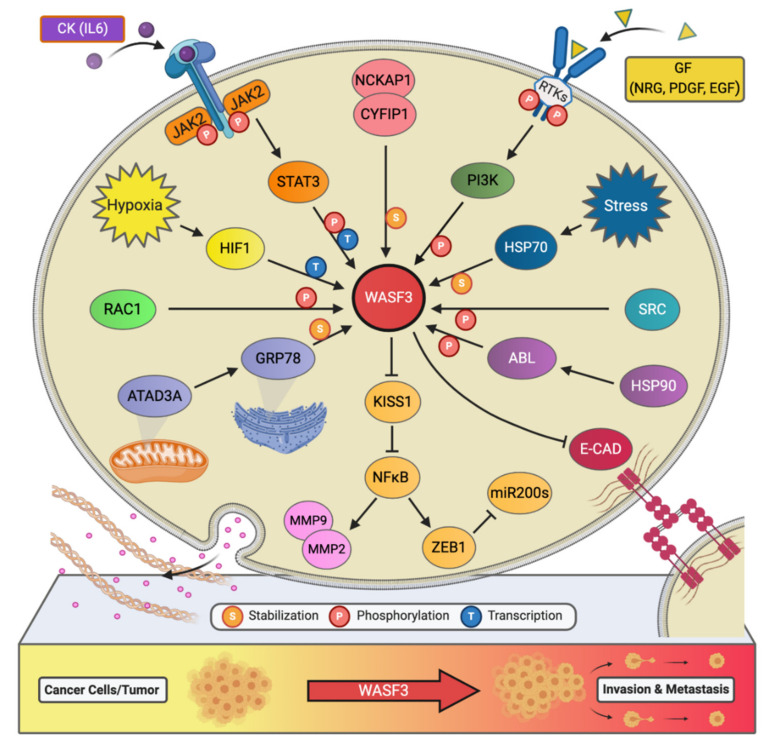
Increasing evidence indicates that cancer metastasis is regulated by specific genetic pathways independent of those controlling tumorigenesis and cancer growth. WASF3, a Wiskott-Aldrich syndrome protein family member, appears to play a major role not only in the regulation of actin cytoskeleton dynamics but also in cancer cell invasion/metastasis. Recent studies have highlighted that WASF3 is a master regulator and acts as a pivotal scaffolding protein, bringing the various components of metastatic signaling complexes together both spatially and temporally. Herein, targeting WASF3 at the levels of transcription, protein stability, and phosphorylation holds great promise for metastasis suppression, regardless of the diverse genetic backgrounds associated with tumor development. This review focuses on the critical and distinct contributions of WASF3 in the regulation of signal pathways promoting cancer cell invasion and metastasis.
越来越多的证据表明,癌症转移是由特定的遗传途径调控的,这些途径与控制肿瘤发生和癌症生长的途径无关。WASF3(Wiskott-Aldrich 综合征蛋白家族成员)似乎不仅在调节肌动蛋白细胞骨架动力学方面发挥主要作用,而且在癌细胞侵袭/转移中也发挥重要作用。最近的研究强调,WASF3 是一个主要的调节因子,作为一个关键的支架蛋白,将转移信号复合物的各种成分在空间和时间上聚集在一起。在此,无论与肿瘤发展相关的遗传背景如何,在转录、蛋白质稳定性和磷酸化水平靶向 WASF3 都有望抑制转移。本综述重点介绍了 WASF3 在调节促进癌细胞侵袭和转移的信号通路方面的关键和独特贡献。