Department of Nephrology, The First Affiliated Hospital of Zhengzhou University , Zhengzhou, People's Republic of China.
Institute of Integrated Traditional Chinese and Western Medicine, Tongji Hospital, Tongji Medical College, Huazhong University of Science and Technology , Wuhan, People's Republic of China.
Cell Cycle. 2021 Feb;20(3):332-344. doi: 10.1080/15384101.2021.1874696. Epub 2021 Jan 20.
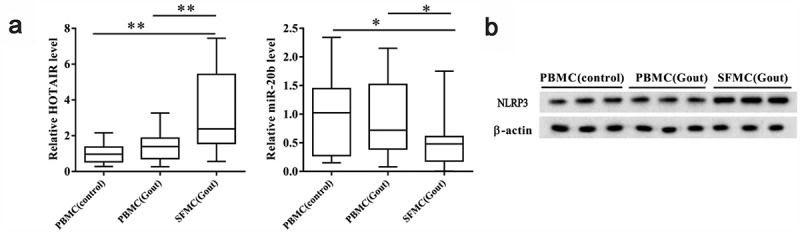
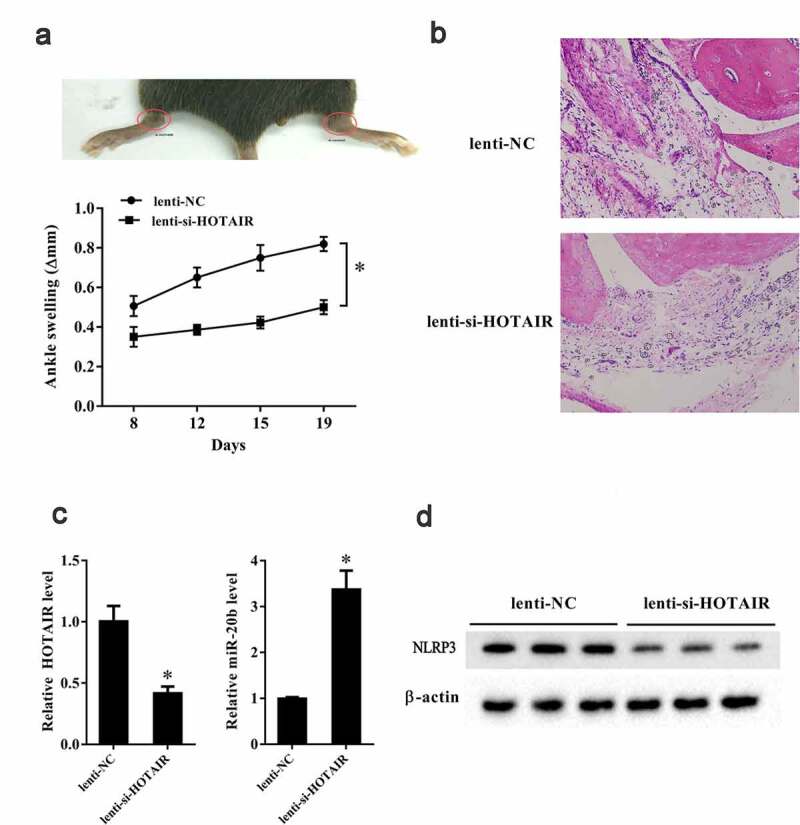
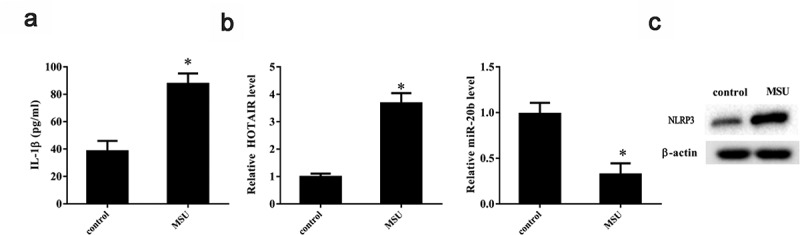
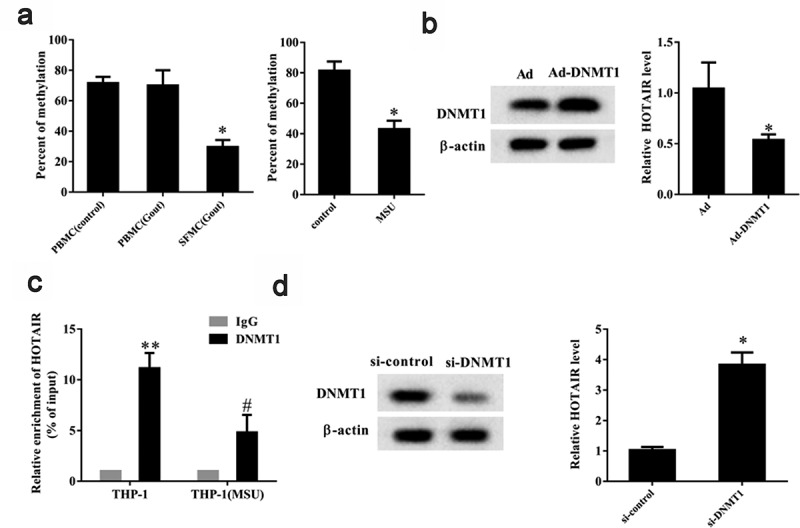
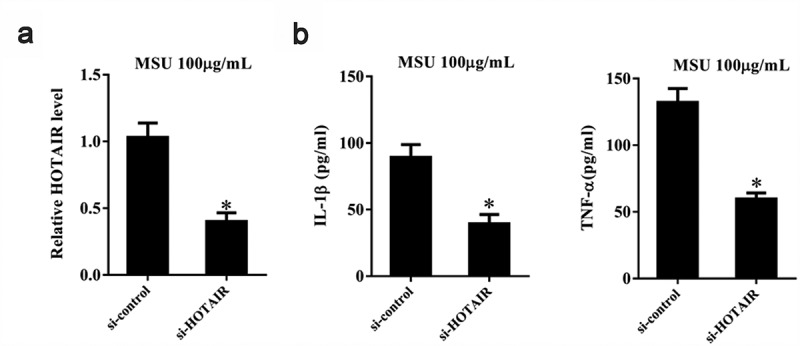
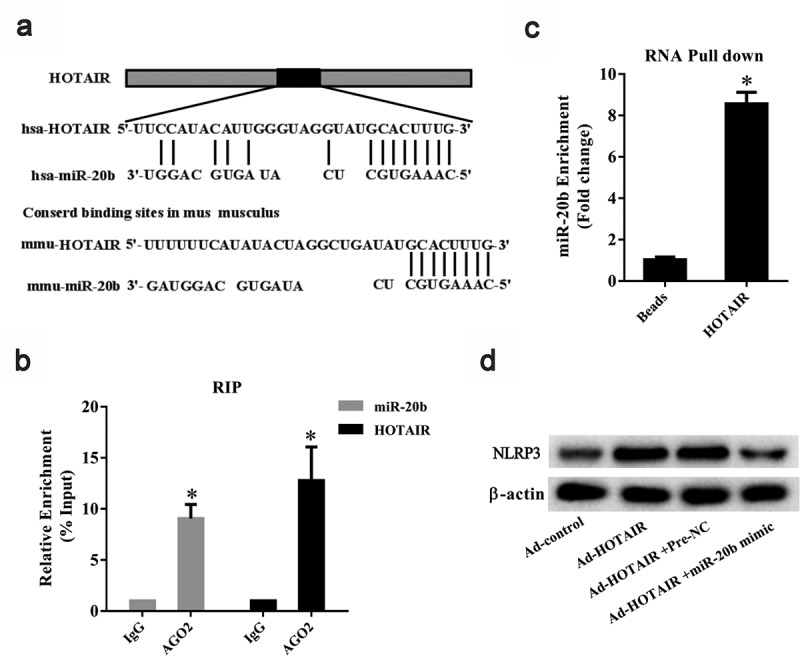
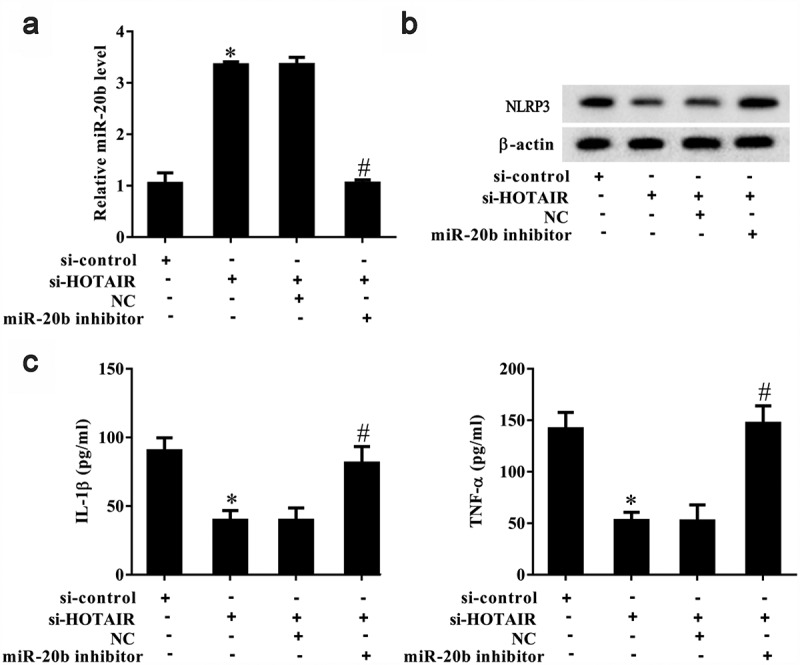
This study aimed to determine the mechanism underlying the regulation of gout by the HOX transcript antisense RNA (HOTAIR) long non-coding RNA (lncRNA). The expression levels of HOTAIR, miR-20b, and Nlrp3 were estimated by qRT-PCR and western blotting. The methylation level of HOTAIR was detected by methylation-specific PCR. The recruitment of DNA methyltransferase 1 (DNMT1) to the lncRNA HOTAIR promoter was confirmed by a ChIP assay. RNA immunoprecipitation and RNA pull-down assays were used to confirm the interaction between HOTAIR and miR-20b. LncRNA HOTAIR and Nlrp3 expression was upregulated, and that of miR-20b was downregulated in synovial fluid mononuclear cells (SFMCs) collected from patients with gouty arthritis and monosodium urate (MSU)-stimulated THP-1 cells. Interleukin (IL)-1β level increased substantially upon stimulation by MSU crystals. The methylation percentage of HOTAIR was reduced in SFMCs from patients with gouty arthritis and MSU-stimulated THP-1 cells. DNMT1 expression was downregulated in MSU-stimulated THP-1 cells, and DNMT1 knockdown increased lncRNA HOTAIR expression. In addition, the interaction of HOTAIR with miR-20b was confirmed. HOTAIR knockdown suppressed Nlrp3 expression and the secretion of inflammatory cytokines miR-20b regulation. Finally, experiments showed that HOTAIR knockdown alleviated ankle swelling in a mouse model of gouty arthritis. These findings suggest that lncRNA HOTAIR knockdown suppresses inflammatory cytokine secretion by upregulating miR-20b and downregulating NLRP3, thereby alleviating ankle swelling in gouty arthritis.
本研究旨在确定 HOX 转录反义 RNA(HOTAIR)长非编码 RNA(lncRNA)调节痛风的机制。通过 qRT-PCR 和 Western blot 测定 HOTAIR、miR-20b 和 Nlrp3 的表达水平。通过甲基化特异性 PCR 检测 HOTAIR 的甲基化水平。通过染色质免疫沉淀(ChIP)实验证实 DNA 甲基转移酶 1(DNMT1)与 lncRNA HOTAIR 启动子的募集。RNA 免疫沉淀和 RNA 下拉实验用于证实 HOTAIR 和 miR-20b 之间的相互作用。在痛风性关节炎患者的滑膜单核细胞(SFMCs)和单核细胞白血病细胞(THP-1)中,HOTAIR 和 Nlrp3 的表达上调,miR-20b 的表达下调。单核细胞白血病细胞(THP-1)经尿酸单钠(MSU)晶体刺激后,白细胞介素(IL)-1β水平显著升高。痛风患者 SFMCs 和 MSU 刺激的 THP-1 细胞中 HOTAIR 的甲基化百分比降低。DNMT1 在 MSU 刺激的 THP-1 细胞中表达下调,DNMT1 敲低增加了 lncRNA HOTAIR 的表达。此外,还证实了 HOTAIR 与 miR-20b 的相互作用。HOTAIR 敲低抑制了 Nlrp3 的表达和炎症细胞因子的分泌,从而上调了 miR-20b 的表达。最后,实验表明 HOTAIR 敲低减轻了痛风性关节炎小鼠模型的踝关节肿胀。这些发现表明,lncRNA HOTAIR 敲低通过上调 miR-20b 和下调 NLRP3 抑制炎症细胞因子的分泌,从而减轻痛风性关节炎的踝关节肿胀。