Alfiero Simona, Brescia Valerio, Bert Fabrizio
Department of Management, C.so Unione Sovietica, University of Turin, 218 bis, Torino, Italy.
Department of Public Health Sciences, University of Turin, Via Santena 5/bis, Torino, Italy.
BMC Health Serv Res. 2021 Jan 20;21(1):73. doi: 10.1186/s12913-021-06087-y.
Knowledge resources are in most productive sectors distinctive in terms of competitiveness. Still, in the health sector, they can have an impact on the health of the population, help make the organisations more efficient and can help improve decision-making processes. The purpose of this paper is to investigate the Intellectual Capital impact on healthcare organization' performance in the Italian healthcare system.
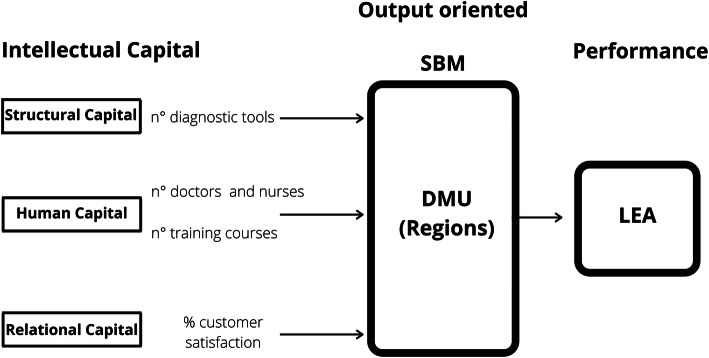
The theoretical framework linked to intellectual Capital in the health sector and the performance evaluation related to efficiency supports the analysis carried out in two stages to determine the right placement of resources and the exogenous variables that influence performance level. The evaluation of the impact of the ICs on performance is determined through the Data envelopment analysis. The incidence of the exogenous variables has been established through linear regression.
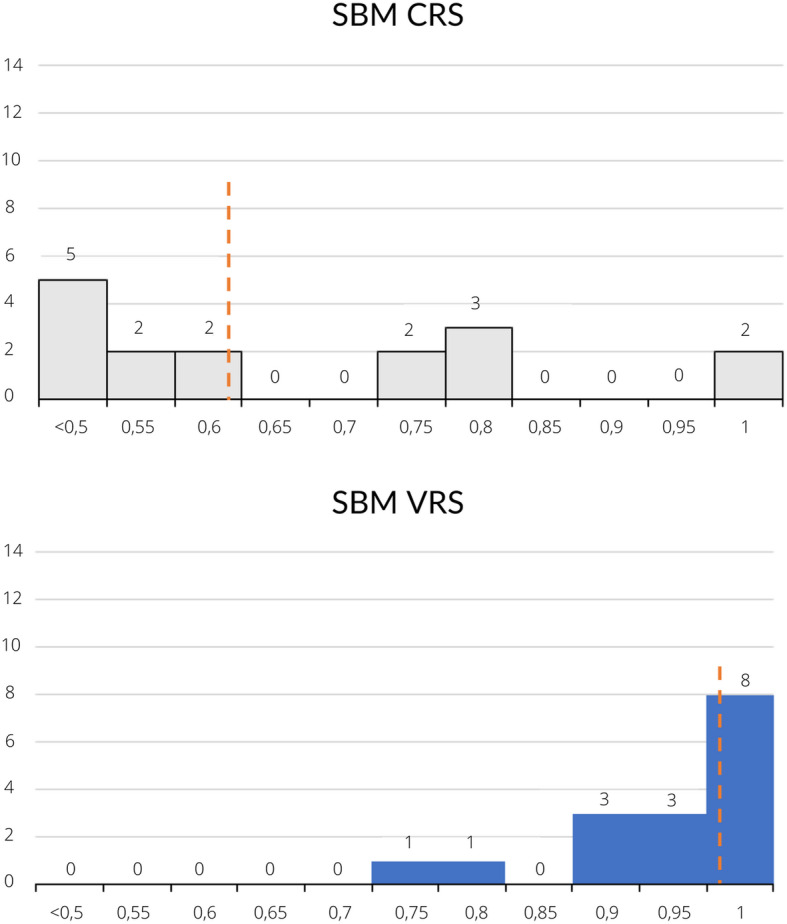
Empirical results in Italy show some IC components influence organization 'performance (Essential Levels of Assistance) and could be used for defining the policy of allocation of resources in healthcare sector. The efficiency of 16 regions considered in 2016 based on Slack-Based-Model constant returns-to-scale (SBM-CRS) and Slack-Based-Model variable returns-to-scale (SBM-VRS) identifies a different ability to balance IC and performance. Current healthcare expenditure and the number of residents is correlated with the identified efficiency and performance levels.
This paper embeds an innovative link between healthcare performance, in term of efficiency and IC which aligns resource management with future strategy. The study provides a new decision-making approach.
知识资源在大多数生产性部门中具有独特的竞争力。然而,在卫生部门,它们会对民众健康产生影响,有助于提高组织效率,并能改善决策过程。本文旨在研究智力资本对意大利医疗体系中医疗机构绩效的影响。
与卫生部门智力资本相关的理论框架以及与效率相关的绩效评估,支持了分两个阶段进行的分析,以确定资源的合理配置以及影响绩效水平的外部变量。通过数据包络分析确定智力资本对绩效的影响。通过线性回归确定外部变量的影响程度。
意大利的实证结果表明,一些智力资本组成部分会影响组织绩效(基本援助水平),可用于确定医疗部门的资源分配政策。基于松弛变量模型规模报酬不变(SBM-CRS)和松弛变量模型规模报酬可变(SBM-VRS)对2016年所考虑的16个地区的效率进行评估,发现平衡智力资本与绩效的能力存在差异。当前医疗支出和居民数量与所确定的效率和绩效水平相关。
本文在医疗绩效(效率方面)与智力资本之间建立了创新联系,使资源管理与未来战略保持一致。该研究提供了一种新的决策方法。