Zhu Pengpeng, He Fang, Hou Yixuan, Tu Gang, Li Qiao, Jin Ting, Zeng Huan, Qin Yilu, Wan Xueying, Qiao Yina, Qiu Yuxiang, Teng Yong, Liu Manran
Key Laboratory of Laboratory Medical Diagnostics, Chinese Ministry of Education, Chongqing Medical University, Chongqing, 400016, China.
Department of pharmacy, The First Affiliated Hospital of Chongqing Medical University, Chongqing, 400016, China.
Oncogene. 2021 Mar;40(9):1609-1627. doi: 10.1038/s41388-020-01638-9. Epub 2021 Jan 19.
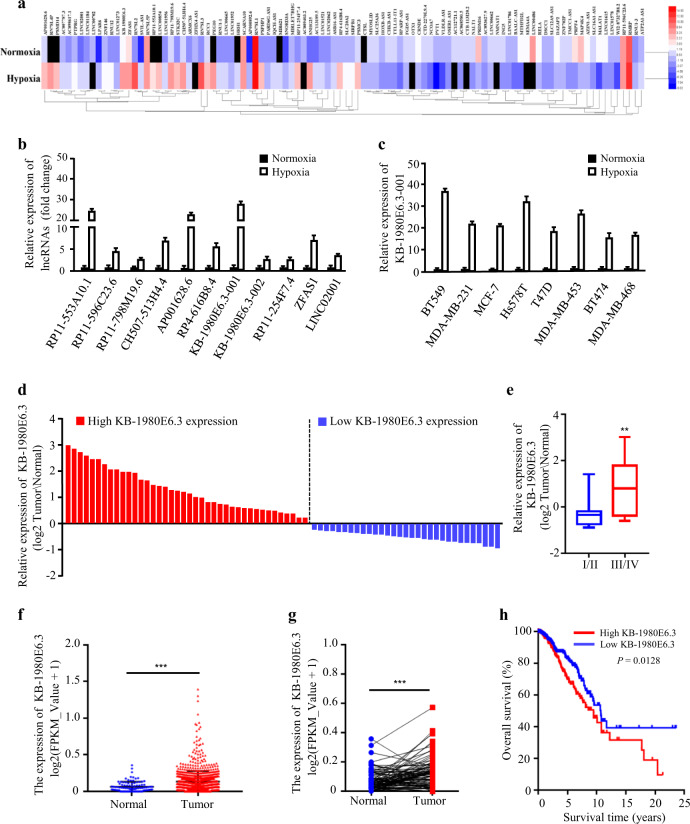
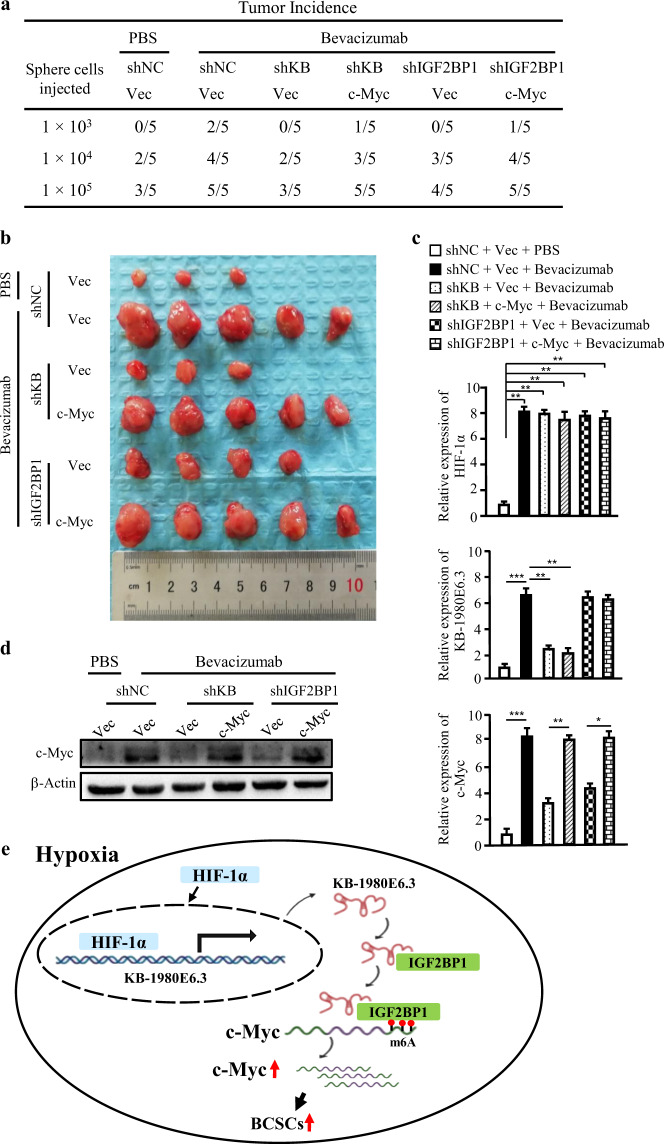
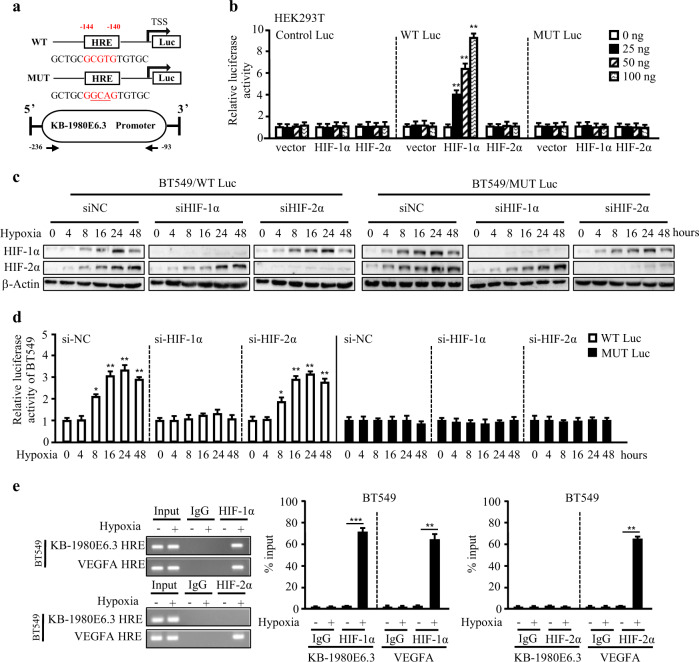
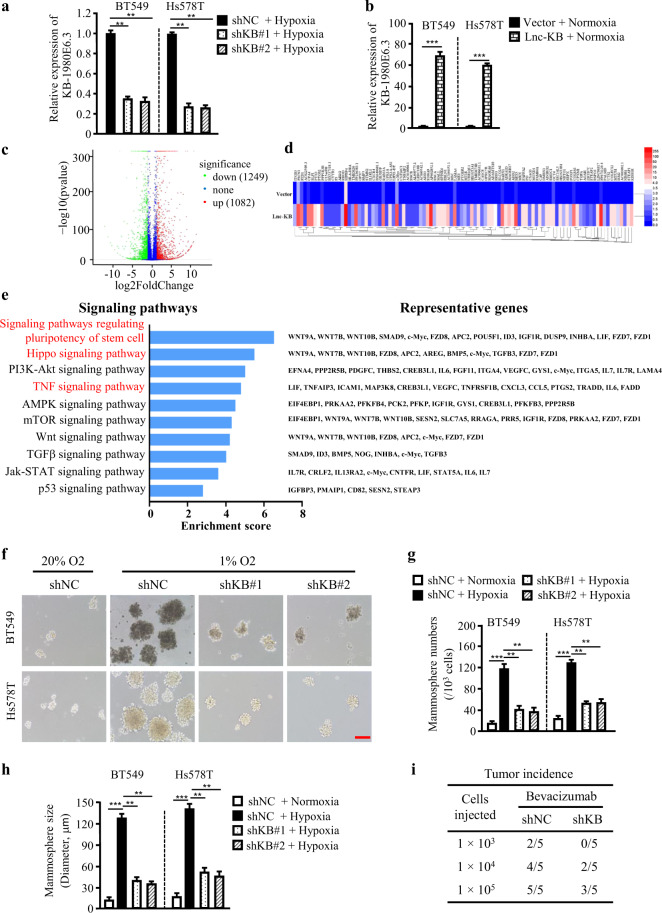
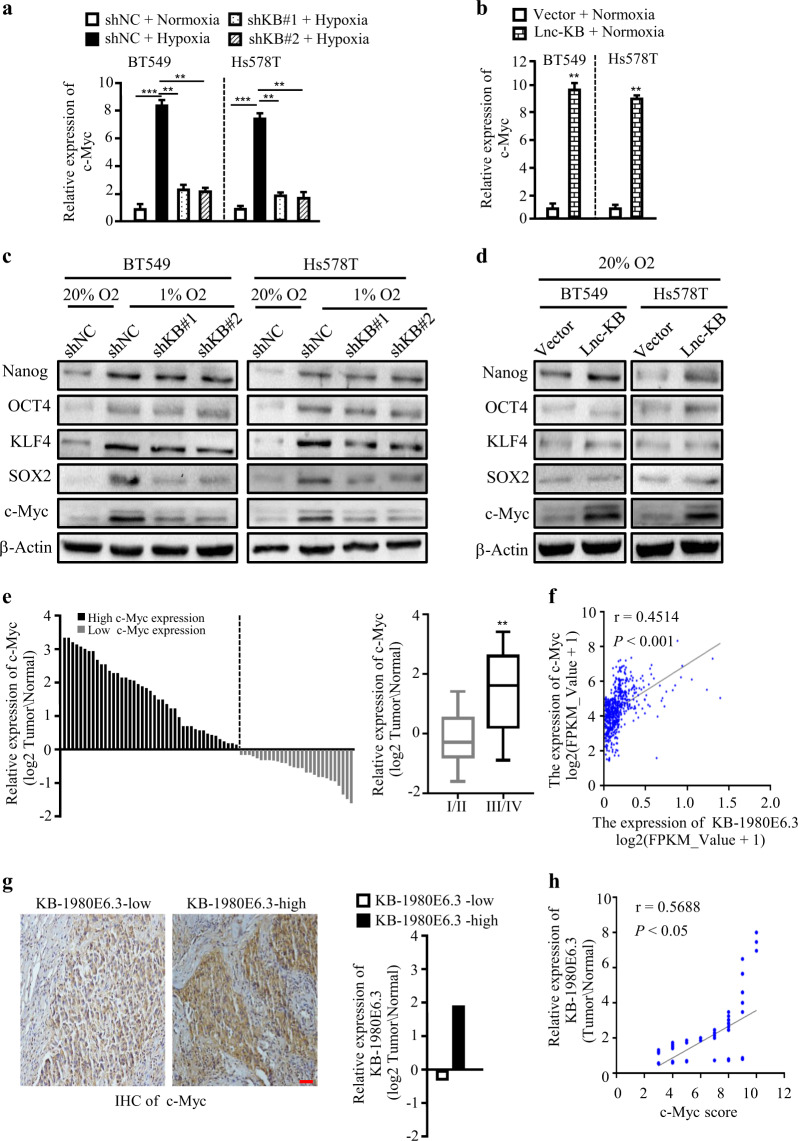
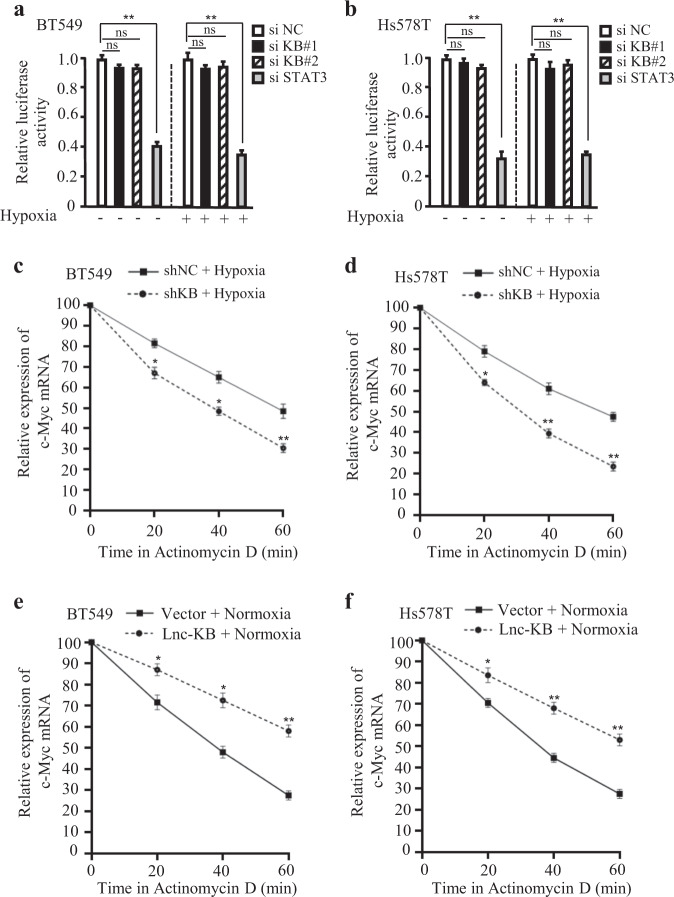
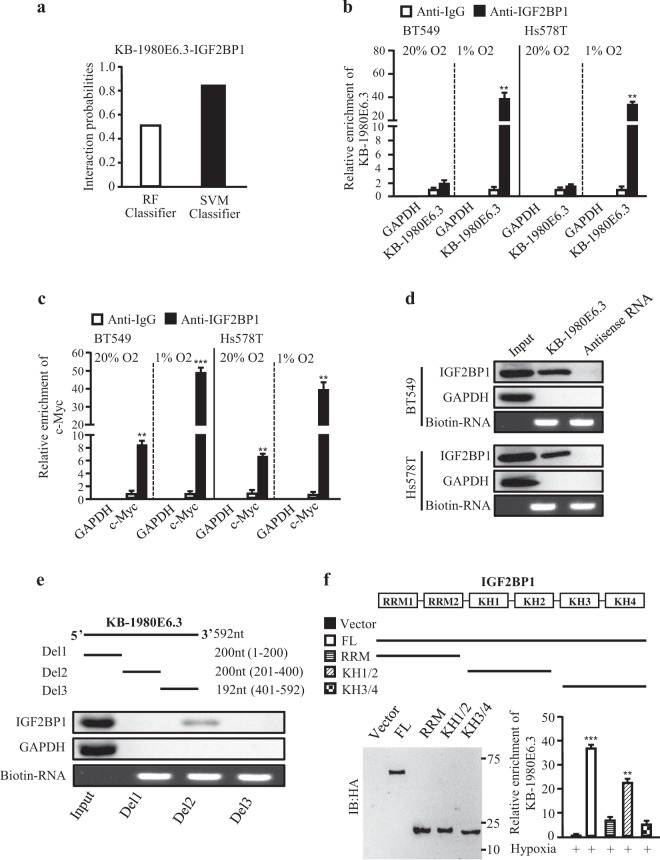
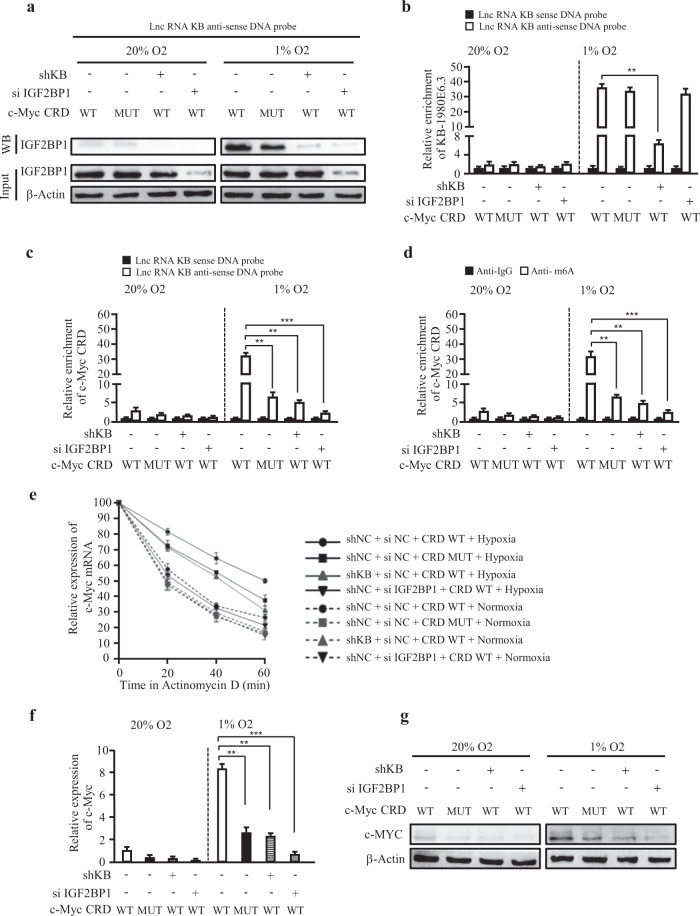
The hostile hypoxic microenvironment takes primary responsibility for the rapid expansion of breast cancer tumors. However, the underlying mechanism is not fully understood. Here, using RNA sequencing (RNA-seq) analysis, we identified a hypoxia-induced long noncoding RNA (lncRNA) KB-1980E6.3, which is aberrantly upregulated in clinical breast cancer tissues and closely correlated with poor prognosis of breast cancer patients. The enhanced lncRNA KB-1980E6.3 facilitates breast cancer stem cells (BCSCs) self-renewal and tumorigenesis under hypoxic microenvironment both in vitro and in vivo. Mechanistically, lncRNA KB-1980E6.3 recruited insulin-like growth factor 2 mRNA-binding protein 1 (IGF2BP1) to form a lncRNA KB-1980E6.3/IGF2BP1/c-Myc signaling axis that retained the stability of c-Myc mRNA through increasing binding of IGF2BP1 with m6A-modified c-Myc coding region instability determinant (CRD) mRNA. In conclusion, we confirm that lncRNA KB-1980E6.3 maintains the stemness of BCSCs through lncRNA KB-1980E6.3/IGF2BP1/c-Myc axis and suggest that disrupting this axis might provide a new therapeutic target for refractory hypoxic tumors.
恶劣的缺氧微环境是乳腺癌肿瘤快速生长的主要原因。然而,其潜在机制尚未完全明确。在此,我们通过RNA测序(RNA-seq)分析,鉴定出一种缺氧诱导的长链非编码RNA(lncRNA)KB-1980E6.3,它在临床乳腺癌组织中异常上调,且与乳腺癌患者的不良预后密切相关。增强的lncRNA KB-1980E6.3在体外和体内的缺氧微环境下均促进乳腺癌干细胞(BCSCs)的自我更新和肿瘤发生。机制上,lncRNA KB-1980E6.3招募胰岛素样生长因子2 mRNA结合蛋白1(IGF2BP1)形成lncRNA KB-1980E6.3/IGF2BP1/c-Myc信号轴,通过增加IGF2BP1与m6A修饰的c-Myc编码区不稳定决定簇(CRD)mRNA的结合来维持c-Myc mRNA的稳定性。总之,我们证实lncRNA KB-1980E6.3通过lncRNA KB-1980E6.3/IGF2BP1/c-Myc轴维持BCSCs的干性,并表明破坏该轴可能为难治性缺氧肿瘤提供新的治疗靶点。