Takeshita Nobuaki, Oe Tomoya, Kiso Tetsuo, Kakimoto Shuichiro
Drug Discovery Research, Astellas Pharma Inc, Ibaraki, Japan.
J Pain Res. 2021 Jan 12;14:23-34. doi: 10.2147/JPR.S274563. eCollection 2021.
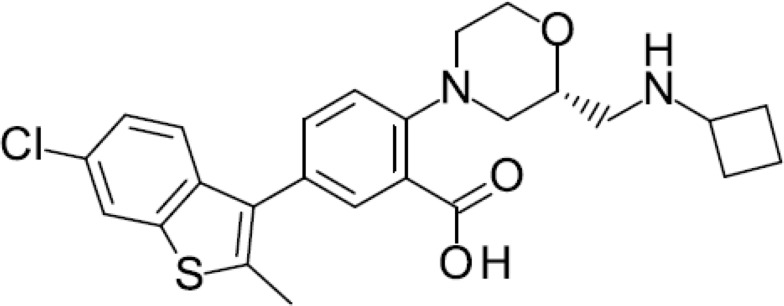
Although abnormal peripheral and central pain processing has been observed in fibromyalgia (FM) patients, the biomechanics and pathophysiology, surrounding the peripheral mechanism are not well understood. An intermediate conductance channel, K3.1, is expressed in peripheral sensory nerve fibers where it maintains the resting membrane potential and controls nerve firing, making it a plausible target for peripheral therapeutic interventions. ASP0819, a K3.1 channel opener, is an orally available molecular entity and is used in this investigation to elucidate the role of K3.1 in signal processing of pain in FM.
Human or rat K3.1 channel-expressing cells were used for evaluating the main action of the compound. Effects of the compound on withdrawal behavior by mechanical stimulation were examined in reserpine-induced myalgia (RIM) and vagotomy-induced myalgia (VIM) models of rats. In addition, in vivo electrophysiological analysis was performed to examine the peripheral mechanisms of action of the compound. Other pain models were also examined.
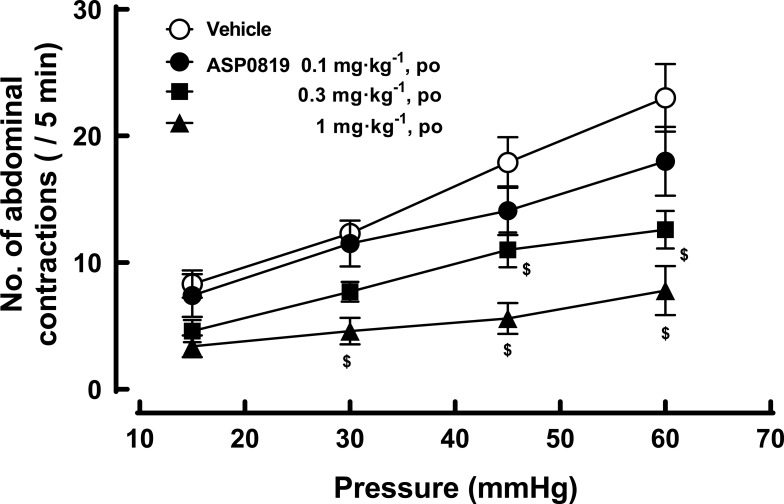
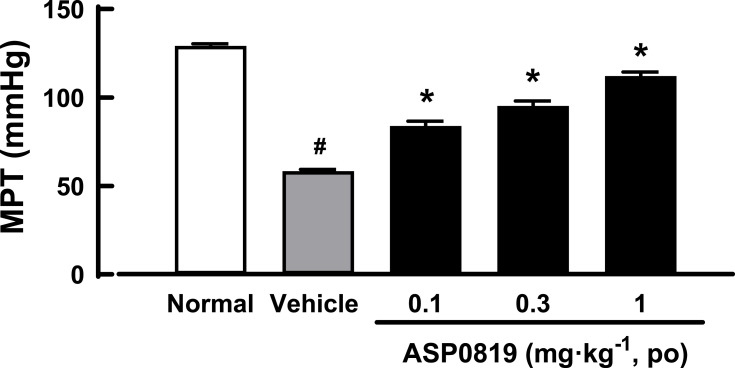
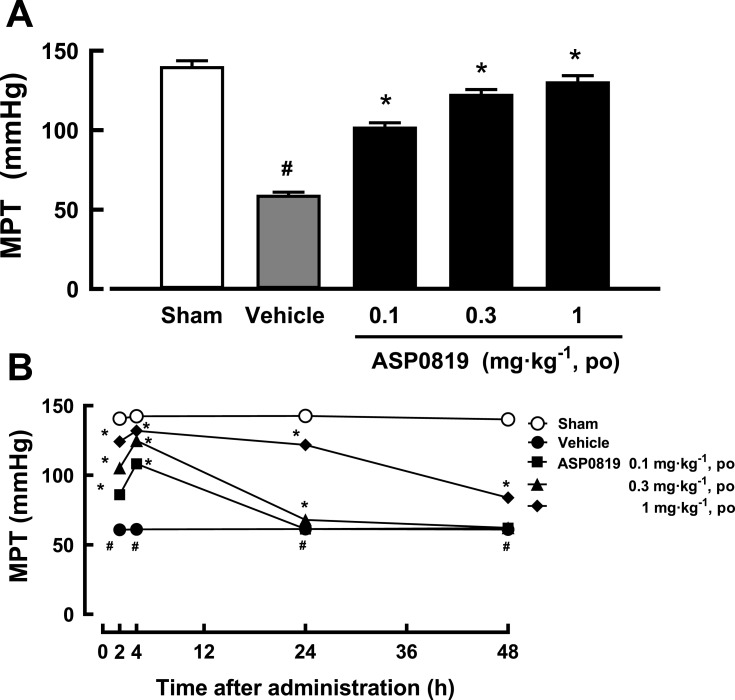
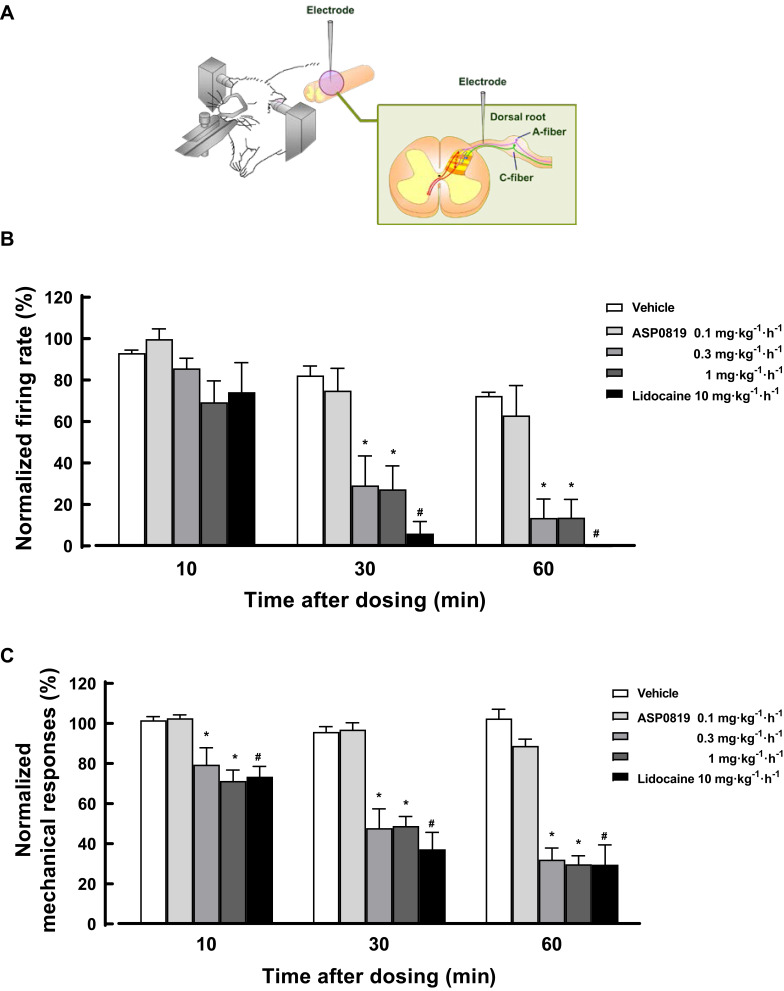
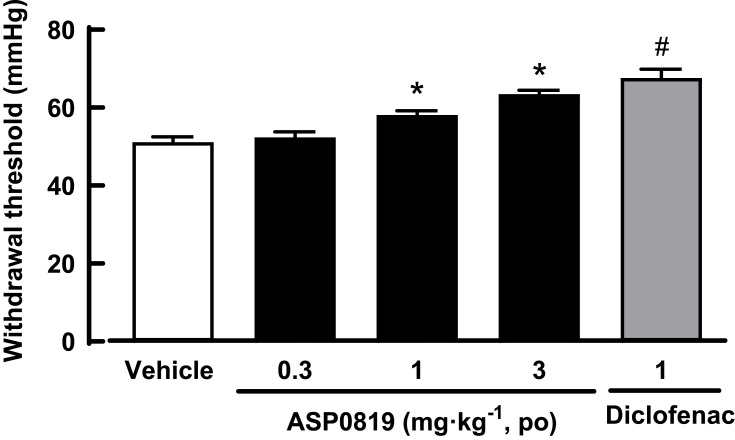
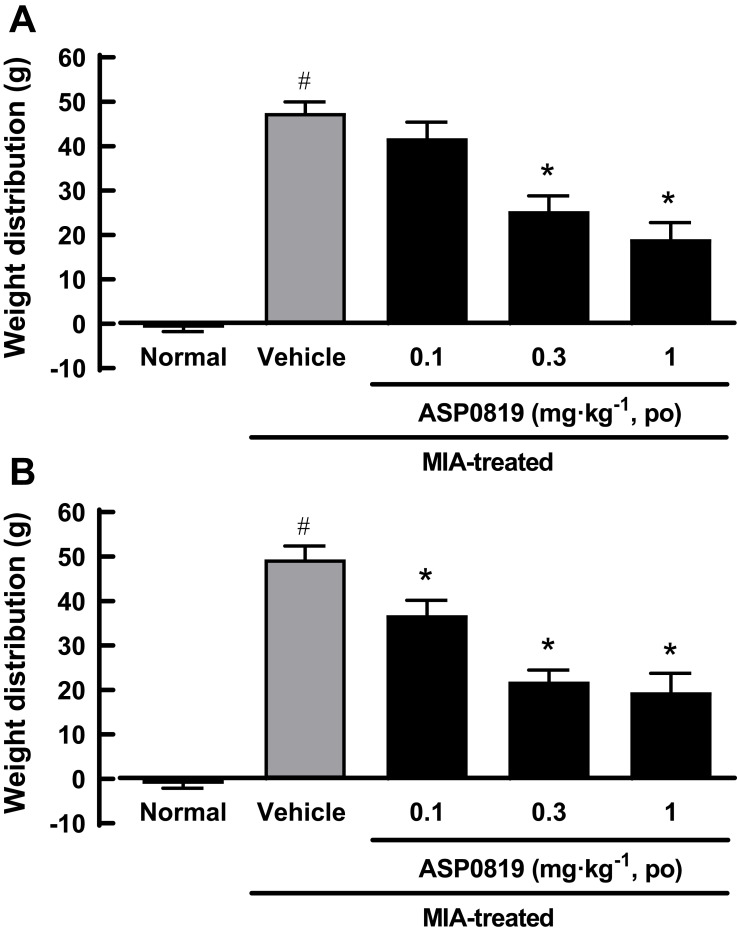
ASP0819 increased the negative membrane potential in a concentration-dependent manner. Oral administration of ASP0819 significantly recovered the decrease in muscle pressure threshold in rat FM models of RIM and VIM. The in vivo electrophysiological experiments showed that Aδ- and C-fibers innervating the leg muscles in the RIM model demonstrated increased spontaneous and mechanically evoked firing compared with normal rats. Intravenous infusion of ASP0819 significantly reduced both the spontaneous activity and mechanically evoked responses in Aδ-fibers in the rat RIM model. ASP0819 significantly reduced the number of abdominal contractions as an indicator of abdominal pain behaviors in the rat visceral extension model and withdrawal responses in the osteoarthritis model, respectively.
These findings suggest that ASP0819 may be a promising analgesic agent with the ability to modulate peripheral pain signal transmission. Its use in the treatment of several pain conditions should be explored, chief amongst these being FM pain.
尽管在纤维肌痛(FM)患者中观察到外周和中枢疼痛处理异常,但围绕外周机制的生物力学和病理生理学仍未得到充分理解。一种中间电导通道K3.1在外周感觉神经纤维中表达,它维持静息膜电位并控制神经放电,使其成为外周治疗干预的一个合理靶点。ASP0819是一种K3.1通道开放剂,是一种口服可用的分子实体,本研究用其阐明K3.1在FM疼痛信号处理中的作用。
使用表达人或大鼠K3.1通道的细胞来评估该化合物的主要作用。在利血平诱导的肌痛(RIM)和迷走神经切断术诱导的肌痛(VIM)大鼠模型中,检测该化合物对机械刺激引起的退缩行为的影响。此外,进行体内电生理分析以检查该化合物的外周作用机制。还检查了其他疼痛模型。
ASP0819以浓度依赖性方式增加膜负电位。口服ASP0819可显著恢复RIM和VIM大鼠FM模型中肌肉压力阈值的降低。体内电生理实验表明,与正常大鼠相比,RIM模型中支配腿部肌肉的Aδ和C纤维显示出自发性和机械诱发放电增加。静脉输注ASP0819可显著降低大鼠RIM模型中Aδ纤维的自发活动和机械诱发反应。ASP0819分别显著减少了大鼠内脏伸展模型中作为腹痛行为指标的腹部收缩次数和骨关节炎模型中的退缩反应。
这些发现表明,ASP0819可能是一种有前途的镇痛药,具有调节外周疼痛信号传递的能力。应探索其在治疗多种疼痛病症中的应用,其中主要是FM疼痛。